-
E-mail
jdjm17@aliyun.com
-
Phone
13381663924,18301025881
-
Address
No. 8 Xiaotun Road, Fengtai District, Beijing
Beijing Jiade Precision Technology Co., Ltd
What is a cellular reactor throughout the article?
Date: 2025-12-27Read: 10
Animal cells, especially mammalian cells, have unique advantages in the production of biological products, especially in the areas of erythropoietin (EPO) for the treatment of pernicious anemia, interferon (IFN) for the treatment of viral diseases and tumors, proUK for the treatment of thrombosis, vaccines, etc. As a qualified animal cell bioreactor, it should meet the needs of high-density proliferation of animal cells and ensure efficient secretion of target products by animal cells
The number of sensors varies with the degree of automation of the bioreactor. In process cultivation, based on sensors, the bioreactor can continuously monitor and adjust changes in parameters related to cells, resulting in uniform cell growth and more stable product quality. Glass cell reactors are made of high borosilicate materials with a cultivation volume of less than 10L, while stainless steel bioreactors can achieve a cultivation scale of up to 2000L. Combined with microcarriers, porous microspheres, and tank injection technology, the density of cultured cells can reach over 107cells/ml, and disinfection is convenient. For several liters of glass jars, they can be sterilized using a pressure cooker; For stainless steel tanks over tens of liters, the sterilization device attached to the reactor can be used for original sterilization. The major advantage of Beijing Jiade's JD-SFM-XL series stirred bioreactor is that it can cultivate various types of animal cells, the cultivation process is easy to scale up, the product quality is stable, and it is very suitable for factory production, with greater potential in the development of biological products.
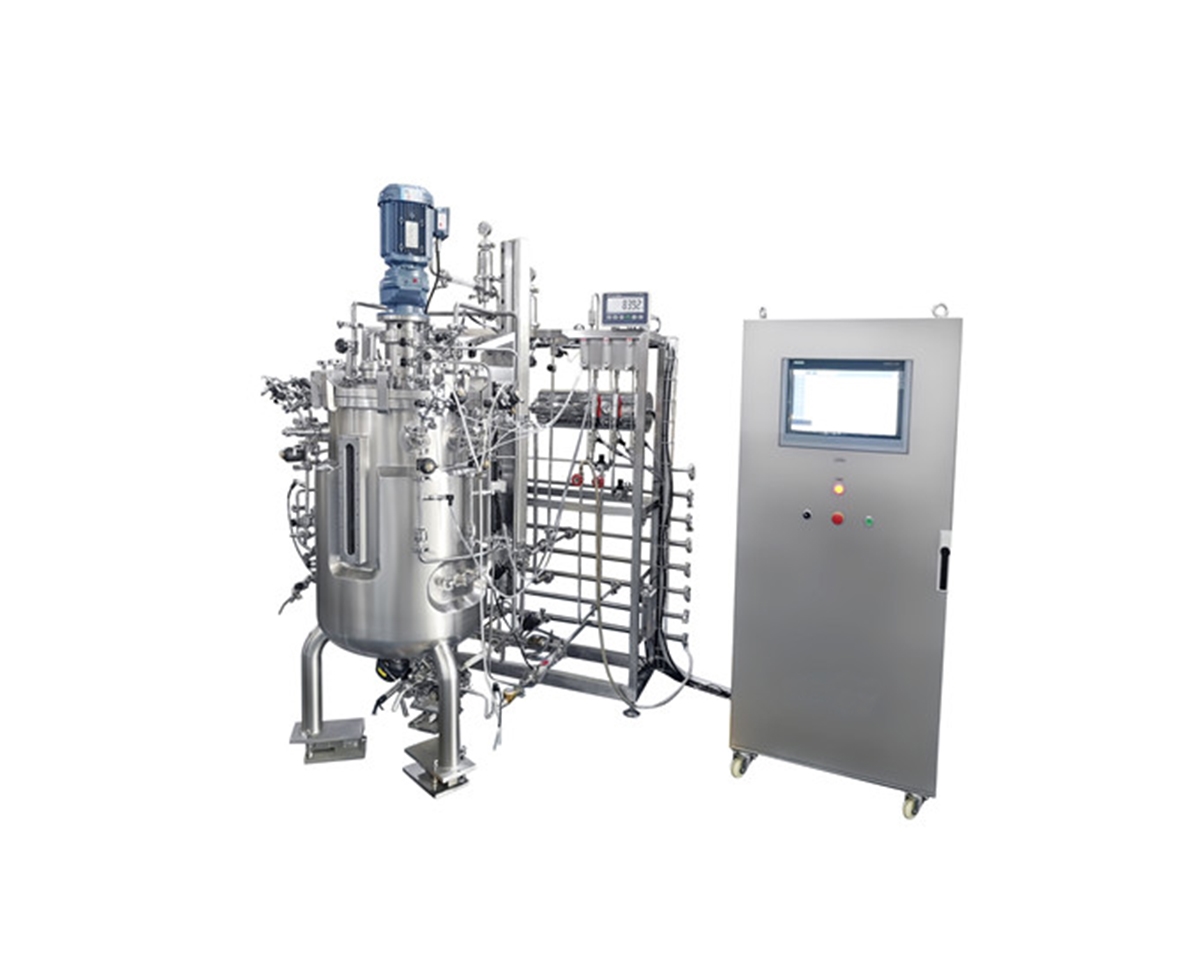
In the future, animal cell culture bioreactor technology will mainly develop in two directions: one is to produce biological products by high-density cultivation of animal cells; The second is for the purpose of three-dimensional cultivation of animal cells and regeneration of tissues or organs. The former belongs to cell engineering; The latter belongs to organizational engineering. As stem cell research continues to heat up, the source of stem cells is limited and cannot meet the needs of tissue engineering or organ regeneration. The large-scale expansion of stem cell seeds using bioreactors will have good development prospects.
Next Article: Application analysis of anaerobic fermentation tank