-
E-mail
616584903@qq.com
-
Phone
15706156656
-
Address
Sanhekou Ninghe Village, Zhenglu Town
Changzhou Ruiting Drying Engineering Co., Ltd
Structural components of rotary drum dryer
Date: 2025-12-24Read: 7
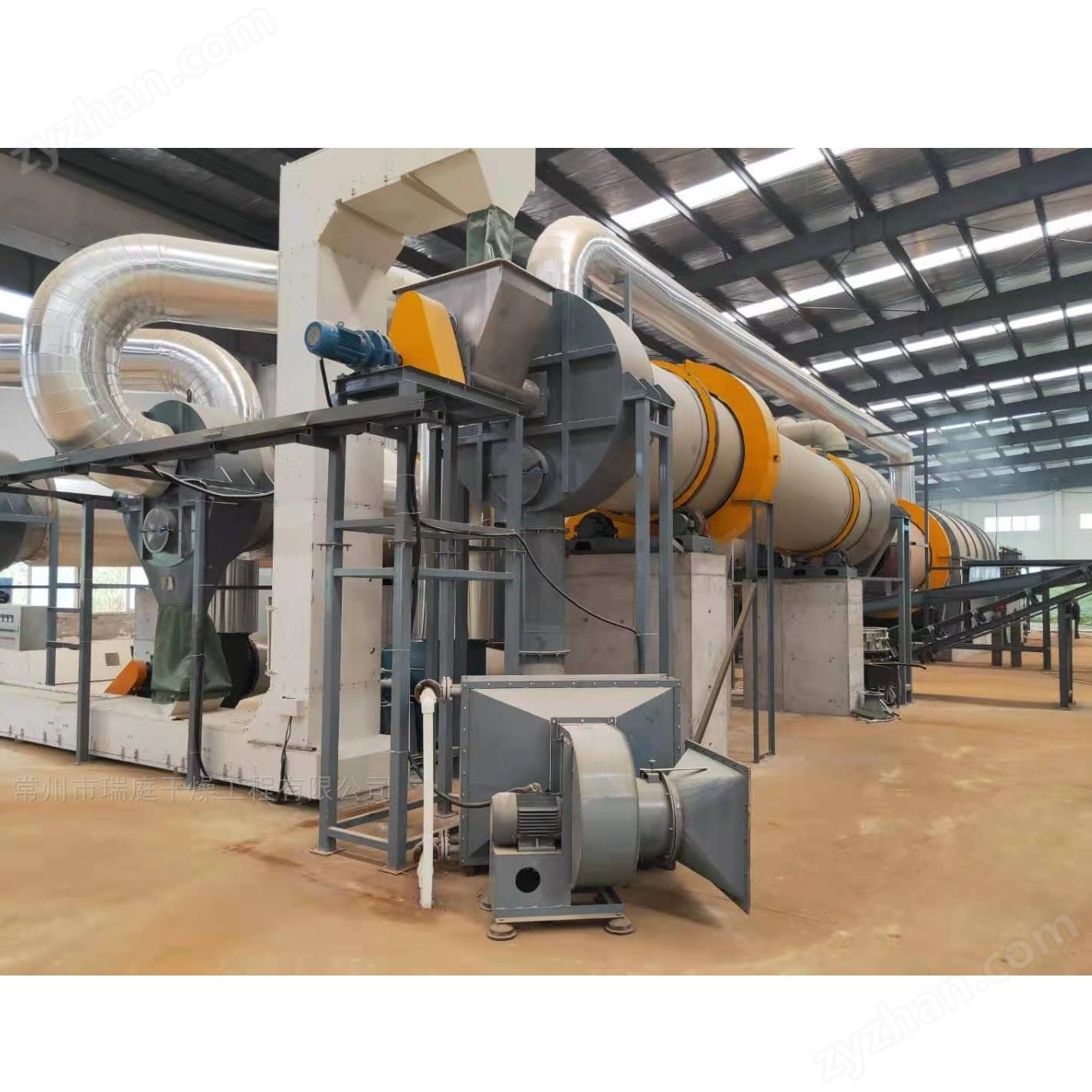
Rotary drum dryer, as an efficient and continuous industrial drying equipment, is widely used in various fields such as chemical industry, metallurgy, agriculture, and food processing. The core design utilizes a tilted rotating cylinder structure, combined with an internal plate copying device, to achieve sufficient contact between the material and the heat medium, completing efficient dehydration treatment. The device is mainly composed of the following key modules, each of which works together to ensure the stability and reliability of the drying process.
1. Rotating cylinder: dry core carrier
The rotating cylinder is the core component of the dryer, usually composed of a steel cylindrical cylinder with a tilt angle of 0.5-5 degrees, which facilitates the movement of materials from high to low under the action of gravity. The inner wall of the cylinder is equipped with forward facing plates, which repeatedly pick up and scatter materials during the rotation of the cylinder, forming a uniform material curtain, significantly increasing the contact area with hot air, and promoting water evaporation. The inclination angle of the cylinder can be adjusted according to the characteristics of the material to meet different drying needs, ensuring that the material stays in the cylinder for the best effect.
2. Heat source system: providing drying energy
The heat source system provides necessary thermal energy for the drying process, usually including heating devices such as burners or steam generators, supporting various forms of heat sources such as hot air, high-temperature flue gas, or water vapor. The choice of heat source directly affects drying efficiency and energy consumption. For example, in food processing, low-temperature hot air can avoid nutrient loss of materials, while in the chemical industry, high-temperature flue gas is suitable for rapid dehydration of high moisture materials. The system design needs to ensure even distribution of heat and avoid local overheating or uneven drying.
3. Feeding device: a bridge for material import
The feeding device consists of a feeding machine and a feeding machine, responsible for continuously and stably conveying wet materials to the high entrance of the rotating cylinder. This module typically includes a conveyor belt or screw conveyor to ensure uniform distribution of materials and prevent blockage or accumulation. The feeding speed can be dynamically adjusted according to the processing capacity of the cylinder to match the continuity requirements of the drying process, especially suitable for the processing of high viscosity or easily clumped materials.
4. Discharge device: key to finished product output
The discharge device is located at the lower end of the cylinder and includes an unloader and a cyclone separator, used to collect and discharge the dried finished materials. The unloader is designed as a continuous mechanism to ensure that the material quickly separates from the cylinder after drying, avoiding secondary moisture absorption. The cyclone separator separates small particles from the exhaust gas, improves the purity of the finished product, and reduces environmental pollution. The efficient operation of this module is essential to keep the drying process automated.
5. Transmission and Support System: Drive and Stability Guarantee
The transmission system consists of a motor, a reducer, and a gear device, which drives the rotating cylinder to rotate at a constant speed. The speed is usually adjustable to adapt to different material characteristics. The support system includes rollers and rolling rings to ensure stable operation of the cylinder in an inclined state, reducing vibration and wear. Auxiliary components such as cooling devices (such as hollow shaft water-cooled structures) can prevent overheating and extend equipment life. These systems work together to ensure the reliability and low maintenance requirements of the dryer during long-term operation.
6. Auxiliary module: Enhance overall efficiency
The auxiliary module covers the induced draft fan, distribution cabinet, and dust removal device. The induced draft fan promotes the flow of hot air and enhances heat exchange efficiency; Centralized control of equipment operating parameters in distribution cabinets to achieve automated operations. Dust removal devices (such as cyclone separators) treat exhaust gases in compliance with environmental standards. These auxiliary components, although not directly involved in drying, play a critical role in improving energy efficiency, reducing energy consumption, and ensuring operational safety.
The structural design of the rotary drum dryer reflects engineering wisdom, with each module working closely together to form an efficient closed loop from material import to finished product discharge. Its wide application benefits from its adaptability to different materials, such as ore, metal powder, or agricultural straw, all of which can optimize the drying effect by adjusting parameters. With the development of industry, this equipment continues to be optimized and has become an important solution in modern drying processes.