-
E-mail
461985491@qq.com
-
Phone
13665179222
-
Address
Building 5, Ruiyun, Xishan Science and Technology Entrepreneurship Park, No. 99 Furong Middle Third Road, Xishan Economic Development Zone, Wuxi City, Jiangsu Province
Famafu (Wuxi) Filtration Technology Co., Ltd
Core functions and practical operation points of fluidized bed capture bags
Date: 2025-10-23Read: 93
The fluidized bed capture bag is an important supporting component of fluidized bed drying, granulation and other equipment. It is mainly installed at the top of the equipment or at the air flow outlet, and intercepts the dust generated during the material processing process through filtration. It not only avoids the pollution of dust discharge to the environment, but also reduces material loss and protects downstream equipment. The following provides a detailed explanation from two aspects: core functions and key points of use and maintenance:
1、 The core function of fluidized bed capture bag
•Dust capture and airflow purification
During the operation of a fluidized bed, the dust generated by the disturbance of the airflow flows upward with the airflow. The capture bag intercepts the dust particles on the surface or inside of the bag body through a fiber filtration structure, allowing only clean airflow to pass through. Selecting the appropriate filter bag based on the particle size of the material dust can ensure that the dust concentration in the exhaust airflow meets environmental requirements, prevent dust from spreading to the workshop, and protect the health of operators.
•Protecting equipment and material recycling
Capture bags can prevent dust from entering downstream components such as fans and pipelines in fluidized beds, avoiding dust adhesion that can cause fan wear and pipeline blockage, reducing equipment failures, and extending the overall service life of equipment. For material dust with recycling value, the intercepted dust can be collected through dust cleaning and reused in production, reducing material waste and improving resource utilization.
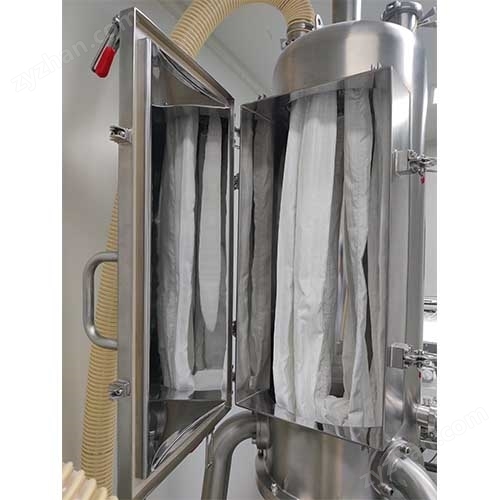
2、 Key points for use and maintenance of fluidized bed capture bags
•Installation and adaptation precautions
Before installation, confirm that the specifications of the capture bag match the model of the fluidized bed equipment to avoid size discrepancies that may result in poor sealing or decreased filtration efficiency; During installation, tightly fit the opening of the capture bag with the equipment flange or clamp structure, and install sealing gaskets if necessary to prevent dusty airflow from leaking out through gaps; If the capture bag is equipped with a support frame, it is necessary to ensure that the frame is in good contact with the bag body without wrinkles, to avoid wear and tear on the bag body caused by the edges and corners of the frame.
•Monitoring and Control of Operation Process
Regularly monitor the pressure difference on both sides of the capture bag during equipment operation. If the pressure difference gradually increases, it indicates that there is too much dust accumulation in the bag body, and the dust cleaning device needs to be started in a timely manner; Control the frequency and intensity of dust cleaning, excessive frequency can easily cause damage to the fibers in the capture bag, and failure to do so in a timely manner can increase equipment operating resistance; At the same time, observe the dust situation in the exhaust airflow. If the content is abnormal, stop the machine to check if the capture bag is damaged and replace it in a timely manner.
Cleaning and replacement maintenance
When the capture bag is used for a period of time or the filtration efficiency significantly decreases, offline cleaning is required: reusable capture bags should be blown with compressed air from the inside out to remove dust, or rinsed with clean water, avoiding the use of strong acid and alkali cleaning agents; After cleaning, it needs to be dried before installation. If the capture bag is damaged, the fiber is aged, or the filtration accuracy does not meet the standard, it should be replaced in a timely manner. When replacing, the old bag should be stored in a classified manner to prevent dust from scattering; Unused new capture bags should be stored in a dry and ventilated environment to avoid moisture and direct sunlight that may cause material deterioration.