-
E-mail
info-china@gerresheimer.com
-
Phone
18661195281
-
Address
Building 3, Rail Transit Industrial Park, No. 355 Longjin Road, Changzhou City, Jiangsu Province
Gresham Plastic Packaging (Changzhou) Co., Ltd
Gresham database empowers rapid market launch of new drugs
Date: 2025-07-18Read: 4


Whether it is a new drug or a modified drug, in order to achieve timely and cost-effective market launch, a significant amount of energy and resources need to be invested throughout the entire product development cycle. Although the ultimate success is attributed to the Marketing Authorization Holder (MAH), raw material and packaging material suppliers also play a crucial role in simplifying the product registration, re registration, or change process. One of the core support tasks is to provide key data for the supplied materials, including active pharmaceutical ingredients (APIs), excipients, and primary packaging materials. Without this data, pharmaceutical companies will have to spend a lot of time and cost generating relevant information on their own. In this field, Gerresheimer is at the forefront of the industry. Its unique and freely available plastic packaging product database provides strong support for global pharmaceutical companies, helping them efficiently tackle the challenges of choosing suitable packaging solutions and ensuring regulatory compliance throughout the entire product lifecycle.
Brief Overview of Regulatory Challenges
Packaging plays a crucial role in the development and production of any drug or biological product, and is often deeply involved from the early stages of research and development. Product packaging not only has multiple functions, such as providing physical protection, effectively isolating external factors such as air, moisture, and pollutants, but in some cases, it is also an important component of the drug delivery system.
Regulatory agencies require that the primary packaging of drugs must be suitable for the packaged drugs to ensure product quality and ensure that the drugs are delivered to end-users in the expected form. Regarding the requirements for drug packaging, relevant guidelines are provided by the International Technical Coordination Organization for the Registration of Medicines for Human Use (ICH), while local guidelines are issued by relevant drug regulatory agencies, such as the European Medicines Agency (EMA), the US Food and Drug Administration (FDA), Health Canada, the Australian Therapeutic Goods Administration (TGA), the New Zealand Medical Safety Authority (MedSafe), and Japan's Medicines and Medical Devices Agency (PMDA). In addition, the General Technical Document (CTD) provides unified technical guidelines and pharmacopoeial monographs applicable to specific countries or regulatory regions, such as the Japanese Pharmacopoeia, the United States Pharmacopeia (USP), the European Pharmacopoeia, and the European Medicines Agency (EDQM).

The registration process requires the collection of detailed technical specifications and the systematic organization of all important data related to the product and its packaging for use in regulatory application materials. The registration requirements of the European Union and the United States are representative, usually requiring the following information on drug and packaging registration:
- Material name
- Chemical name
- Product Description
- Identification of polymer types
- Size
- Applicability
- Technical specifications
- Non pharmacopoeial analysis methods (validation data required)
The type and level of information required depend on the dosage form and administration route. For example, for packaging systems of injectable or inhaled drugs, the required information is often more detailed than for oral solid preparations. Moreover, compared to powder or solid formulations, liquid formulations typically require more detailed information as liquids are more likely to interact with packaging materials. In terms of packaging, the key areas of focus include: protective performance (including spectral transmittance and water vapor transmittance testing); Compatibility between packaging and specific dosage forms; Meet the safety requirements of relevant regulations (such as the European Pharmacopoeia or the United States Pharmacopoeia); Requirements and guidelines related to food contact and pharmaceuticals; And performance related to the specific risks that may arise when packaging specific drugs.
A complex situation is that the registration process may vary in different regions, depending on the specific requirements of local regulatory agencies. For example, when registering in China, it is necessary to conduct relevant tests according to local requirements and submit additional statements. In addition, there may be different registration requirements depending on the type of drug (such as original research drug or generic drug).
Usually, if a product undergoes any changes at any time, such as qualitative or quantitative changes in its composition, replacement of suppliers, or changes or modifications in packaging materials (including accessories, shape, or size), the manufacturer must also submit a corresponding change request. There may be many reasons for changes in raw materials, packaging types, suppliers, shapes, or designs, among which the most common include: reducing or gradually phasing out certain raw materials, potentially improving specific packaging characteristics, optimizing overall packaging, and economic considerations. The implementation of changes must be as smooth as possible and minimize the impact on the business. At the same time, it is necessary to evaluate the impact of these changes at the registration level based on the specific product registration requirements.
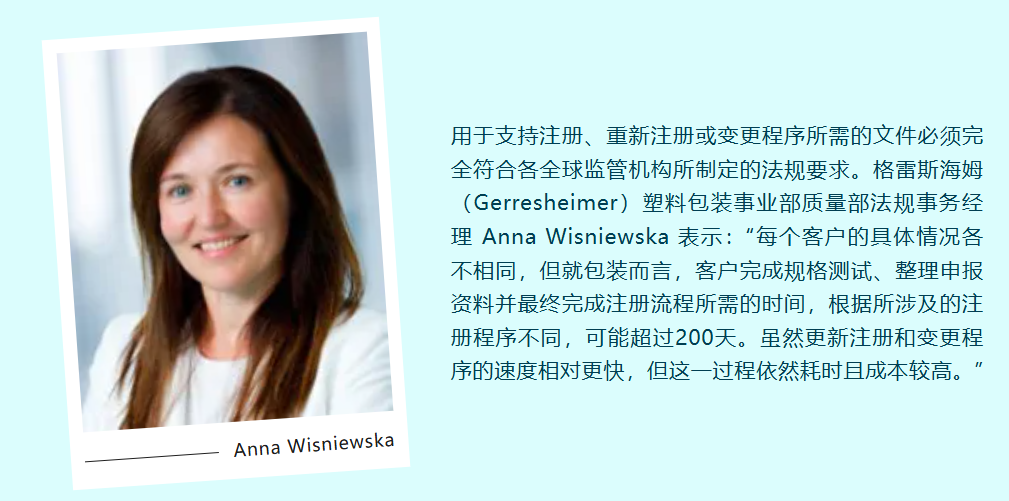
In fact, the preparation work before registration is very time-consuming, "Holder added." Just taking stability testing as an example, if a product undergoes significant changes, it usually requires at least 3 months of testing, sometimes even up to 6 or 12 months. And before the actual testing begins, there is still a lot of work to be done. "By providing a comprehensive and systematic database of plastic packaging product technical specifications, covering all necessary parameters and standards, Gracheim helps customers save time and costs in this process, supporting them to quickly collect all key data required for regulatory reporting.
How does Grasheim's product database support the registration process

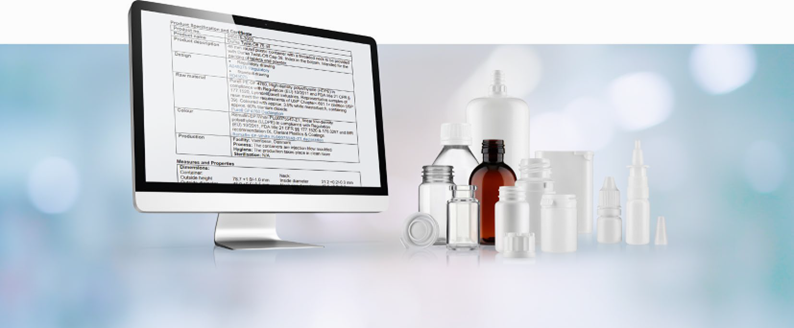
For a long time, Gracheim has been well aware that generating and collecting information is a daunting task for the pharmaceutical industry. To this end, the company has created a one-stop product database for centralized storage of all relevant data for the products it supplies. Nowadays, this easily accessible and continuously updated cloud system enables packaging customers to instantly access a large amount of detailed information, and all content meets relevant regulatory requirements. As confirmed by the client, this system can greatly reduce the time they need to prepare their application materials. In the past, it took two weeks, but now it only takes two minutes to complete, "said Nico Sch ö nfeld from PACKSYS company.
This database is not only used by experts in Gracheim to quickly answer customer questions and support their processes, but customers can also access the database directly for free. This enables all relevant packaging information required for product registration to be viewed and downloaded in real-time.
The content provided by the database
This product database provides a standardized toolkit that includes timely and available resources to support the registration process for product packaging. This system complies with the requirements of 21 CFR Part 11 of the US Food and Drug Administration (FDA), comprehensively displays information on all standard products, and supports customers' internal document preparation, testing, and approval processes through relevant certificates and test results. In this database, users can find all the relevant information they need, including:
- Standard product series, including recommended accessories
- Raw materials and masterbatch
- Test results, such as child resistant opening (CR), water vapor transmission rate (MVT), spectral transmission rate (ST), relevant European Pharmacopoeia and United States Pharmacopoeia test results, etc
- Packaging technical specifications
- Quality control information
- Declaration of conformity
- Size and performance parameters
- Label information
- Sterilization and bioburden situation
This rich information resource is easy to share, print, or insert into other documents, and is maintained by Gracheim's quality and regulatory affairs team to ensure that the information for each product is always up-to-date.
Once we obtain new information from suppliers, we immediately enter it into the database and associate it with the corresponding products, "said Wishiewska." It is crucial to respond quickly to new information or regulatory updates because only by ensuring that documents are always fully effective can we truly support every database user
This database not only plays a crucial role in the information collection process of product registration, but also serves as a powerful reference resource for pre registration work. For example, in the research and development (R&D) phase, measurement data and material properties, product drawings for packaging solutions, and USP test results such as water vapor transmission rate (MVT) and spectral transmission rate (ST) are all crucial information. In terms of quality control, the database provides information on the most common types of defects and their corresponding acceptable quality levels (AQLs). In terms of regulatory affairs, the database also includes declaration documents from raw material suppliers, as well as compliance statements for registration and certification.
With the help of this database, manufacturers can easily compare data and determine suitable packaging solutions for new and existing products, as well as choose appropriate packaging and labels based on their own filling production line needs. In addition, the database can also help companies select the most environmentally friendly packaging solutions based on factors such as shelf life and multi-level packaging materials.

Fully utilize the advantages brought by this unique resource
Our client points out that Gresham is the only packaging solution provider that can provide direct access to databases that comply with the requirements of the US Food and Drug Administration (FDA) Chapter 21, Part 11 of the Federal Regulations. ”Haas commented.
Currently, 572 customers have access to the database. During 2023, the number of customer self logins reached 3028, while in the first half of 2024, there were 1695 logins. During the same period, Gresham employees logged in 42837 times and 20574 times respectively. On average, there are about 125 login records per day, which clearly indicates that the database is widely used. Not only do many customers directly obtain information from it, but employees of Gracheim also use the database to collect data for others to use.

Wisniewska and Haas concluded, "We can no longer imagine a situation without this database, as it is not only crucial to us, but also has irreplaceable value for our customers." At PACKSYS, Nico Sch ö nfeld also deeply understands the significant advantages of accessing this database. In the past, we needed to contact the relevant person in charge via email, wait for feedback, obtain technical specifications or clarify questions, and the whole process was time-consuming and inefficient, "he said. Nowadays, we can directly access databases, view and download all relevant files at any time. This is a great efficiency improvement and a real competitive advantage
Due to the centralized availability of technical specifications, all employees of PACKSYS can independently obtain the required information, and we are confident that all documents are kept up-to-date, "Sch ö nfeld continued. This greatly reduces the workload of our data management, internal sales, and change management departments. The database significantly simplifies daily work, optimizes team collaboration, and allows us to quickly, conveniently, and efficiently access all important information