-
E-mail
info-china@gerresheimer.com
-
Phone
18661195281
-
Address
Building 3, Rail Transit Industrial Park, No. 355 Longjin Road, Changzhou City, Jiangsu Province
Gresham Plastic Packaging (Changzhou) Co., Ltd
Production process and quality control of oral solid plastic bottles
Date: 2025-10-24Read: 5
Oral solid drugs are usually produced in the form of tablets, capsules, etc., and the packaging of these drugs has a significant impact on their quality and safety. Oral solid plastic bottles are usually made of plastic and can effectively protect drugs from external environmental influences. Its production process and quality control play a crucial role in ensuring drug stability, safety of use, and production efficiency.
1、 Production process
1. Raw material selection:Oral solid plastic bottleThe main raw materials are polyethylene (PE), polypropylene (PP), polyethylene terephthalate (PET), etc. When choosing these plastic materials, the main considerations are their chemical stability, moisture resistance, mechanical strength, transparency, and compliance with pharmaceutical packaging standards. Medicinal packaging bottles also require materials that are non-toxic, free of heavy metals, and have good sealing properties.
2. Blow molding: Blow molding is one of the commonly used production processes. Firstly, the plastic particles are softened by heating, and then the preform is formed through injection molding process. The preform is usually a hollow semi-finished bottle with a shape similar to the final product. This process can produce bottles with high strength and good sealing, and has high production efficiency, making it suitable for large-scale production.
3. Injection molding: In addition to blow molding, injection molding is also an important production process. Injection molding is generally used for producing bottle caps. After heating the plastic raw material to a molten state through an injection mold, it is injected into the mold, cooled and solidified to form a bottle cap. The injection molding process can precisely control the size, shape, and thread accuracy of the bottle cap, ensuring the sealing of the bottle cap.
4. Bottle body processing: During the production process, the bottle body may require some subsequent processing, such as surface spraying, printing, coating, etc. These treatments not only enhance the appearance of the packaging bottle, but also increase the protection of the bottle body.
5. Bottle mouth design: The bottle mouth design should ensure the safe closure of the medication and facilitate user access. The bottle mouth is usually designed with a rotating bottle cap, which should have good sealing to prevent drugs from getting damp or contaminated. In the design of the bottle mouth, it is necessary to ensure that the threads of the bottle mouth are tightly matched with the threads of the bottle cap to avoid air leakage or leakage during transportation and use.
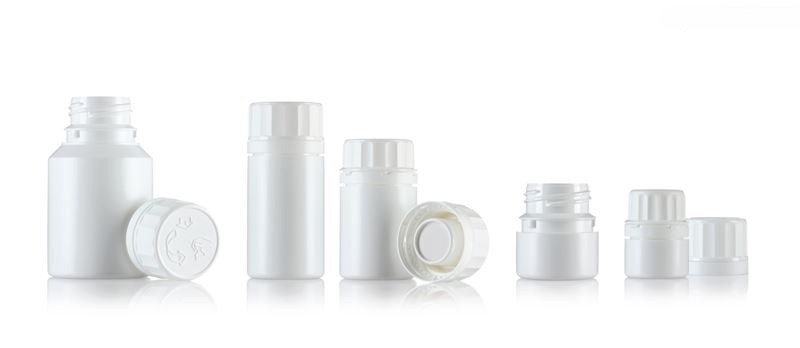
2、 Quality control
The quality control of oral solid plastic bottles is a key link in ensuring the safety, stability, and compliance with standards of drug packaging. The main quality control measures include:
1. Raw material inspection: All raw materials must undergo strict inspection before entering the production factory, including chemical composition analysis, heavy metal content testing, etc., to ensure that the raw materials comply with the relevant regulations of pharmaceutical packaging. The physical properties of raw materials, such as melting point, density, transparency, hardness, etc., should also be comprehensively tested to ensure their suitability for use in pharmaceutical packaging.
2. Production process control: Strictly control each process link in the production process, including temperature, pressure, time, etc. of injection molding and blow molding. The parameter changes in each stage will affect the quality of the final product. For example, during blow molding, temperatures that are too high or too low can cause deformation or cracking of the bottle body, and uneven wall thickness can affect the strength and sealing of the bottle.
3. Size and appearance inspection: Each batch of bottles produced needs to undergo size inspection to ensure that the height, diameter, and mouth size of the bottle body meet the design standards. Visual inspection requires checking the bottle body for defects such as cracks, bubbles, impurities, etc. In addition, for the spraying, printing and other treatments on the surface of the bottle, it is necessary to ensure that there are no quality issues such as peeling, scratches, fading, etc.
4. Sealing test: Sealing is one of the key requirements for drug packaging. During the production process, strict testing is required for the sealing of the bottle cap and body to prevent drugs from being affected by external factors such as moisture and oxygen due to inadequate packaging sealing. The commonly used sealing testing methods include pressure leakage test and water immersion test to ensure that the packaging will not leak during transportation and storage.
5. Stability and weather resistance testing: It is necessary to have good weather resistance and be able to adapt to different storage environments. After production, bottles are usually subjected to environmental simulation tests such as high temperature, low temperature, and humidity changes to ensure that they will not deform, break, or age under harsh weather conditions. In addition, the bottle also needs to undergo ultraviolet testing to ensure that the quality of the drug will not change under ultraviolet irradiation.
The production process and quality control of oral solid plastic bottles cover every link from raw material selection to the production process. Through strict process control and multiple quality inspection measures, it is possible to ensure that the final product has excellent performance, ensuring the safety, stability, and effectiveness of the drug.