-
E-mail
gzsinoinstrument@163.com
-
Phone
13802743802
-
Address
Room 2201-03, Building A1, Greenland Central Plaza, No. 112 Science Avenue, Huangpu District, Guangzhou City
Guangdong Southeast Sci Tech Innovation Technology Co., Ltd
IKA New Product! Carry with you, homogenize as you please
Date: 2025-11-21Read: 5
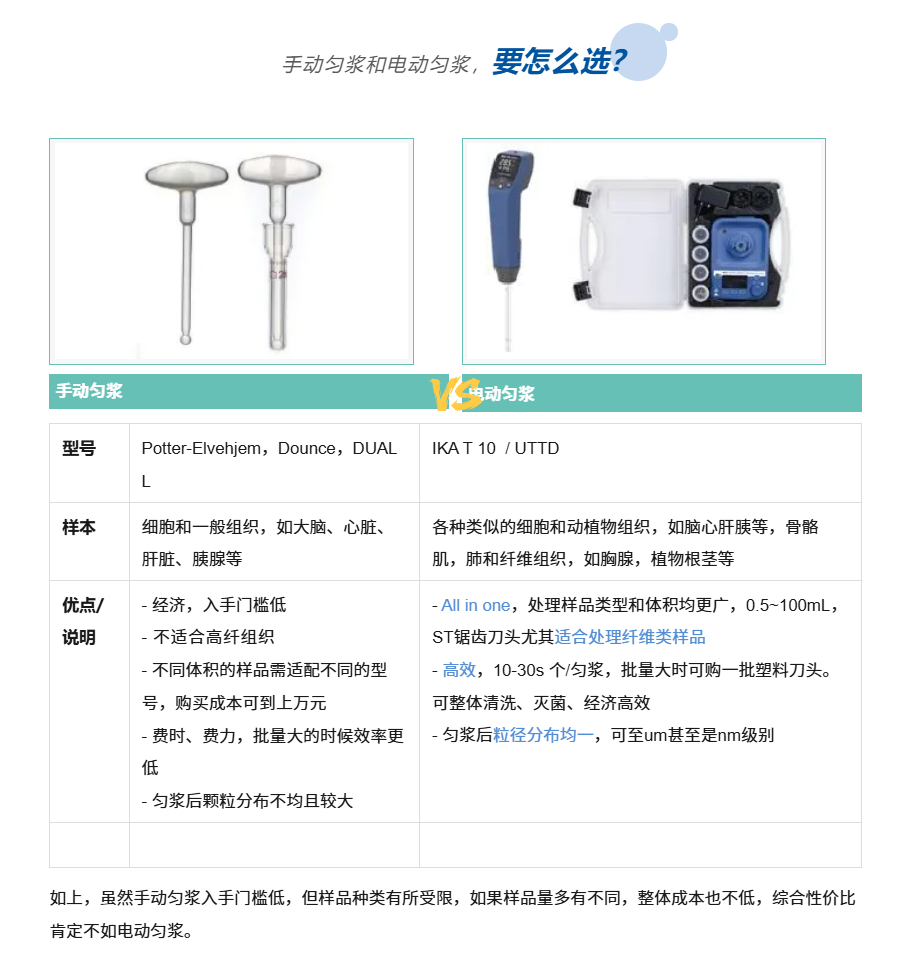
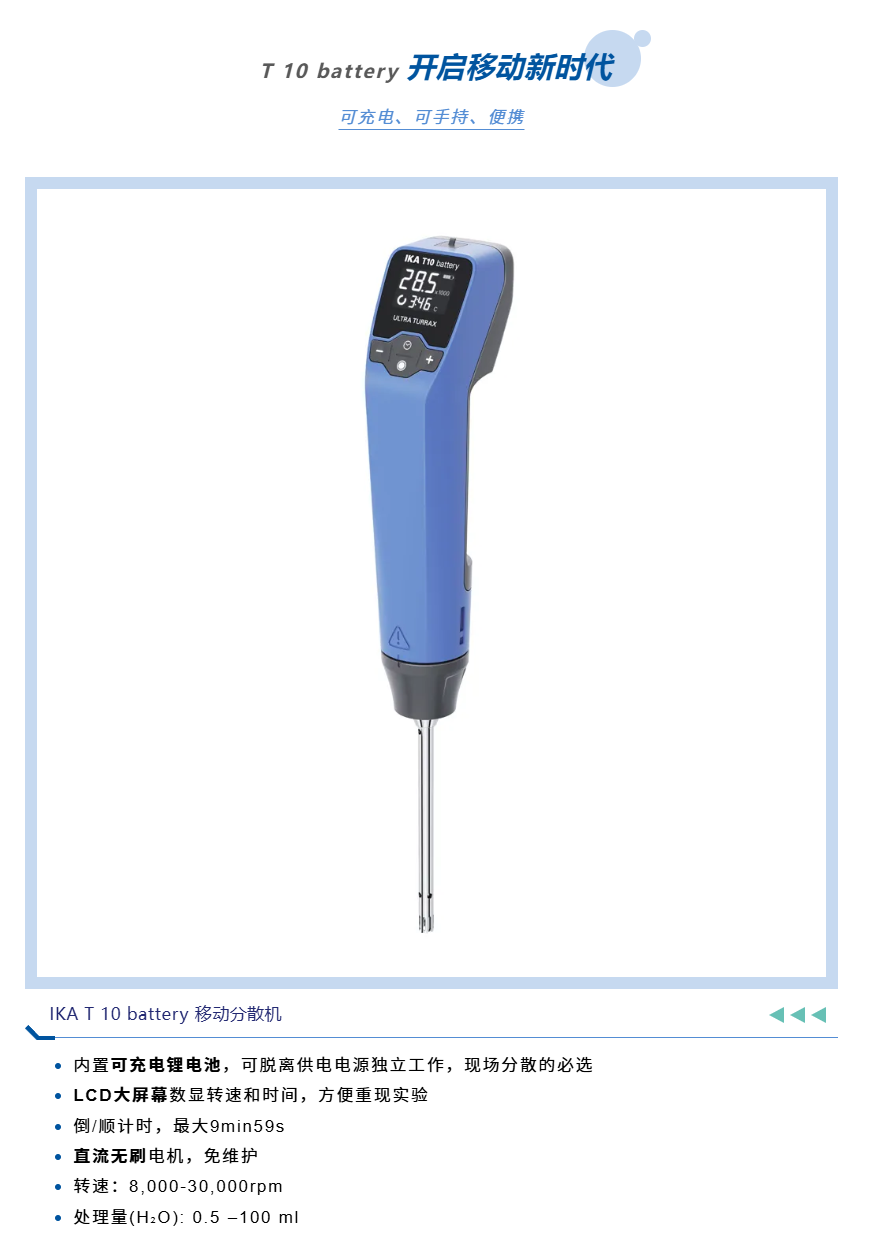
In life science research, homogenization of animal and plant tissues and cell lysis are key steps in the pre-treatment of molecular biology, biochemistry, and pathology experiments to extract enzymes, proteins, or DNA/RNA. The key to accurate and reproducible experiments is to achieve sufficient fineness and uniformity in the homogenized tissue!Commonly, manual homogenizers such as Potter Elvehjem, Dounce, DUALL homogenizers, and electric homogenizers such as IKA T10 mobile dispersers are used.
| model | Potter-Elvehjem,Dounce,DUALL | Th t 10 / uttd |
| sample | Cells and general tissues, such as the brain, heart, liver, pancreas, etc | Various similar cells and animal and plant tissues, such as brain, liver, liver, pancreas, skeletal muscle, lungs, and fibrous tissues, such as thymus, plant rhizomes, etc |
| Advantages/Explanation | -Economy, low threshold for entry -Not suitable for high fiber tissue -Samples of different volumes need to be adapted to different models, and the purchase cost can reach tens of thousands of yuan -Time consuming, labor-intensive, and less efficient when in large quantities -Uneven and large particle distribution after homogenization |
-All in oneProcessing a wider range of sample types and volumes, ranging from 0.5 to 100 mL, with ST serrated blades being particularly effectiveSuitable for processing fiber samples -efficient, 10-30s per homogenate, a batch of plastic blades can be purchased for large quantities. Can be cleaned, sterilized, and economically efficient as a whole -After homogenizationUniform particle size distributionIt can reach the level of um or even nm |