-
E-mail
ec@hkaco.com
-
Phone
13412598543
-
Address
Building T6, PCI Future Community, No. 30 Kaitai Avenue, Huangpu District, Guangzhou City
Guangzhou Hongke Electronic Technology Co., Ltd
Case Study | Introduction to the Production of Alginate Microspheres in Microfluidic Applications
Date: 2025-12-25Read: 67

1 |
microfluidicsSystem: Applied to the production of alginate microspheres
1 alginatemicrosphereProduction Introduction
Hydrogel based delivery systems are increasingly being used in various fields, including packaging, protection, and the release of bioactive substances in the pharmaceutical, health products, and food industries, as well as the cultivation and implantation of cells/bacteria/microorganisms, and cell based gene manipulation in biological research.

Sizes within the range of 50 µ mofHighly monodisperseAlginate microspheres——Dian ChengThe experimental results of the Elveflow team.
2 Use alginate saltmicrospherethe advantage of
Hydrogel microspheres made of biopolymers are particularly suitable for biological encapsulation because of their biocompatibility and generally involve mild preparation conditions that do not change biological properties.
Among them, anionic polysaccharide alginate microspheres have special advantages because they are easy to form or degrade, can provide a non-toxic microenvironment (promote cell/microbial growth), and have extremely low cost.
Generally, alginate micro gel is prepared by diffusing the crosslinking agent externally into or between dispersed aqueous alginate droplets, or by internal release.
In addition, the size and shape of microspheres are often strictly controlled, as for many applications, microspheres must have uniform size and spherical shape.
Alginate can be used for various applications, such as:
l Antibody encapsulation
l Formation of Alginate Fibers
3 alginatemicrosphereThe Mass Production Method
The common method for producing alginate microspheres is to squeeze the alginate mixture into a calcium solution. However, this method has significant limitations as the generated microspheres are very large in size (>500 microns) and non sphericalshapeAnd the reproducibility is very poor.
4 UseMicrofluidicscontrolTechnical production of alginatemicrosphere
thistextWe will demonstrate how to easily prepare highly monodisperse alginate microspheres using microfluidic droplet generation technology. The specific steps are as follows:
Firstly, we will prepare alginate/EDTA calcium solution.againGenerate micro droplets of the solution using a microfluidic system. Finally, calcium compounds are released into the droplets through a pH regulator (acetic acid) to crosslink with alginate, resulting in the formation of calcium alginate microspheres. We have tested various experimental conditions to obtain highly monodisperse droplets with sizes ranging from 50 micrometers. Similar settings can also be used to obtain microspheres of other sizes.
If you would like to learn more information, please feel free to contact our expert team at any time!
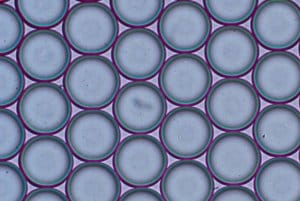
Sizes within the range of 50 µ mofHighly monodisperseAlginate microspheres——Dian ChengThe experimental results of the Elveflow team.
5 alginatemicrosphereproductionEquipment List
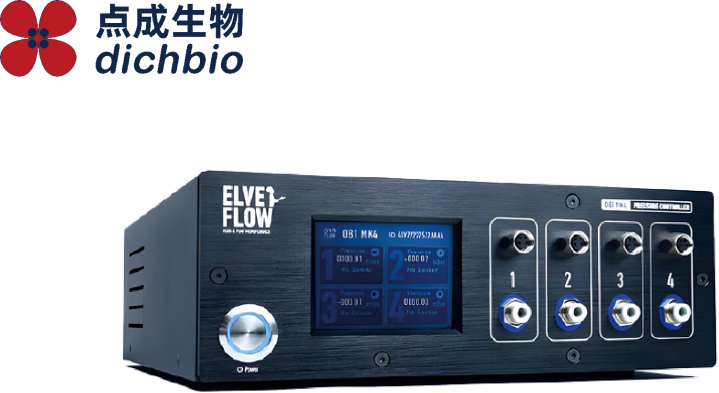
OB1trafficcontroller |
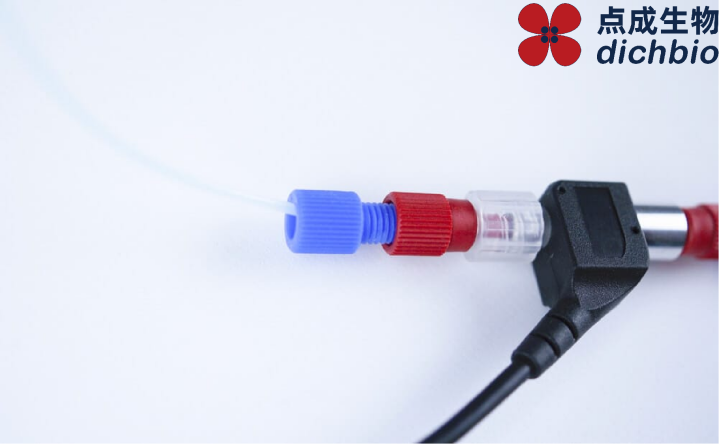
2xflow sensorMFS2 0/7 µL/minn |
|
|
|
Ruhr Lock Kit Entry Pack+ 1/32Inch pipeline + 1/32Inch kit+ 23Gneedle |
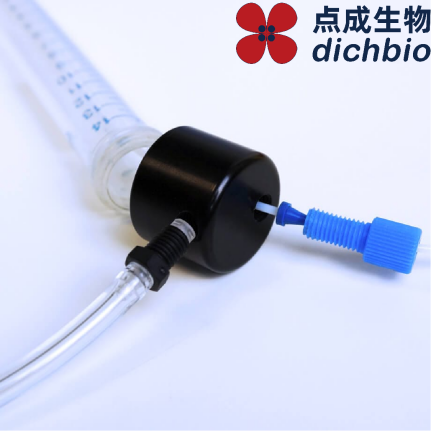
2x 15 mL storage tanks |
|
|

6 alginatemicrosphereproduction materials
Hardware:
l DC-OB1 flow controller, with at least two channels,pressure range0~2000 mbar
l 2aflow sensorDC-MFS2,Flow velocity range0~7 µL/min
l Ruhr lockStarter kit+1/32 inchesTube+1/32inchSleeve+23G needle
l 2x 15mLliquid storage tank
l Microfluidic chip (hydrophobic channel)
l Microscope(For observation,Optional)
l high-speedCamera(Used for recording droplets,Optional)
chemicals:
l Alginate (low viscosity)
l Calcium-EDTA
l acetic acid
l containhaveHFE7500 oil with 2% surfactant
l Droplet fragmentation solution
7 alginatemicrosphereofstep by stepproduction
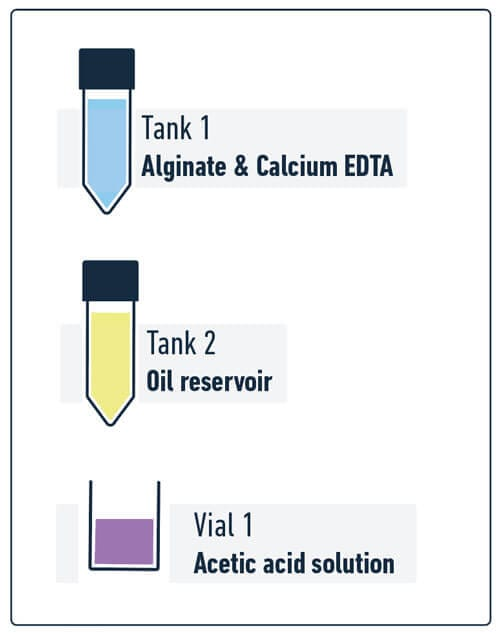
Step 1Solution Preparation
Container 1Alginate and calcium-EDTA
Mix 2%(Weight/Weight)Algae acid salt solution, and add 0.5M calcium to the mixture-EDTA。
Bottle 1:vinegarAcid solution
Prepare acetic acid solution. According to the required gel time, use up to 2% acetic acid to achieve rapid gel. If slower gel is required, use less than 0.2% acetic acid (but it is not recommended to use less than 0.05% concentration).
Step 2: Generate alginate/EDTA calcium droplets
Microfluidic device for generating highly monodisperse droplets with a size range of 50 micrometers.

Step 3: AddvinegarAcid releases Ca2+Ions, thusPromote crosslinking of calcium alginate and formation of microspheres
l Add acetic acid solution and mix to ensure better contact between acetic acid and the droplets.
l Acetic acid will react with calcium carbonate, releasing calcium ions. These calcium ions undergo cross-linking reaction with alginate to generate calcium alginate microspheres


Step 4: Add demulsifierTo release microspheres from droplets
l After gel, drop/lotion demulsifier shall be usedTo break the droplets.
l The demulsifier will remove surfactants from the droplets, thereby releasing alginatemicrosphere.
Point into BiologyProvide you with a one-stop microfluidic solution
Diancheng Biotechnology is deeply involved in the field of microfluidics, providing you with high-precision products including microfluidic pumps, microfluidic chips, organ chips, microfluidic accessories, microscopes, etc. Currently, we have released multiple professional solutions for microfluidic droplet generation, cell culture, synthesis/preparation of nanoliposome particles, organ chips, and more.
If you have any related needs, please feel free to contact us!