-
E-mail
shu@sedpharma.com
-
Phone
15336513721
-
Address
Room 602, 6th Floor, Building 1, No. 2630 Yuhangtang Road (Jingcheng Electric Power Technology Park), Yuhang District, Hangzhou City
Hangzhou Shengde Machinery Co., Ltd
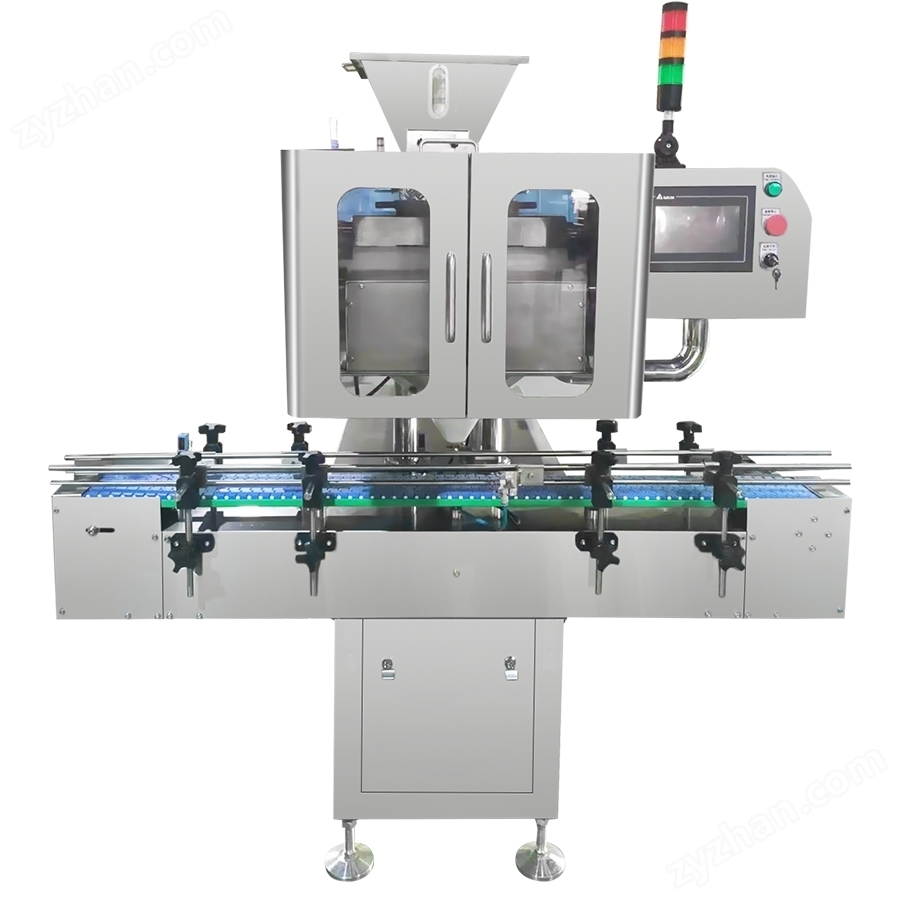
The Process Principle and Wide Application of Electronic Counting Machine
Date: 2025-09-17Read: 5
Electronic counting machine is an automated counting device based on multiple sensing technologies. Its core process principles and application areas are as follows:
1、 Process principle
1. Photoelectric sensing technology
By detecting materials through the transmission or reflection characteristics of light, when particles pass through the sensing area, the photoelectric sensor captures the changes in light and converts them into electrical signals, with a counting accuracy of ± 1 particle.
2. Electromagnetic and capacitive induction
Electromagnetic induction is applicable to metal particles, and the quantity is counted by alternating magnetic field changes, with a frequency of 10-20 times per second.
Capacitive induction utilizes changes in capacitance between materials and electrodes, with small particle errors controlled within 1%.
3. Image recognition technology
High speed cameras capture material images and use sub-pixel level algorithms to identify irregularly shaped particles, improving the counting accuracy of complex materials.
4. Auxiliary system design
The vibrating feeding device (50-100Hz) ensures the orderly passage of particles.
The inner diameter of the counting channel is 1-2mm larger than the maximum diameter of the particles, balancing passability and accuracy.
The temperature compensation circuit ensures stability in environments ranging from -20 ℃ to 60 ℃.
2、 Widely applicable fields
1. Food industry
Used for rapid counting of granular materials such as candy and nuts, significantly improving production efficiency and reducing labor costs.
2. Pharmaceutical industry
Ensure dosage accuracy in tablet counting and comply with GMP production standards.
3. Daily chemical industry
Automated packaging of cosmetics and detergent granules to ensure product consistency.
4. Industrial sector
Precision counting of electronic components, metal parts, etc., suitable for high-frequency production needs.
The electronic counting machine has achieved wide coverage from conventional particles to high-precision materials through the integration of multiple technologies, becoming a key equipment for quality control in modern manufacturing industry.