-
E-mail
sale@zjuee.com
-
Phone
13372416330
-
Address
12th Floor, Building 3, No. 1418-50 Moganshan Road, Hangzhou City
Hangzhou Zeda Instrument Co., Ltd
Working principle of cold chain temperature and humidity recorder
Date: 2025-04-15Read: 6
The working principle of the cold chain temperature and humidity recorder can be divided into the following core modules:
1、 Sensor perception module
1. Temperature sensor: using thermistor, thermocouple or semiconductor material, reflecting the ambient temperature through changes in resistance value. For example, for every 1 ℃ increase in temperature of a thermistor, the resistance value will significantly decrease, and after conversion by a microprocessor, the accuracy can reach ± 0.1 ℃.
2. Humidity sensors: often use capacitive or resistive principles. Capacitive sensors rely on changes in the dielectric constant of moisture absorbing materials to cause fluctuations in capacitance values; Resistance type converts signals through changes in the resistance value of humidity sensitive resistors, with an accuracy range typically from ± 2% RH to ± 5% RH.
2、 Data processing and transmission module
1. Signal conversion: The analog signal collected by the sensor is converted into a digital signal by an analog-to-digital converter (ADC), and processed into a readable numerical value by a microprocessor according to a preset algorithm.
2. Real time transmission: Synchronize and upload data to the cloud platform through 4G/5G networks or satellite communication modules to achieve remote monitoring; When the signal is weak, the data is temporarily stored locally and will be transmitted after the network is restored.
3. Offline storage: Built in memory or external storage card stores historical data, which can be exported to a computer for analysis via USB or Bluetooth after transportation.
3、 Monitoring and feedback module
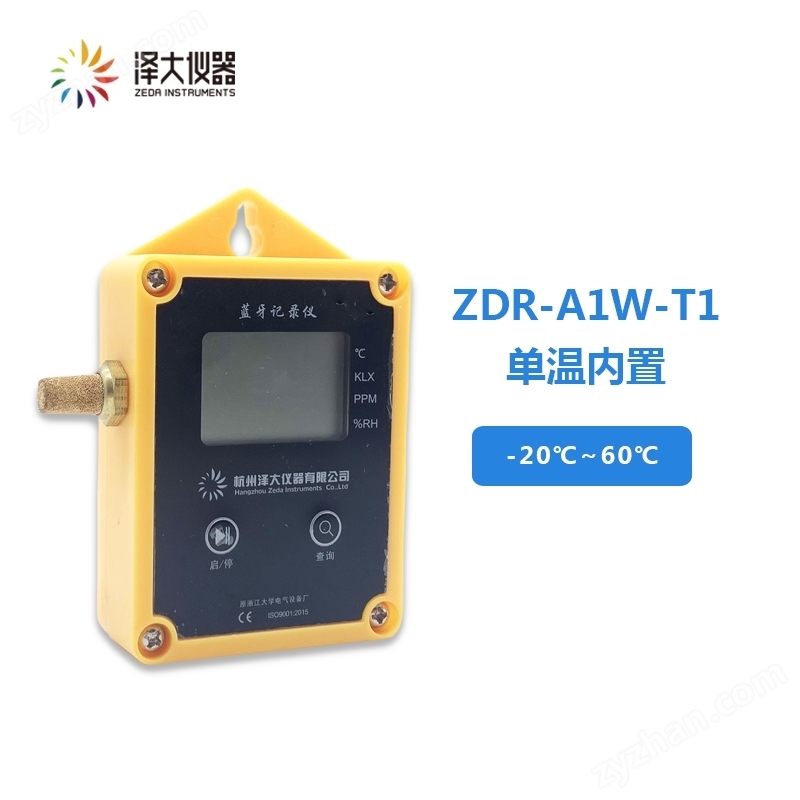
1. Real time display: Equipped with a LCD screen to dynamically display the current temperature and humidity values, some devices support viewing on mobile phones/computers.
2. Abnormal alarm: When the temperature and humidity exceed the set threshold, sound and light alarms are triggered or warning information is pushed to management personnel.
4、 Data recording and analysis module
1. Continuous recording: Store data at a fixed frequency (such as once per minute) to form a complete temperature and humidity curve during transportation.
2. Post analysis: Through specialized software, statistical indicators such as maximum, minimum, and average values can be extracted, and trend charts can be generated to assist in quality traceability.
This technology ensures real-time, accurate, and traceable temperature and humidity data in cold chain logistics through multi module collaboration, and is widely used in the transportation of highly sensitive goods such as food and medicine.