-
E-mail
hexiyiqi@qq.com
-
Phone
13974810586
-
Address
Room 401, 4th Floor, Building 2, Tianma New Energy Technology Industrial Park, Caojiaao, Bairuopu Town, Xiangjiang New Area, Hunan Province
Hunan Hexi Instrument Equipment Co., Ltd
Structural characteristics and safety guidelines for the use of capillary centrifuges
Date: 2025-10-29Read: 4
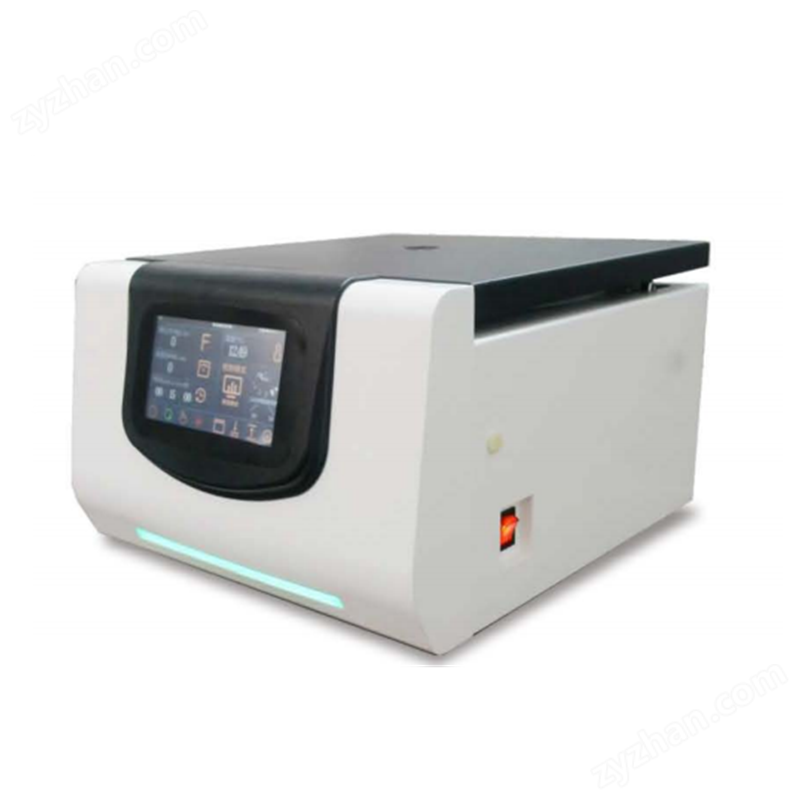
The capillary centrifuge has the core function of "efficient separation of trace samples". By accurately controlling the centrifugal force and separation time, it achieves the component separation of trace samples in the capillary. Its structural design needs to adapt to the fine diameter characteristics of the capillary and the separation requirements of trace samples. During use, it is necessary to balance operational standards and equipment safety, and both support the stable operation of the equipment.
1、 Structural characteristics of capillary centrifuge
1Drive and speed control structure
The driving system is centered around a motor, which can stably output the set speed and drive the capillary rotor to rotate uniformly, ensuring that centrifugal force is evenly applied to the sample; Equipped with a speed adjustment panel, the speed can be set and displayed in real time through a knob or touch screen, making it easy to adjust parameters according to sample types and ensuring consistent separation effects.
2Capillary fixation and rotor assembly
Equipped with a dedicated capillary fixing frame, adapted to different specifications of capillaries, fixed vertically or obliquely through slots or fixtures to avoid displacement and detachment during centrifugation; The quality distribution of the rotor components is uniform, the rotational vibration is small, the sample shaking is reduced, and it is suitable for the stability requirements of trace sample separation.
3Temperature control and observation components
Some models are equipped with temperature control modules, which adjust the temperature of the centrifugal chamber through heating or cooling components to avoid temperature fluctuations affecting the activity of thermosensitive samples; The body is equipped with a transparent observation window, which can visually view the status of the sample without stopping the machine to judge the separation progress, improving the convenience of operation.
4Safety protection structure
The centrifugal chamber is designed to be sealed and equipped with a door lock device, which automatically locks during centrifugation to prevent sample splashing or personal injury caused by accidentally opening the lid; Some equipment has overload protection, which automatically shuts down and alarms when the speed is abnormal or the rotor is unbalanced, to avoid equipment damage or affecting the sample; Anti slip foot pads are installed at the bottom of the body to reduce displacement during operation and improve stability.
2、 Precautions for using capillary centrifuge
1Preparation and inspection before operation
Confirm that the capillary tube is undamaged and the inner wall is clean; Select the corresponding capillary tube according to the sample specifications, install it into the fixing frame to ensure that it is tightly clamped without looseness; Check that the power supply of the equipment is secure and there are no foreign objects inside the centrifuge chamber. Before closing the chamber door, confirm that the fixing bracket is installed in place to avoid rotor collision with the chamber.
2Sample loading and parameter setting
Control the amount of sample loaded into the capillary tube to avoid overflow during centrifugation; After loading, gently tap to release bubbles to prevent affecting separation and layering; The setting of rotational speed and centrifugation time should refer to the characteristics of the sample to avoid excessive rotational speed causing capillary rupture or insufficient time affecting the effect.
3Safety regulations during the operation process
Do not open the cover while the equipment is running. If an emergency stop is required, press the emergency stop button and wait for the rotor to come to a complete stop before opening the cover; During operation, observe for any abnormal vibrations or noises. If they occur, immediately stop the machine for inspection. After troubleshooting, restart the machine; Avoid stacking debris around the device, ensure that the heat dissipation port is unobstructed, and prevent overheating.
4Cleaning and maintenance after operation
After centrifugation, wait for the rotor to come to a complete stop before taking the capillary tube to avoid sample leakage; Clean the extracted capillary tube as required, and confirm that there is no residue on the inner wall when reusing it; Clean the centrifugal chamber, wipe away dust and residue with a soft cloth to avoid corrosion; Regularly check the wear and tear of the fixed frame, replace the slot deformation in a timely manner, clean the heat dissipation port according to the instructions, and ensure the stable operation of the equipment.