-
E-mail
15298818928@163.com
-
Phone
15298818928
-
Address
No. 27 Guotai North Road, Zhangjiagang City, Jiangsu Province
Jiangsu Guolang Machinery Manufacturing Co., Ltd
Laboratory dry granulation machine: structural composition and diverse applications
Date: 2025-12-18Read: 3
The laboratory dry granulation machine is a device that directly compresses powder into particles through mechanical pressure, without the need to add moisture or binders, and is particularly suitable for the processing of heat sensitive and moisture sensitive materials. Its core advantages lie in high efficiency, environmental friendliness, and the ability to significantly improve the solubility and flowability of particles, thus occupying an important position in the research and production of pharmaceuticals, food, chemicals, and other fields. The following provides a detailed introduction from two aspects: structural composition and application scenarios.
1、 Main structural components
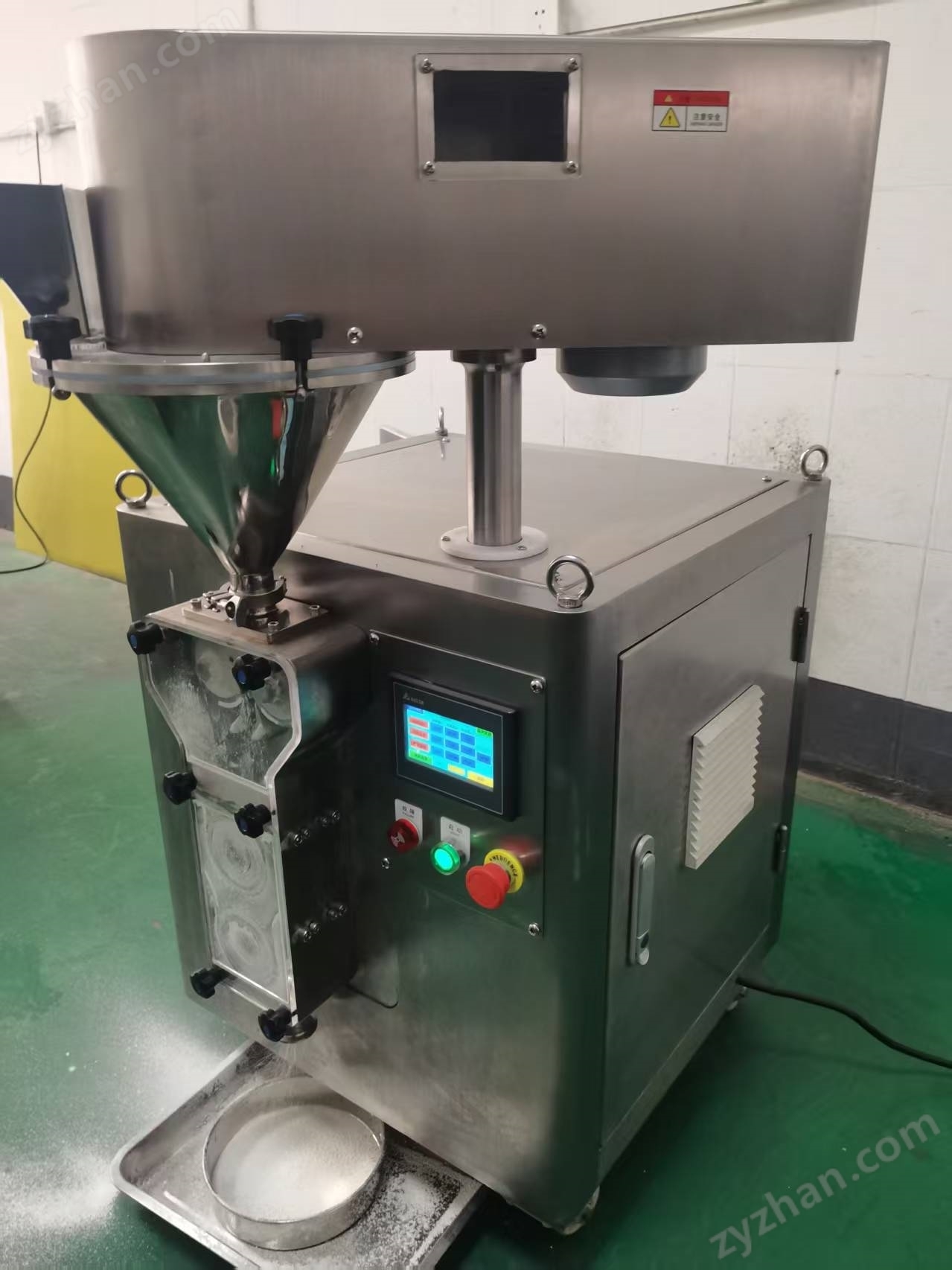
The design of laboratory dry granulation machines usually adopts modular integration to ensure operational flexibility and maintenance convenience. The main structure includes the following core modules:
Feeding system:
Responsible for stably conveying the uniformly mixed powder material to the pressure roller area. The system is usually equipped with horizontal and vertical feeding screws to achieve material degassing and preloading, avoiding problems such as powder agglomeration or insufficient fluidity. For example, some models adopt a Z-shaped dual chamber design, combined with a screw conveyor, which can effectively reduce dust flying and improve feeding efficiency.
Pressure roller component:
As the core component of the equipment, the pressure roller compacts the powder into thin sheets through hydraulic or mechanical pressure. The surface of the pressure roller can be designed with different patterns such as mesh, smooth surface, or grooves to adapt to the characteristics of different materials (such as viscosity or fluidity). The material of the pressure roller is usually stainless steel, which has undergone special treatment to enhance wear resistance and plasticity, ensuring stability during long-term use.
Whole grain unit:
After compression, the thin flakes enter the crushing and granulating machine, and are cut by a crushing knife and classified by a vibrating screen to form uniform particles. Whole grain units are often equipped with multi-stage sieves, with a wide range of adjustable particle sizes to meet different experimental needs. Some models also integrate fine powder recycling function, which returns the screened material to the feeding system for recycling and improves the utilization rate of raw materials.
control system:
Modern models often use PLC intelligent control systems to monitor and adjust key parameters (such as roller pressure, speed, temperature) in real time through a touch screen interface. The system supports one click optimization of particle hardness and density, and has fault self diagnosis function, significantly improving operational convenience and experimental repeatability. For example, the intelligent temperature control module can accurately maintain the working temperature (with an error of ± 1 ℃) to prevent thermal sensitive materials from deforming.
auxiliary module:
Including vacuum feeding device (to reduce dust pollution), water cooling system (to control the temperature of the pressure roller), and whole particle box (to ensure particle uniformity). These modules work together to ensure efficient operation of equipment in laboratory small-scale and multi batch production.
2、 Multiple application scenarios
The laboratory dry granulation machine has a wide range of applications, especially in fields where it needs to avoid the involvement of moisture or solvents, and performs well:
pharmaceutical industry:
Used for the preparation of thermosensitive drugs (such as antibiotics, probiotic preparations) or solvent sensitive active ingredients. Dry granulation can avoid the bonding problem of wet granulation, improve the dissolution rate and bioavailability of particles. For example, in the development of Banlangen effervescent tablets, optimizing the roller parameters can significantly improve particle yield and stability.
food processing:
Suitable for granule molding of instant coffee, chocolate powder and other products. Dry granulation can enhance the flowability and solubility of particles, and improve the taste of products. In the laboratory stage, this technology can quickly verify the feasibility of different formulations and shorten the research and development cycle.
chemical engineering field:
Used for processing materials such as pigments and plastic particles, increasing packing density through compression and reducing transportation costs. Dry granulation method can also avoid the solvent residue problem of traditional wet process technology, which meets environmental protection requirements. For example, in the development of fertilizer granules, this technology can accurately control particle size and uniformity, improving product performance.
Environmental Protection and New Materials:
In the development of environmentally friendly materials such as biodegradable plastics, dry granulation can handle moisture sensitive raw materials to ensure the stability of the particles during subsequent processing. In addition, this technology is also applicable to the molding research of special materials (such as nanoparticles) on a laboratory scale.
3、 Future Trends and Choice Suggestions
With the advancement of Industry 4.0, laboratory dry granulation machines are developing towards intelligence and automation, such as AI parameter optimization and remote monitoring functions. When selecting equipment, it is recommended to pay attention to the following points based on specific needs:
R&D requirementsPrioritize modular design and support for small batch production models to facilitate quick parameter adjustment.
Material CharacteristicsFor viscous or heat sensitive materials, water-cooled temperature control and special pressure roller surfaces are required.
scalabilityConsider whether the equipment supports subsequent process integration (such as tablet pressing or coating) to improve experimental efficiency.
The laboratory dry granulation machine, with its precise structural design and wide applicability, has become an important tool for interdisciplinary research and development, continuously promoting innovation in particle preparation technology.