-
E-mail
ksjt0808@163.com
-
Phone
13338055762
-
Address
No. 1388 Chengbei Road, Kunshan City
Jiangsu Jutian Weighing Equipment Co., Ltd
The Application of Balance in Chemical Experiments
Date: 2025-11-25Read: 7
The balance plays a crucial role in chemical experiments, mainly used for precise measurement of the mass of substances, and is the fundamental tool for quantitative analysis in chemical experiments. The following are the main applications of scales in chemical experiments:

1. Solution preparation
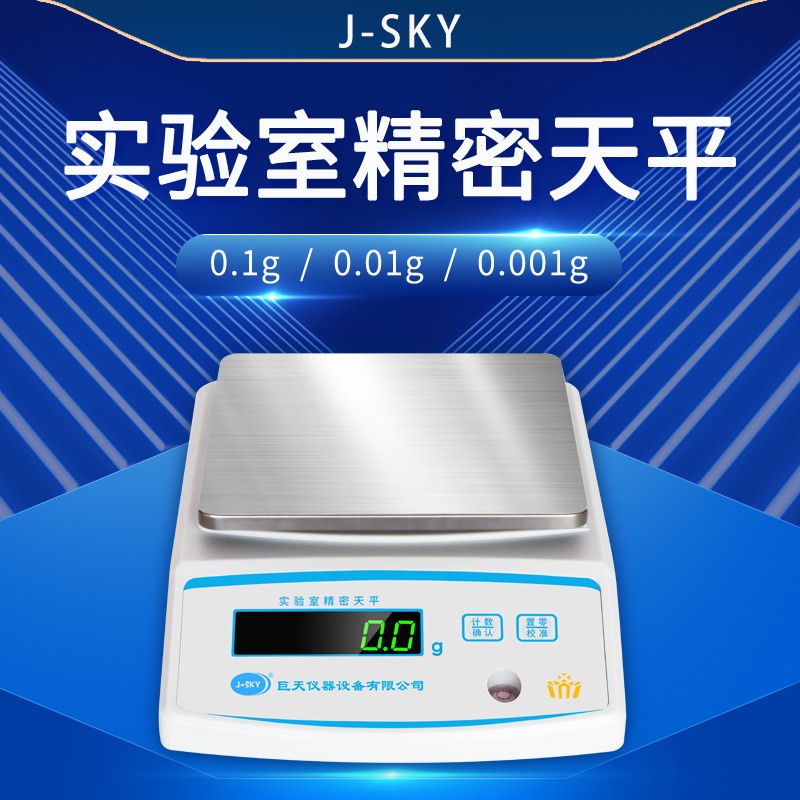
In chemical experiments, accurately preparing a solution of a certain concentration is the key to the success of the experiment. A balance is used to accurately weigh the mass of a solute, and based on the mass of the solute and the volume of the solution, the concentration of the solution can be calculated. For example, when preparing a certain concentration of hydrochloric acid solution, it is necessary to use a balance to accurately weigh the mass of hydrogen chloride, then dissolve it in an appropriate amount of water, and finally make up to the required volume of 1.
2. Measurement of reactant mass
The progress of chemical reactions requires precise control of the mass ratio of reactants. A balance can be used to measure the mass of reactants, ensuring that the reaction proceeds in the expected proportions. For example, when synthesizing a certain compound, it is necessary to mix the reactants in a certain molar ratio. Accurate measurement by a balance can ensure the accuracy of the reactant ratio, thereby improving the yield and purity of the product.
3. Control of catalyst dosage
In many chemical reactions, the amount of catalyst used has a significant impact on the reaction rate and product yield. A balance can be used to accurately weigh the mass of catalysts, ensuring that the amount of catalyst used is within the optimal range. For example, in petroleum cracking reactions, the amount of catalyst needs to be precisely controlled to improve cracking efficiency and product quality.
4. Weighing and concentration adjustment of biological samples
In biological experiments, a balance is used for weighing and adjusting the concentration of biological samples. For example, in cell culture experiments, it is necessary to accurately weigh the mass of cell suspension to determine the concentration of cells; In drug preparation experiments, it is necessary to accurately weigh the mass of the drug in order to adjust its concentration.
5. Applications in Materials Science
In materials science, a balance is used to measure the density, proportion, and composition of materials. For example, when synthesizing new materials, it is necessary to accurately weigh the mass of various raw materials to determine the composition ratio of the materials; In material performance testing, it is necessary to measure the mass of the material in order to calculate its density and other physical properties.
6. Quality control
In the quality control process in the laboratory, a balance is used to ensure accurate weighing of products and compliance with quality standards. For example, in drug production, it is necessary to use a balance to accurately weigh the quality of drugs to ensure that the quality of drugs meets standards; In food testing, it is necessary to use a balance to weigh the mass of food samples for component analysis and quality testing.
7. Data analysis
The balance is equipped with data processing and analysis functions, which can record and analyze measurement data, generate reports and charts, and provide convenience for the interpretation and evaluation of experimental results. For example, in chemical experiments, a balance can record multiple measurements of quality data, calculate the average and standard deviation through data analysis functions, and evaluate the accuracy and reliability of experimental results.
8. Improvement of experimental efficiency
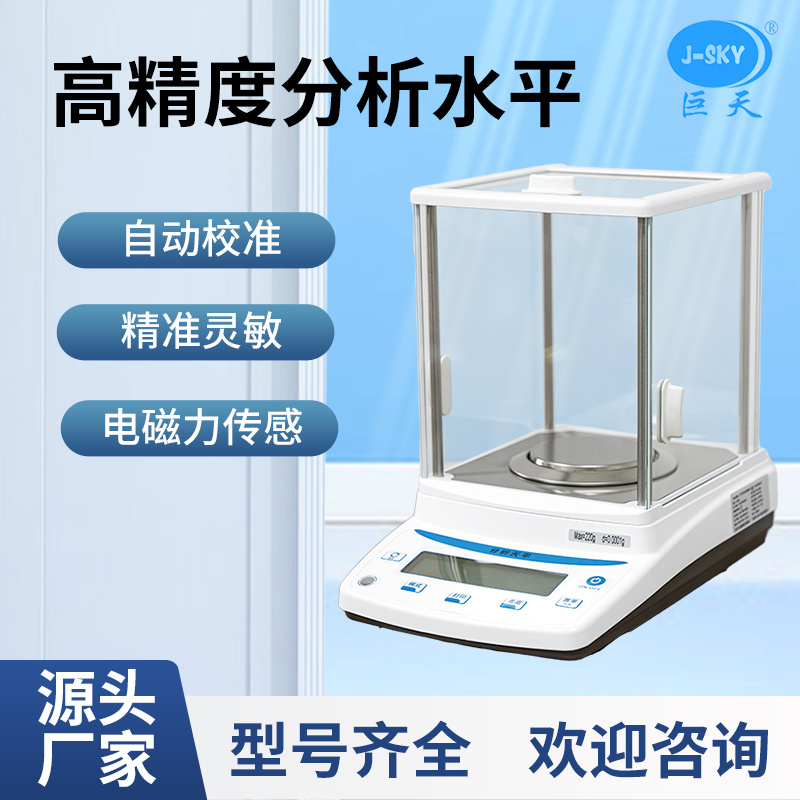
The high precision and innovative functions of the balance can improve the efficiency of experiments, reduce operation time and human errors, and enhance the overall efficiency of laboratory work. For example, automatic calibration and temperature and humidity compensation functions can reduce the preparation time before the experiment; The statistical analysis function can quickly process experimental data and improve the analysis speed of experimental results.
Conclusion
In summary, scales have a wide range of applications in chemical experiments, from solution preparation and reactant mass measurement to biological sample processing, materials science research, quality control, and data analysis. Scales are all tools. Its high precision and versatility provide strong guarantees for the accuracy and efficiency of chemical experiments. With the continuous advancement of science and technology, scales will continue to evolve and innovate, providing more possibilities and convenience for chemical experiments