-
E-mail
jydry@163.com
-
Phone
18901520262
-
Address
Jiangyin Lingang Development Zone, Shengang Industrial Park, Jiangsu Province
Jiangyin Jiayuan Pharmaceutical Equipment Co., Ltd
Process flow and industry application guide of two-dimensional motion mixer
Date: 2025-10-28Read: 60
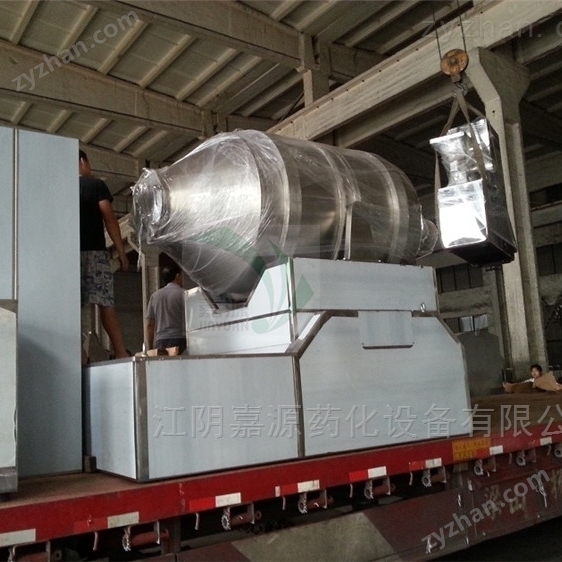
The core of the two-dimensional motion mixer breaks the mixing limitations of a single motion through the composite motion of the mixing cylinder (rotating along the horizontal axis+swinging around the vertical axis), allowing materials to fully contact and interlock inside the cylinder, reducing mixing dead corners, and suitable for the uniform mixing needs of bulk materials. The process flow needs to adjust parameters based on material characteristics, while industry applications revolve around mixed demands in different fields, reflecting the practical value of the equipment together.
1、 Process flow of two-dimensional motion mixer
1Material pretreatment and preparation
Before mixing, check the condition of the materials to be mixed to ensure that they are free of lumps and impurities (if there are lumps, they need to be crushed, and if there are impurities, they need to be sieved out); Control the particle size and humidity of the materials according to the mixing requirements (to avoid material adhesion or dust generation caused by excessive moisture), and calculate the dosage of each component material according to the preset ratio to ensure accurate feeding.
2Quantitative feeding and sealing
Pour each component material into the mixing cylinder in proportion, avoiding material accumulation in the dead corners of the cylinder wall during the feeding process; After all materials are fed, close the inlet of the mixing drum and check the sealing to prevent material leakage or external impurities from entering during the mixing process, ensuring a clean mixing environment.
32D motion mixing operation
After starting the device, the mixing drum performs a composite motion of "horizontal rotation+vertical swing" according to the set parameters: the rotation of the drum body causes the animal material to roll along the drum wall, while the swing pushes the material to flow horizontally and interlock. The combination of the two motions quickly breaks the layering of the material and achieves uniform mixing; Adjust the mixing time (usually 5-30 minutes) and speed according to the characteristics of the material, such as particle size and density, to avoid excessive speed causing material splashing or insufficient speed affecting mixing efficiency.
4Mixing effect inspection
After the mixing reaches the set time, pause the equipment and open the sampling port to take samples from different positions of the mixing cylinder (such as the top, middle, and bottom); Check the uniformity of the material through screening, component testing, and other methods. If the uniformity does not meet the standard, adjust the mixing time or speed, restart the equipment to continue mixing until it meets the requirements.
5Discharge and equipment cleaning
After confirming that the mixing is qualified, open the discharge port of the mixing drum, start the equipment to run at low speed, make the material slide out along the drum wall, and collect it in the designated container; After emptying the materials, turn off the equipment and clean the inner wall of the mixing cylinder (which can be blown with compressed air or wiped with specialized cleaning tools) to remove residual materials and avoid cross contamination when mixing different materials in the future.
2、 Industry application analysis of two-dimensional motion mixer
1pharmaceutical industry
Mainly used for mixing Chinese medicine powder and Western medicine excipients, such as mixing Chinese medicine extract powder with fillers and adhesives, to ensure the uniformity of effective ingredients in each tablet during subsequent granulation and compression; It is also used for mixing capsule raw materials, such as mixing drug powder with diluent, to avoid component stratification inside the capsule, which meets the strict requirements of the pharmaceutical industry for material uniformity.
2food industry
Suitable for mixing grain flour with food additives, such as flour mixed with improvers and yeast powder, to ensure consistent taste of the finished noodles; It is also used for mixing granular foods, such as nuts, dried fruits, icing sugar, and seasonings, for snack production, ensuring that the taste and ingredient ratio of each bite of snacks are balanced, and improving the stability of food quality.
3chemical industry
Suitable for mixing pigments and dyes, such as mixing pigment powders of different color numbers to achieve the desired color, avoiding color blocks and color differences; It is also used for mixing small-scale chemical raw materials, such as mixing plastic particles with antioxidants and plasticizers, to prepare for subsequent injection molding and extrusion processes, ensuring uniform performance of chemical products.
4Feed industry
It is mainly used for mixing raw materials of livestock and poultry feed, such as corn meal, soybean meal and trace elements (such as calcium, phosphorus), vitamins, to ensure that the nutritional composition of each batch of feed is balanced, so as to avoid the growth of livestock and poultry affected by uneven intake of nutrients; It is also used for mixing aquatic feed, such as mixing fish meal with binders, to ensure that the feed is not easily scattered after entering water, and the nutritional content is stable.