-
E-mail
zhongbsh7402@163.com
-
Phone
18653147530
-
Address
Xinmao Technology City, No.1 Zidong Avenue, Tianqiao District, Jinan City
Jinan Feichi Machinery Equipment Co., Ltd
What is the structural principle of a vibrating ultrafine crusher?
Date: 2025-08-25Read: 1
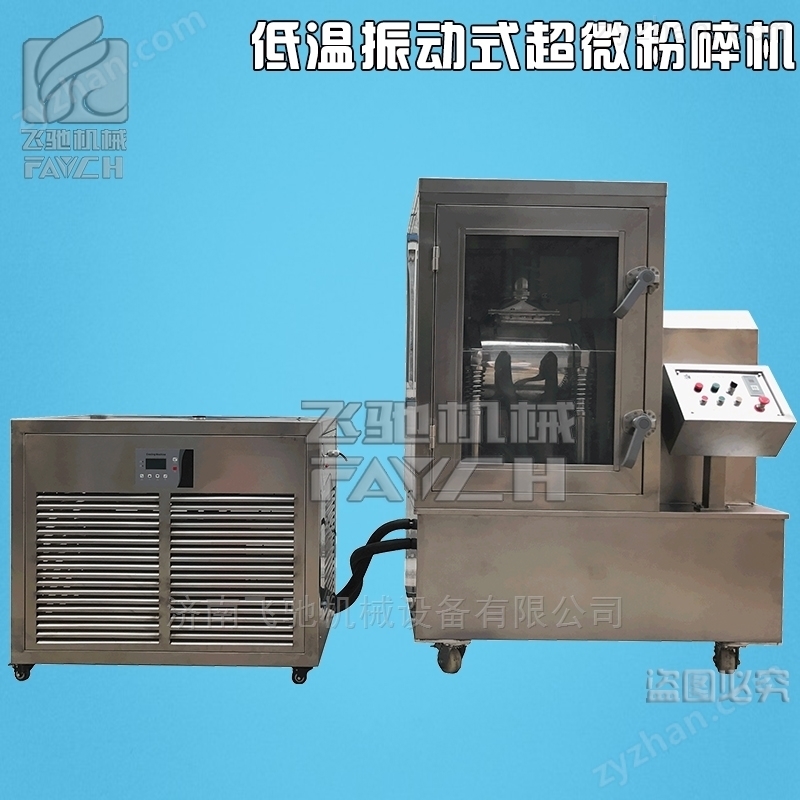
The structural principle of the vibrating ultrafine crusher mainly includes the following core parts:
1. Vibration source and excitation system
The equipment generates high-frequency vibration energy through a vibration motor or eccentric shaft exciter, which drives the grinding chamber containing grinding media (such as steel balls, ceramic balls) to undergo periodic vibration. The exciter is usually composed of an eccentric shaft and a counterweight, which drives the overall system vibration through the inertial centrifugal force generated by rotation.
2. Crushing chamber and grinding medium
The cylindrical crushing chamber is filled with grinding medium and the material to be processed, and the chamber is connected to the base through a spring or elastic support device. During vibration, high-frequency impact, friction, and shear occur between the grinding medium and the material, achieving ultrafine grinding.
3. Energy Transfer and Crushing Mechanism
The vibration energy is transmitted to the material through the medium, and under the combined action of rotation, throwing, and mutual collision, the material is repeatedly impacted and ground. High frequency vibration (usually up to thousands of times per minute) can significantly improve crushing efficiency while avoiding local overheating, making it suitable for handling heat sensitive materials.
4. Classification and Collection System (Some Models)
Part of the vibration type ultrafine crusher integrates an airflow classification device, which separates fine powder through negative pressure airflow, and returns coarse particles for further crushing, achieving particle size control. The grading wheel or filter system ensures even distribution of finished particles.
This structural design combines high efficiency and low energy consumption, and is suitable for ultrafine powder processing in fields such as chemical engineering, pharmaceuticals, and food.
Last Article: Structure and characteristics of Sanqi ultrafine grinder