-
E-mail
2945155087@qq.com
-
Phone
18953188556
-
Address
Xinsha Industrial Park
Jinan Zhongnuo Instrument Co., Ltd
YBB00212003 Test Method and Significance for Linear Thermal Expansion Coefficient of Medicinal Glass Containers
Date: 2025-04-01Read: 3
1、 Purpose and significance of the experiment
The coefficient of thermal expansion is one of the important indicators for evaluating the physical properties of medicinal glass containers, which directly affects the thermal stability and sealing of the container. Due to temperature changes that drugs may undergo during filling, sterilization, storage, and other processes, if the thermal expansion coefficient of the glass container does not match the drug or sealing material, it may cause deformation, sealing failure, or even rupture of the container, thereby affecting drug safety. According to the YBB00212003-2015 standard, by measuring the coefficient of thermal expansion, it is possible to verify whether the glass material meets the temperature resistance requirements of pharmaceutical packaging, ensuring its reliability in practical applications.
2、 Overview of Experimental Methods
According to the YBB00212003-2015 standard, the coefficient of thermal expansion test requires the use of an expansion meter method. The specific steps are as follows:
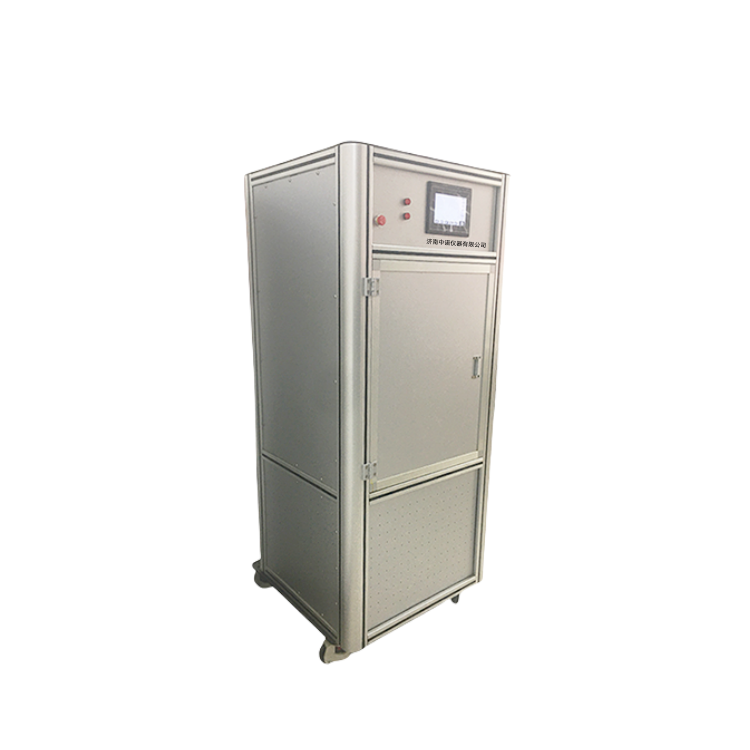
1. Sample preparation: Select defect free glass container fragments and process them into cylindrical specimens with a diameter of 5mm and a length of 50mm, ensuring that the two end faces are parallel and smooth.
2. Testing conditions: Place the sample in an expansion apparatus, heat it up to 300 ℃ at a rate of 3 ℃/min, and record the temperature and sample length change data.
3. Data processing: Calculate the average linear thermal expansion coefficient within the range of 20 ℃ to 300 ℃ according to the formula, and express the result as 10 ^ -6/℃. The experiment should be conducted in a constant temperature and humidity environment to avoid external interference. Before testing, the sample needs to be annealed to eliminate the influence of residual stress on the results. Instruments need to undergo regular metrological certification, and operators should receive professional training to ensure the accuracy and repeatability of test results.
3、 Key points of experimental quality control
Sample representativeness: At least 5 samples should be taken from the same batch, and the test results should be averaged with deviations within the standard range.
Environmental control: The laboratory temperature should be stable at (23 ± 2) ℃, and the humidity should be ≤ 60%.
Process recording: Detailed recording of heating curves, instrument status, and abnormal conditions for easy traceability of results.
Standard compliance: The final result must meet the limit of linear thermal expansion coefficient specified in YBB00212003-2015 (such as sodium calcium glass ≤ 9.0 × 10 ^ -6/℃).
The coefficient of thermal expansion test is an important part of quality control for medicinal glass containers. Pharmaceutical companies need to strictly establish a testing system in accordance with standard requirements and equip professional instruments and technical teams. Through scientific and standardized testing, qualified packaging materials can be effectively screened, reducing the risks of drugs in production and storage, while providing data support for product compliance. Enterprises should conduct regular internal audits and optimizations of their testing processes to ensure the continued effectiveness of their quality control system.