-
E-mail
2594479801@qq.com
-
Phone
13304008117
-
Address
No. 26 Libo Center, Minhang District, Shanghai
Laitelide (Shanghai) Water Treatment Equipment Co., Ltd
Garbage leachate equipment was born for the treatment of garbage leachate
Date: 2025-12-17Read: 5
Garbage leachate, also known as leachate or leachate, is an inevitable secondary pollutant in landfills, mainly derived from precipitation, water contained in garbage, and organic wastewater produced by anaerobic decomposition of microorganisms. Garbage leachate is a high concentration organic wastewater. If it is discharged directly without treatment or does not meet the standards, it will cause serious pollution to the surrounding groundwater, surface water, and soil.
After the implementation of the "Pollution Control Standards for Landfills of Municipal Solid Waste" (GB16889-2008), stricter requirements have been put forward for the treatment and control of leachate from garbage. The water quality and quantity of leachate are influenced by various factors and become very complex, with a large amount of organic matter that is difficult to degrade by organisms. Currently, the treatment processes for leachate mainly include land treatment, physical treatment, chemical treatment, biological treatment, etc.
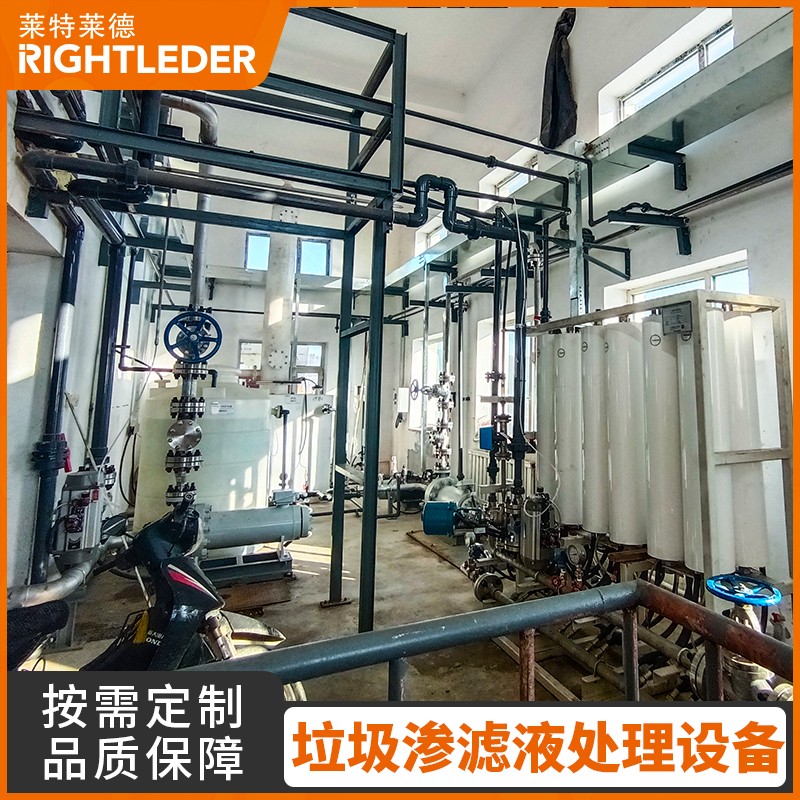
The application of membrane technology in the treatment of leachate from garbage has attracted great attention from scholars in China. Membrane treatment technologies include microfiltration membranes (MF), ultrafiltration membranes (UF), nanofiltration membranes (NF), and reverse osmosis membranes (RO), which are commonly used for deep treatment after secondary treatment. They are all membrane separation processes driven by pressure difference (also known as transmembrane pressure difference). When a certain pressure difference is applied on both sides of the membrane, a portion of the solvent and components smaller than the membrane pore size can pass through the membrane, while particles, macromolecules, salts, etc. are intercepted by the membrane, thus achieving the purpose of separation.
DTRO membrane is a type of disc tube reverse osmosis membrane. The DTRO process has strong adaptability to the fluctuation of leachate water quality, and has a high retention rate for pollutants contained in it. It is not affected by biodegradability, and there are few factors that affect the membrane retention effect. This is also an important advantage of DTRO membrane itself.
The DTRO garbage leachate equipment can effectively intercept the content of pollutants such as COD, total nitrogen, and ammonia nitrogen in the leachate, and the treated effluent can meet the standards of the "Pollution Control Standards for Landfills of Municipal Solid Waste" (GB16889-2008). The DTRO garbage leachate equipment is specifically designed for the treatment of garbage leachate.
The DTRO garbage leachate equipment has high mechanical performance for garbage leachate, and the effluent can be directly reused or discharged, bringing practical benefits to enterprises in reducing environmental investment and operating costs, improving wastewater recovery rates, and achieving efficient utilization of water resources, bringing economic benefits to enterprises.