-
E-mail
2594479801@qq.com
-
Phone
13304008117
-
Address
No. 26 Libo Center, Minhang District, Shanghai
Laitelide (Shanghai) Water Treatment Equipment Co., Ltd
Membrane separation equipment is an inevitable trend in the development of juice processing industry
Date: 2025-12-15Read: 5
Juice is a beverage made from fruits through physical methods such as pressing, centrifugation, extraction, etc. Juice retains most of the nutrients found in fruits, such as vitamins, minerals, sugars, and pectin in dietary fiber. Drinking fruit juice regularly can help with digestion, moisturize the intestines, and supplement the nutritional deficiencies in the diet.
Traditional juice processing industries often require complex processes such as heating, enzyme treatment, and freeze concentration to improve juice yield after pre-treatment of raw fruit and vegetable juices. This process involves necessary separation and purification, resulting in significant loss of nutrients in the juice and increased energy consumption during processing, thereby reducing the additional output value of the product. The use of membrane separation equipment to separate impurities such as biological enzymes and bacteria that damage the nutrition of raw fruit juice has the advantages of room temperature operation, good selectivity, no phase change process, and no biological pollution. At the same time, it greatly reduces process energy consumption and is an inevitable trend in the technological development of fruit juice processing.
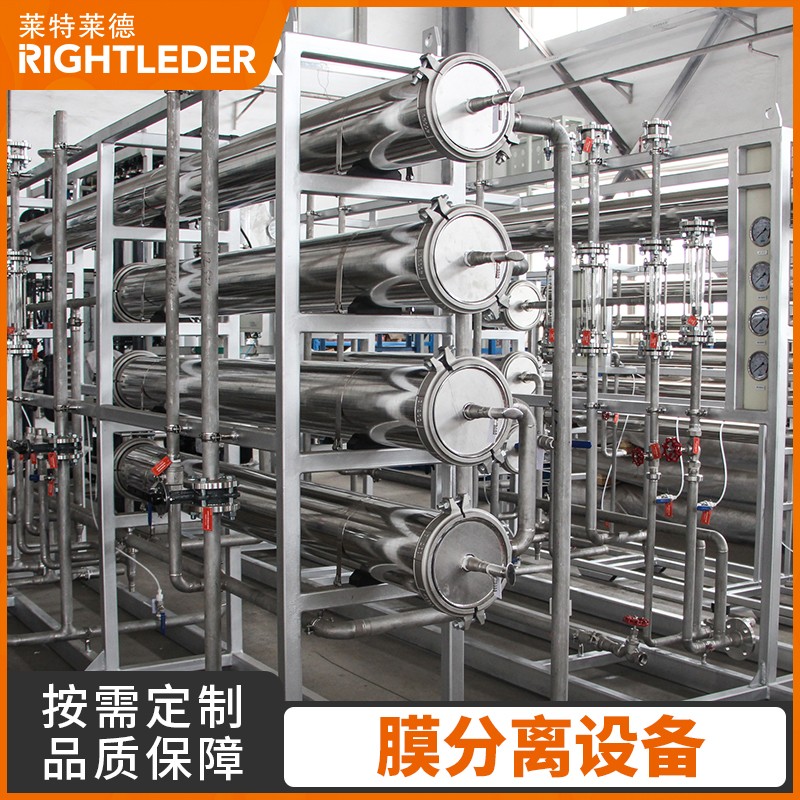
Juice membrane separation process:
Fruit cleaning, juicing, enzymatic hydrolysis, membrane separation, clarification, decolorization, membrane separation, concentration, concentrated juice
The process advantages of membrane separation equipment are as follows:
1. The color value of the juice after ultrafiltration decolorization is stable. The ultrafiltration decolorization system can maintain the continuity of production, and the cleaning and maintenance time is significantly shorter than that of resin decolorization. Moreover, the amount of acid and alkali used in cleaning is much smaller than that of resin decolorization, and the impact on the pH value of wastewater can be ignored. In terms of consumption, only the pump and electrical components consume a small amount of power, and the operating cost is much lower than that of resin adsorption.
2. There is no phase change in membrane concentration, so there is no need for heating. Therefore, the processing temperature is low, which can effectively protect the nutritional components in the juice. This brings more choices to production. Low sugar juice can be provided as a product for the domestic or regional market to the market. The dialysis water produced by membrane concentration can also be used as cleaning water, and the water quality is better than that of evaporated condensate water. As there is no steam and no phase change, membrane concentration is also much lower than evaporation concentration in terms of energy consumption.
Lightlad has been deeply involved in the field of membrane separation for many years, and its membrane separation equipment is widely used in the industry due to its unique advantages. Based on feedback from different industry applications, Literide continuously iterates and upgrades product performance to provide users with high-quality products that can be widely used in fields such as food and beverage, biopharmaceuticals, seawater desalination, and wastewater recovery.