-
E-mail
851012694@qq.com
-
Phone
13916683657
-
Address
No. 9 Kesheng Road, Zhongshan Science and Technology Park, Jiangbei New District, Nanjing City
Nanjing Haizhizhou Heating and Cooling Equipment Co., Ltd
Core equipment and maintenance foundation of central air conditioning water system
Date: 2025-08-10Read: 4
The central air conditioning water system, as a component of modern buildings, plays a crucial role in regulating indoor temperature and humidity. This article introduces the main equipment components of the system and provides a brief explanation of the selection, installation, and maintenance of key components, providing some learning and reference for novice friends.

Analysis of Core Equipment in Central Air Conditioning Water System
1. Chiller unit
Types: including lithium bromide absorption type (bromine machine), centrifugal type, water-cooled screw type, piston type, and air-cooled type, each with its own characteristics, suitable for air conditioning systems of different scales and needs.
2. Cooling tower
Function: Used to discharge heat into the atmosphere, only air-cooled units do not require this equipment. The selection of cooling towers should consider environmental conditions and system requirements.
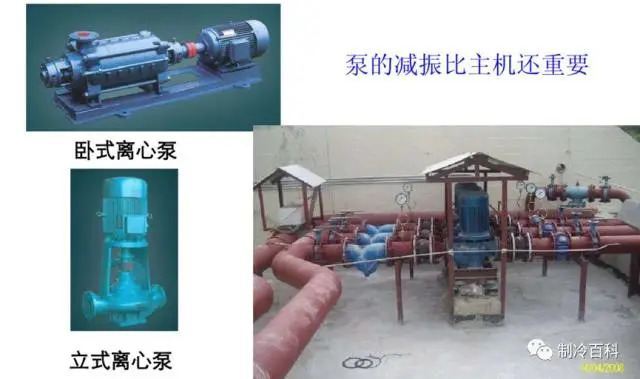
3. Water pump
Classification: Divided into chilled water pumps and cooling water pumps, responsible for promoting water circulation in the system, air-cooled units do not require cooling water pumps.
4. Water quality treatment equipment
Including electronic water treatment equipment or fully automatic water softening devices, as well as water filters, valves, pressure gauges, thermometers, etc., to ensure clean water quality and reduce system corrosion and blockage.
5. Expansion tank and water collector
Function: Balance changes in system water volume, maintain stable system pressure, and the water collector is responsible for distributing and collecting circulating water in the system.
6. End devices
Types: such as air handling units (wind cabinets) and fan coil units, which directly deliver cold and hot air indoors.
Connection and configuration of key equipment
Water inlet and outlet of chiller unit: equipped with rubber soft joint shock absorber, butterfly valve for easy maintenance, thermometer and pressure gauge to monitor water status, and flow switch interlock protection.
Cooling tower flow estimation: Based on unit type and temperature difference, reasonably estimate the required flow rate of the cooling tower to ensure effective heat dissipation.
Pump configuration: Based on the system cooling capacity, calculate the required flow rate and head, configure the corresponding specifications of the pump, and provide accessories such as rubber soft joints, valves, filters, etc.
Pipeline design: It is recommended to accurately calculate the flow rate, pipe diameter selection, and setting of variable diameter joints to ensure smooth and efficient water flow.
Maintenance and troubleshooting
Cooling tower maintenance: Regularly clean the packing and water tray, check the fan motor to prevent algae growth.
Pump and chilled water system: Pay attention to the accuracy of head calculation to avoid system failures caused by incorrect experience values.
Water system issues, such as water flow alarms, improper pump matching, and water pollution, require targeted solutions, as shown in the case, by adjusting the pump head or optimizing the system design.
End devices: Pay attention to wind speed and noise issues, ensure filter cleanliness, correctly install air and water pipes, and prevent malfunctions.
Daily maintenance and optimization
Host and end devices: Regular inspection and cleaning, timely replacement of refrigeration oil and filters to ensure efficient operation of the equipment.
Wind cabinets and fan coil units: Pay attention to noise and floating water issues, regularly clean and inspect belts and motors, use appropriate filters and dust prevention measures.
Water system management: Pay attention to water quality treatment, regularly clean waterways, avoid system scaling and blockage, and ensure long-term stability of the system.
Last Article: Working principle and common faults of screw refrigeration unit
Next Article: Central air conditioning water system equipment