-
E-mail
2360963066@qq.com
-
Phone
18013944726
-
Address
No. 18 Xinyu Road, Hengliang Street, Liuhe District, Nanjing City
Nanjing Lanjiang Pump Industry Co., Ltd
Application advantages of float aerator
Date: 2025-12-27Read: 8
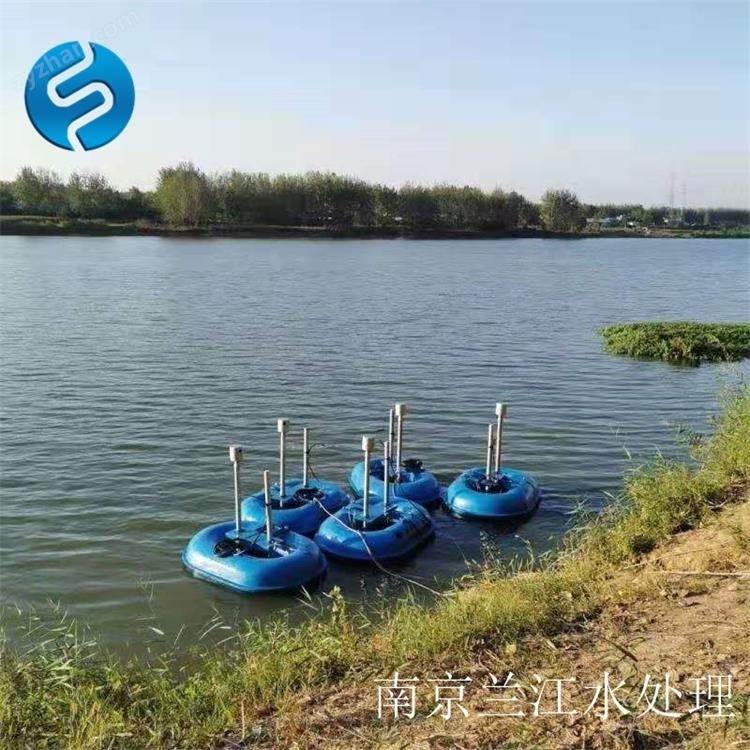
As an efficient water oxygenation device, the float aerator plays an important role in modern water environment management due to its unique design and multifunctionality. Its core advantage lies in the innovative combination of aeration technology and float structure, which solves many pain points of traditional equipment in installation, maintenance, and environmental adaptability. It is widely used in fields such as river treatment, lake restoration, sewage treatment, and aquaculture.
1、 Easy installation, adaptable to complex environments
The float aerator achieves water suspension through float design, without the need to build a machine room or a solid foundation, greatly simplifying the installation process. In soft infrastructure environments such as oxidation ponds, scenic lakes, or rivers, traditional equipment relies on bottom positioning, while float type only requires steel wire rope traction and fixation, saving time and effort. This flexibility makes it stand out in areas with large water level fluctuations or complex terrain, avoiding the hassle of draining water bodies or using large machinery. For example, in river management projects, equipment can be quickly deployed to the target area, significantly improving engineering efficiency.
2、 Easy maintenance and reduced operating costs
During equipment maintenance, the float structure allows personnel to operate from the water surface without diving or emptying the pool, greatly reducing maintenance difficulty and downtime. The faulty equipment can be easily towed to the shore for handling, while other units continue to operate, ensuring system continuity. In addition, its self-priming function eliminates the need for an external gas source, reduces reliance on pipelines and auxiliary equipment, and further lowers energy consumption and long-term operating costs. In the sewage treatment scenario, this design optimizes the operation and maintenance process and improves overall economy.
3、 Multi functional integration enhances governance efficiency
The float aerator not only increases oxygen efficiency, but also has stirring function. It forms a fine bubble group through centrifugation or jet technology, enhances gas-liquid contact, and improves the efficiency of dissolved oxygen transfer. In river restoration, it effectively inhibits algae growth and improves water quality; In aquaculture, stable dissolved oxygen levels increase the survival rate of fish fry. Its compact structure also reduces footprint and noise pollution, making it suitable for applications in residential areas or ecologically sensitive areas. For example, urban river management cases have shown that equipment significantly improves water flow velocity and transparency, restoring poor water quality to ecological standards.
4、 Environmentally friendly, expanding application scenarios
The equipment design focuses on ecological compatibility, such as the use of clean energy in solar float aerators to achieve all-weather operation, balancing landscape effects and environmental protection needs. The metal parts are made of rust proof materials, which extends their service life without the need for chemical additives and avoids secondary pollution. These characteristics make it a preferred choice in landscape lakes, ecological wetlands, and other scenarios, while supporting fisheries and agricultural water management, demonstrating a wide range of adaptability.
The application advantages of float aerators highlight the driving force of technological innovation for water environment governance. From the convenience of installation and maintenance to the diversity of functional integration, and then to the environmentally friendly design concept, it has become an important tool for modern water restoration. With technological iteration, its application potential will be further released, providing strong support for sustainable water management.