-
E-mail
fengjunjie@noozle.com.cn
-
Phone
13918684639
-
Address
Building 4, 3255 Shengang Road, Songjiang District, Shanghai
Nuoze Fluid Technology (Shanghai) Co., Ltd
Maintenance and upkeep guide for laboratory small airflow pulverizer
Date: 2025-12-27Read: 2
Small laboratory airflow crushers are widely used for material crushing and grinding, and are favored by many researchers due to their high crushing efficiency and minimal impact on temperature. However, in order to ensure the normal operation of the equipment and extend its service life, regular maintenance and upkeep are particularly important. The following is aboutLaboratory small airflow crusherThe maintenance and upkeep guide.
1、 Daily inspection
1. Appearance inspection: Before each use, the appearance should be checked to ensure that there is no obvious damage or abnormal phenomenon, such as cracks, missing parts, etc. If any problems are found, stop using and repair them in a timely manner.
2. Power connection: Check if the power cord and plug are intact, ensure good grounding, and avoid safety hazards caused by power issues.
3. Cleaning work: After each use, clean the residues inside and outside the equipment to keep it clean, which helps to avoid cross contamination and improve the efficiency of equipment use.
2、 Equipment component maintenance
1. Sieve and blade: The sieve and blade of a small laboratory airflow crusher are key components that affect the crushing effect. Regularly check whether the aperture of the sieve is blocked and whether the blades are worn. If severe wear is found, it should be replaced in a timely manner to ensure the crushing effect.
2. Airflow system: It relies on compressed air for crushing, so maintenance of the airflow system is crucial. Regularly check for air leaks in the trachea and the working condition of the air pump, and clean and replace it if necessary.
3. Lubrication system: According to the instructions of the equipment, regularly add lubricating oil to mechanical components to ensure the flexibility of each moving part and reduce wear.
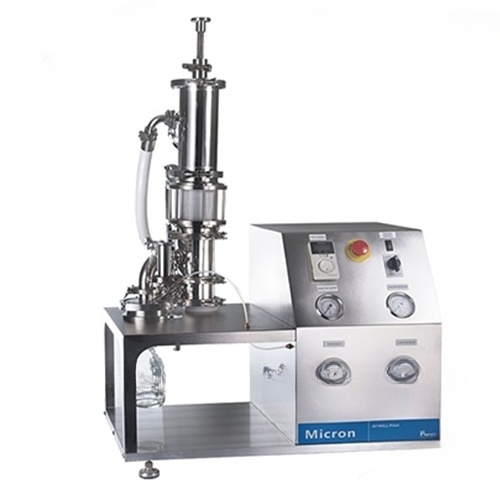
3、 Regular maintenance
1. Deep cleaning: Conduct a deep cleaning at regular intervals (such as one month), including disassembling the main components of the equipment, cleaning all detachable parts, and wiping them with a dry cloth to prevent corrosion and scaling.
2. Performance testing: Regularly run the equipment for performance testing to ensure that the crushing effect of the equipment meets the standards. If a decrease in crushing efficiency is found, internal components should be inspected to identify the cause of the malfunction.
3. Calibration and adjustment: For some high-precision experimental requirements, it is necessary to calibrate them regularly to ensure that they can stably achieve the set crushing particle size.
4、 Safety precautions
1. Wear protective equipment: During operation, operators should wear earmuffs, masks, and goggles to protect themselves from noise and dust.
2. Follow the operating procedures: strictly follow the equipment instructions for operation, and do not arbitrarily change the equipment settings to avoid safety accidents.
3. Emergency stop device: Ensure that the equipment is equipped with effective emergency stop devices and familiar with their usage methods. When abnormal situations occur in the equipment, measures can be taken quickly to ensure safety.
As an important equipment in the laboratory, the maintenance and upkeep of the small-scale airflow crusher are directly related to the smooth progress of experiments and the accuracy of data. Through daily inspections, maintenance of equipment components, regular upkeep, and implementation of safety precautions, it is possible to effectively ensure the good condition of equipment, extend its service life, and improve experimental efficiency. Therefore, laboratory staff should attach great importance to their maintenance and upkeep work, providing solid support for scientific research activities.