-
E-mail
shenbiaobiao@zryq.cn
-
Phone
19589992149
-
Address
No. 11 Yuehe Road, Chengyang District, Qingdao City, Shandong Province
Qingdao Zhongrui Intelligent Instrument Co., Ltd
Regular calibration and performance verification of microbial limit testing instrument
Date: 2025-10-27Read: 1
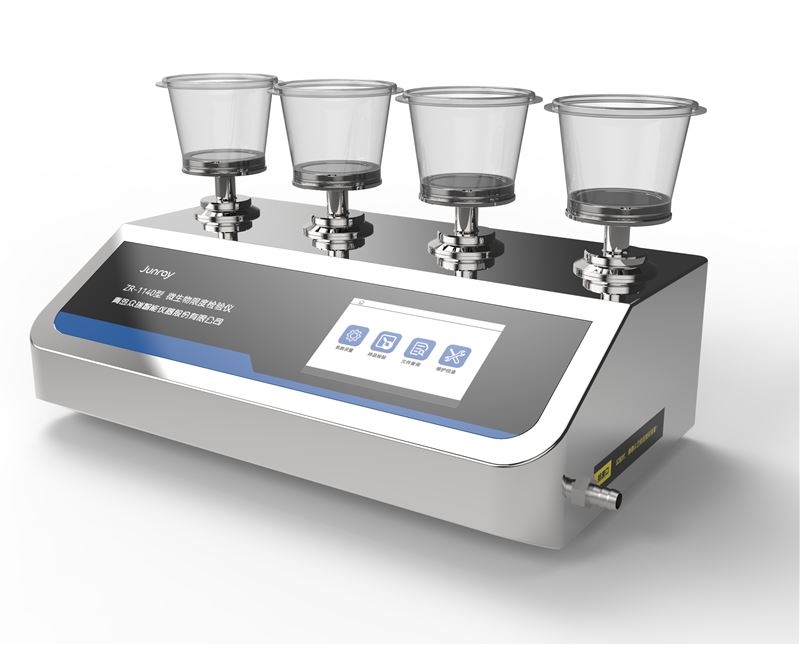
Microbial limit tester is a key equipment used in industries such as pharmaceuticals, food, cosmetics, etc. to detect the microbial content in samples. Its accuracy and reliability directly affect the effectiveness of the test results. The following is a detailed explanation of the maintenance work for the equipment:
Daily maintenance of microbial limit tester:
1. Cleaning and disinfection
Shell and surface treatment: Use a soft dust-free cloth dipped in neutral cleaning agent to wipe the outer surface of the instrument every day, avoiding the use of corrosive chemicals such as strong acids and alkalis. For the touch screen area, it is recommended to gently wipe it with a specialized screen cleaning solution to prevent scratches from affecting operational sensitivity.
Internal cavity cleaning: After each experiment, promptly remove any residue from the culture dish placement area. Use an alcohol swab to wipe the sterile operating table and sample rack, and if necessary, use a UV lamp to irradiate for 30 minutes for deep sterilization. Be careful to avoid liquid infiltration into electronic component interfaces.
Filter replacement: Regularly check the status of the HEPA high-efficiency filter at the air inlet. If the color becomes darker or the resistance increases, immediately replace it with a new one of the same specifications to ensure that the air filtration efficiency meets the cleanliness requirements.
2. Maintenance of mechanical components
Lubrication of motion axis: Add a small amount of medical grade silicone oil to the guide rails of moving parts such as sample turntable and robotic arm every quarter to reduce friction and wear. Check the tightness of the transmission belt. If there is slippage, adjust the tensioner or replace the aged belt.
Sealing ring inspection: Focus on checking whether the silicone sealing ring at the cabin door and pipeline connection is cracked or deformed. If there are signs of aging, it should be replaced in a timely manner to ensure the integrity of the closed system.
3. Electrical safety testing
Power cord stability test: Check monthly whether the power plug and socket are in good contact, and whether there is any risk of damage or leakage to the cable sheath. The grounding resistance value measured with a multimeter should be less than 4 Ω to ensure reliable grounding of the equipment.
Emergency stop button verification: Randomly check the response speed of the emergency stop function, and all power outputs should be completely cut off within 0.5 seconds after pressing the red button.
Regular calibration and performance verification of microbial limit testing instrument:
1. Accuracy calibration
Flow rate calibration: Use a standard rotor flowmeter to compare and calibrate the air flow sensor, with an error range controlled within ± 5%. Adjust the working parameters of the sampling pump until the displayed value matches the actual flow rate.
Temperature uniformity test: Multiple temperature probes are arranged in the cultivation chamber to monitor the temperature difference at different locations, which does not exceed ± 0.5 ℃. If it exceeds the tolerance, the power distribution of the heating element needs to be rebalanced.
Light intensity review: For models with lighting function, use an illuminance meter to measure the attenuation of ultraviolet lamp intensity. When it is lower than 80% of the initial value, replace the lamp with a new one.
2. Functional integrity testing
Simulated operation test: Start the complete detection process under no-load state and observe whether the linkage of each module is normal. Focus on verifying the accuracy and repeatability of actions such as automatic dilution, mixing, and packaging.
Recovery rate verification: Select a standard bacterial suspension of known concentration as the quality control sample, measure it continuously for 3 times, and calculate the recovery rate to be within the range of 90% to 110%. Abnormal results need to be investigated for pipeline blockage or sensor drift issues.