-
E-mail
185945738@qq.com
-
Phone
15306360531
-
Address
Shandong Liende
Shandong Leiente Intelligent Technology Co., Ltd
Technical principles and application fields of antibiotic detectors
Date: 2025-12-17Read: 49
In the current context of antibiotic abuse leading to resistance crisis and food safety hazards, antibiotic detectors, as the core equipment for accurately identifying antibiotic residues, are becoming an important barrier to ensure public health and ecological security with their high efficiency, sensitivity, and intelligence. From food processing plants to clinical laboratories, from breeding farms to environmental monitoring stations, this instrument integrates cutting-edge technologies such as biosensing, fluorescence analysis, and chromatographic separation to build an antibiotic residue prevention and control network covering the entire industry chain.
1、 The technical principle of antibiotic detector: multi-dimensional and precise capture of antibiotic traces
The core technology path of antibiotic detectors can be divided into three categories, each of which achieves breakthrough innovation for specific scenario requirements:
1. Immunoassay method: precise identification of antigen antibody "key mechanism"
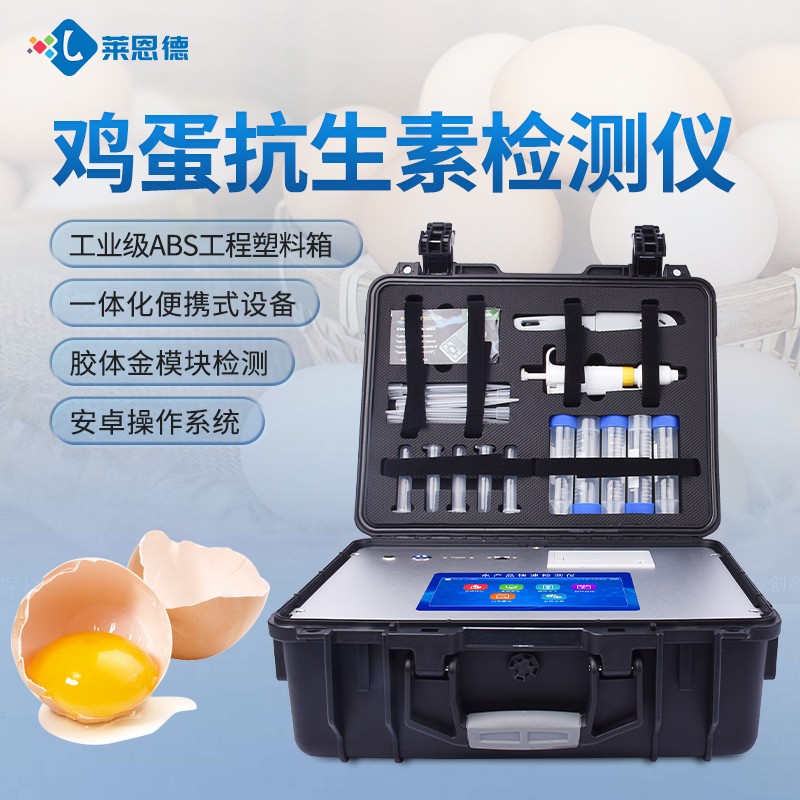
Immunoassay based on antigen antibody specific binding is one of the widely used techniques. Taking enzyme-linked immunosorbent assay (ELISA) as an example, it prepares specific antibodies by using antibiotics as antigens and labeling them with enzymes or fluorescent substances. When antibiotics in the sample compete with labeled antibodies to bind to stationary phase antibodies, the color or fluorescence intensity changes produced by enzymatic reactions can directly reflect the concentration of antibiotics. For example, the LD-KSS detector produced by Shandong Leiente Instrument uses colloidal gold labeling technology to achieve semi quantitative detection of antibiotics through color bands with varying shades of color. It can screen for β - lactam antibiotics in milk within 15 minutes with a sensitivity of 0.5 μ g/kg.
2. Fluorescence quantitative technology: trace detection driven by nanoprobes
The fluorescence quantitative detector achieves ultra sensitive detection through fluorescence resonance energy transfer (FRET) technology. When fluorescently labeled antibodies bind to antibiotics, the distance between donor fluorescent molecules and acceptor molecules shortens, and energy transfer leads to an increase in acceptor fluorescence intensity. The fluorescence quantification instrument launched by the Leinde brand is equipped with quantum dot fluorescence probes, with a detection limit as low as 0.01 μ g/kg, and can simultaneously detect 6 types of antibiotics (such as penicillin, cephalosporin, quinolone). In the detection of sewage treatment plant inlet, it can accurately identify nanogram level erythromycin residues in water, providing data support for process optimization.
3. Chromatographic separation technology: "molecular sieves" for precise analysis of multiple components
High performance liquid chromatography (HPLC) achieves antibiotic separation by the difference in partition coefficients between the stationary phase and the mobile phase, and is used in conjunction with ultraviolet or mass spectrometry detectors for quantitative analysis. The LD-KSS detector can simultaneously separate 8 types of antibiotics such as sulfonamides and tetracyclines in livestock and poultry meat testing, with a separation efficiency of 99.2% and a repeatability error of ≤ 0.8%, becoming the gold standard for laboratory confirmation testing.
2、 Application scenario of antibiotic detector: residue control system covering the entire chain
The application of antibiotic detectors has penetrated into three major fields: food safety, medical health, and environmental protection, forming a full chain prevention and control network from the source to the end:
1. Food Safety: Precise Control from Farm to Table
In the livestock and poultry breeding process, portable detectors can monitor the concentration of antibiotics in feed and livestock blood in real time. For example, a certain breeding farm uses a handheld fluorescence quantitative instrument to detect enrofloxacin residues in pig urine, and the accuracy of monitoring during the off-duty period has been improved to 98%, avoiding the influx of "antibiotic pigs" into the market. In the field of food processing, large enterprises use 96 well plate ELISA detectors, which can simultaneously detect penicillin residues in 200 raw milk samples in a single batch, with a detection efficiency five times higher than traditional methods. The mobile detection vehicle equipped by the market supervision department, equipped with a multi-channel fluorescence quantitative instrument, can quickly screen for malachite green and chloramphenicol in fish and shrimp at the agricultural market site, and issue a quantitative report within 30 minutes.
2. Medical Health: A "Clinical Navigator" for Precise Medication
In the intensive care unit, a fluorescence quantitative PCR detector monitors the concentration of vancomycin in patients' blood in real time, helping doctors control the parameter error of pharmacokinetic models within ± 15% and avoid nephrotoxicity caused by drug accumulation. The microfluidic chip detector introduced by a tertiary hospital can simultaneously detect the concentrations of six antibiotics in serum, providing personalized medication plans for patients with drug-resistant bacterial infections and increasing treatment effectiveness by 22%.
3. Environmental Protection: The 'Pollution Radar' of Ecological Security
The environmental monitoring station used a fully automatic LD-KSS detector to analyze antibiotic residues in river sediment and found that the traceability efficiency of sulfonamide antibiotic pollution in a certain watershed has increased threefold, promoting the upgrading of manure treatment facilities in surrounding farms. In soil testing, portable fluorescence quantitative instruments can locate antibiotic accumulation hotspots in pesticide abuse areas, providing data support for agricultural non-point source pollution control.
3、 The technological evolution of antibiotic detectors: a dual breakthrough in intelligence and portability
With the integration of IoT and artificial intelligence technologies, antibiotic detectors are iterating towards greater efficiency and intelligence
1. Multi channel synchronous detection: The new instrument integrates 8 fluorescent channels, which can simultaneously quantify 8 antibiotics in a single detection, reducing the analysis time of complex samples to 15 minutes.
2. Integration of pre-processing and testing: A certain model of equipment is equipped with sample grinding, extraction, and filtration modules, which can complete the entire process of testing without manual intervention and meet the needs of grassroots stations.
3. AI assisted decision-making system: By analyzing historical detection data through machine learning algorithms, the instrument can automatically generate pollution risk warning reports. For example, after analyzing the monitoring data of a certain watershed through an AI model, the spread trend of antibiotic contamination was predicted 3 days in advance, which provided critical time for emergency response.
4. Miniaturization and Handheld: A handheld fluorescence quantitative analyzer weighing only 1.8kg, using quantum dot fluorescence labeling technology, with detection sensitivity comparable to laboratory equipment, can meet the needs of mobile detection scenarios such as breeding farms and agricultural markets.
4、 Future prospects of antibiotic detectors: building a comprehensive prevention and control ecosystem
According to market research institutions' predictions, by 2027, the market size of antibiotic detectors will exceed 4.5 billion US dollars, with a compound annual growth rate of 12.3%. With breakthroughs in technologies such as quantum dot fluorescence labeling and microfluidic chips, instruments will achieve full chain capabilities of "trace detection+instant response+intelligent traceability". For example, a nano sensor array under development can simultaneously identify 50 types of antibiotic residues through a single detection, reducing the detection limit to the Pick level (10 ⁻¹ ² grams), providing core support for building a comprehensive antibiotic residue control system from production to consumption, from land to water.
In the context of drug resistance prevention and control becoming a topic of discussion, antibiotic detection devices are not only an innovation in detection equipment, but also an important infrastructure for promoting the rational use of antibiotics and building a safe defense line. From rapid screening in food workshops to precise quantification in clinical laboratories, from pollution monitoring in rivers and wetlands to medication control in livestock farms, this instrument is using technology to safeguard the dual bottom line of human health and ecological security.