-
E-mail
18660167086@163.com
-
Phone
18660167086
-
Address
South section of No. 3 Road, East Industrial New City, Pingyin County, Jinan City, Shandong Province, south of Dongcheng Street
Shandong Qinglei Environmental Technology Co., Ltd
Worry free after-sales service for double plate water water soda heat exchange station
Date: 2025-12-19Read: 46
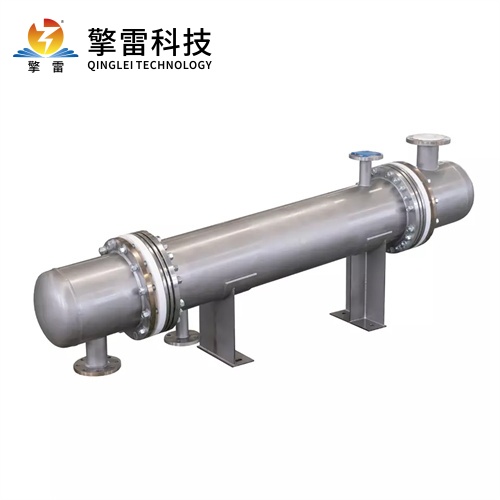
Double plate water steam water heat exchange station: worry free after-sales service, driving new changes in thermal energy management
In the wave of energy transformation and green development, double plate water water steam water heat exchange stations have become core equipment in areas such as regional heating, industrial waste heat recovery, and data center cooling due to their high efficiency, compactness, and intelligence. Not only has it achieved breakthroughs in technical performance, but it also provides users with worry free after-sales service through a comprehensive after-sales service system, promoting the evolution of thermal energy management towards low-carbon and intelligent direction.
1、 Technological breakthrough: deep integration of efficient heat transfer and intelligent control
1. Dual mode adaptive switching to improve energy efficiency
The double plate water steam water heat exchange station achieves intelligent switching between steam direct supply and high-temperature water heat exchange through an electric three-way valve. When the heat source is steam, the system automatically switches to steam water mode, and the steam condenses into water through the plate heat exchanger, releasing latent heat; When the heat source is high-temperature water, the system switches to the water water mode and achieves heat transfer through convective heat exchange between plates. This design enables the equipment to flexibly respond to different heat source conditions. For example, in the recovery of waste heat from blast furnace gas in a steel plant, the system can automatically adjust the heat exchange mode based on gas temperature fluctuations to ensure heating stability. Its system energy efficiency ratio (COP) has increased by 20% compared to traditional equipment, and energy allocation efficiency has been optimized by dynamically adjusting the heat source supply method.
2. Efficient heat exchange technology, breaking through performance limits
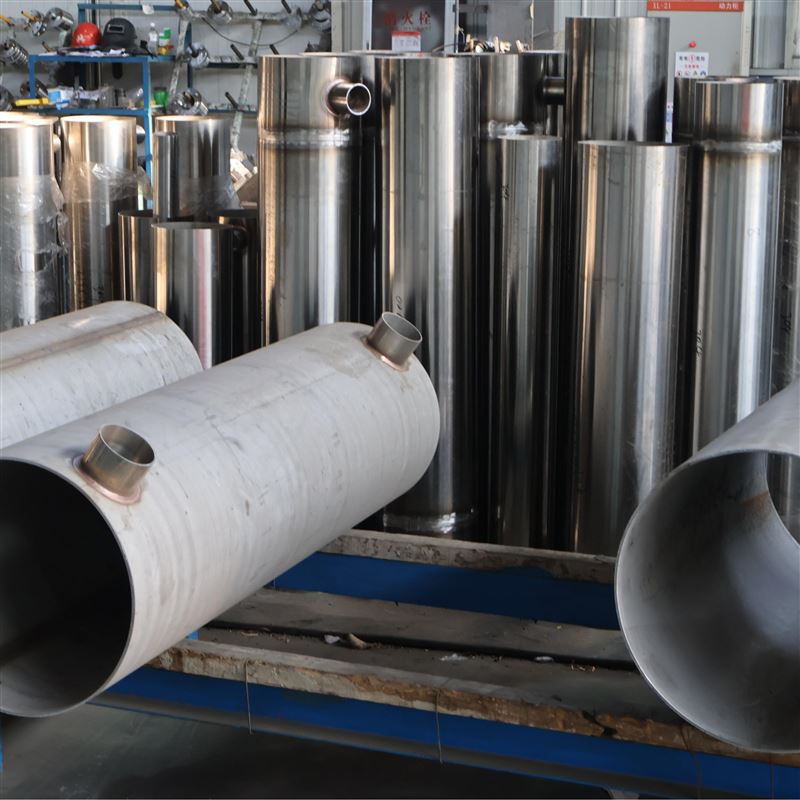
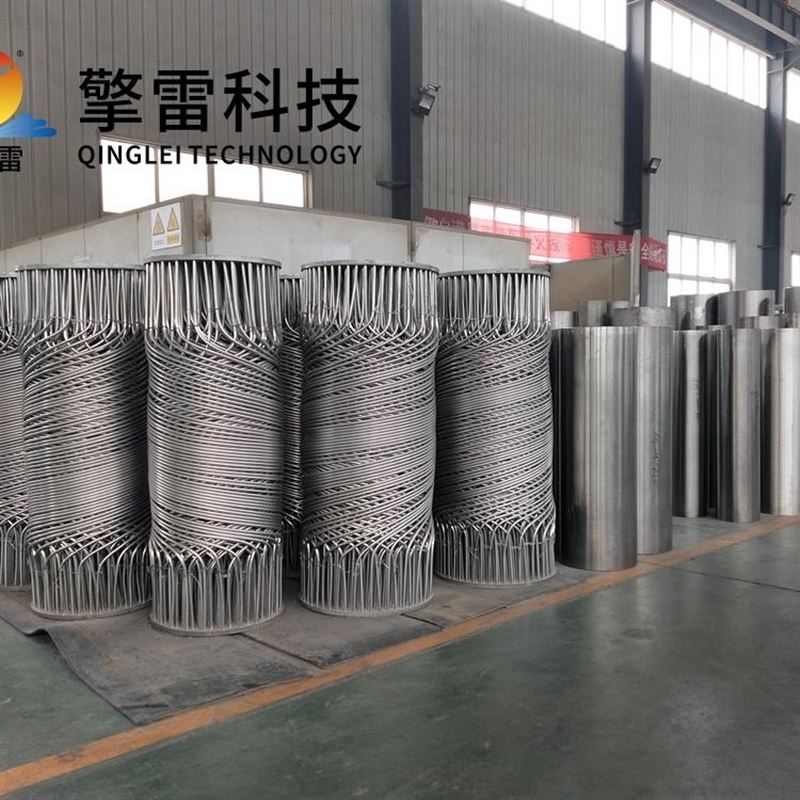
The core components are made of 316L stainless steel plates, and the heat transfer area of a single device can reach 2000 square meters, which is three times that of a shell and tube heat exchanger, while the volume is only 1/10 of the latter. The surface of the board is processed with spiral grooves, which increases the turbulence intensity of the fluid by 60% and the heat transfer coefficient exceeds 7000W/(m ² ·℃), which is 40% higher than that of the light plate. For example, after the application of a certain LNG receiving station, the equipment height was reduced by 40%, saving land costs of over ten million yuan. In addition, the combination of spiral groove plates and three-dimensional turbulence promoters further reduces pressure drop by 20% and improves heat transfer efficiency by 15%.
3. Intelligent control and precise temperature control ensure stable operation of the system
The system integrates data from 12 types of sensors, constructs a three-dimensional thermal field model of the equipment, and achieves precise temperature control of ± 0.5 ℃ through fuzzy control algorithms and electric control valves. The variable frequency pump group is linked with the pressure difference sensor to dynamically adjust the hydraulic working conditions, solving the problem of overheating at the near end and no heating at the far end, and controlling the temperature difference fluctuation within ± 0.5 ℃. For example, in a heating project in a northern city, the use of double plate heat exchange stations resulted in an 85% decrease in user complaints and a 25% energy-saving rate.
2、 Worry free after-sales service: construction of a full lifecycle service system
1. Customized selection and installation debugging to ensure equipment compatibility
Provide customized selection of sheet materials for different working conditions:
Chloride containing environment: 316L stainless steel is recommended, which is resistant to Cl ⁻ corrosion (<200mg/L) and has a lifespan of over 15 years;
Strong corrosive medium: using titanium alloy (TA2) or Hastelloy C-276, resistant to sulfuric acid and hydrochloric acid corrosion;
High temperature condition: titanium alloy plate+ceramic coating combination, with a temperature resistance range covering -20 ℃ to 180 ℃.
During the installation and debugging phase, hydraulic balance is achieved through differential pressure control valves and static balance valves to eliminate hydraulic imbalance in user branches. For example, after adopting a dual cycle unit in a petrochemical enterprise, the equipment life was extended by 2 years, and the corrosion-resistant coating could withstand high temperature heat transfer oil at 280 ℃, reducing maintenance costs.
2. Intelligent operation and predictive maintenance to reduce downtime risks
Digital twin platform: integrating sensor data, constructing virtual simulation models, achieving a fault prediction accuracy of 98%, and warning potential faults 3-7 days in advance;
Edge computing cooperates with the cloud: edge nodes achieve millisecond response, cloud big data analysis optimizes heating strategies, and energy saving rate increases by 18%;
AI diagnosis and self-healing function: Built in machine learning algorithms, supporting fault self-healing operations, and increasing predictive maintenance coverage to 95%.
For example, a certain supercomputing center adopted an indirect evaporative cooling+unmanned unit scheme, which reduced the PUE value to 1.15, saving 45% energy compared to traditional schemes, and achieved millisecond level matching between cooling capacity and computational load through an AI load prediction model.
3. Modular design and standardized services to shorten installation cycles
Modular design supports quick installation and expansion, with a minimum size of 1.2m × 0.8m × 0.6m, shortening the on-site installation cycle by 60%. For example, the China Singapore Tianjin Eco City has built a "source network station household" full process perception system, which can complete all heat exchange station adjustments within 10 minutes and reduce energy consumption per unit heating area by 11.64%.
4. Remote monitoring and intelligent scheduling to reduce operation and maintenance costs
Support remote monitoring and intelligent scheduling to reduce on-site duty requirements. For example, after adopting 32 unmanned units in a 2 million square meter heating project in a northern city, the room temperature complaint rate decreased by 75%, the annual energy saving rate reached 18%, the number of operation and maintenance personnel decreased by 50%, and the annual labor cost was saved by over one million yuan.
3、 Application case: Full scene coverage from regional heating to various fields
1. Regional heating: precise temperature control and energy conservation and consumption reduction
In a heating project in a northern city, a double plate heat exchange station converts steam from a thermal power plant into high-temperature water through a steam water mode, which is then transported to the user end through a secondary network. The system achieves precise temperature control of ± 0.5 ℃, reduces user complaint rate by 85%, achieves energy saving rate of 25%, and saves 12000 tons of steam annually.
2. Industrial waste heat recovery: efficient utilization, emission reduction and efficiency improvement
In the heat recovery of blast furnace gas waste heat in steel plants, the heat exchange efficiency is improved by 30%, and the annual emission reduction of CO ₂ exceeds 10000 tons. The system automatically adjusts the heat exchange mode based on gas temperature fluctuations to ensure heating stability, while converting waste heat into usable energy, achieving a circular economy.
3. Data center cooling: integration of low carbonization and intelligence
A certain supercomputer center adopts a dual plate heat exchange station coupled with indirect evaporative cooling scheme, which reduces the PUE value to 1.15, saving 45% energy compared to the traditional scheme. The AI load forecasting model achieves millisecond level matching between cooling capacity and computational load, supports power peak valley regulation, and reduces operating costs by 30%.
4、 Future Outlook: Collaborative Evolution of Intelligence, Greening, and Standardization
With the continuous breakthroughs in materials science and digital technology, double plate water water steam heat exchange stations will evolve in the following directions:
Edge computing and distributed control: reduce system dependence through device side data processing, and the system response speed is less than 0.5 seconds to enhance emergency response capability;
AI deep empowerment: Transitioning from "auxiliary decision-making" to "dominant decision-making", using deep learning algorithms to explore the dynamic correlation between meteorological changes, user behavior habits, and device performance;
Standardization and normalization: Participate in the formulation of the national standard "Technical Specification for Unmanned Heat Exchanger Units", standardize key indicators such as pressure testing and energy efficiency rating, and promote the standardization process of the industry.
Through technological breakthroughs and deep integration of after-sales service, the double plate water steam water heat exchange station has not only become the core equipment for thermal energy management, but also created long-term value for users through a "worry free after-sales" full life cycle service system. In the future, it will continue to break through performance boundaries, inject new momentum into the energy transformation process, and help build a low-carbon and efficient thermal energy utilization system.