-
E-mail
sales@advanceultrasonics.com
-
Phone
15921972179
-
Address
2nd Floor, Building 12, Yusong Industrial Park, Lane 838 Yuyang Road, Songjiang District, Shanghai
Shanghai Gaoben Ultrasonic Equipment Co., Ltd
Working principle and design points of ultrasonic grading filtration equipment
Date: 2025-12-17Read: 6
Ultrasonic grading filtration equipment is an advanced device that uses ultrasonic technology for material separation and filtration. It has been widely used in many industries, including pharmaceuticals, food processing, environmental protection, and materials science. Compared with traditional filtration methods, ultrasonic classification filtration not only improves separation efficiency, but also can handle finer particles, with higher flexibility and adaptability.
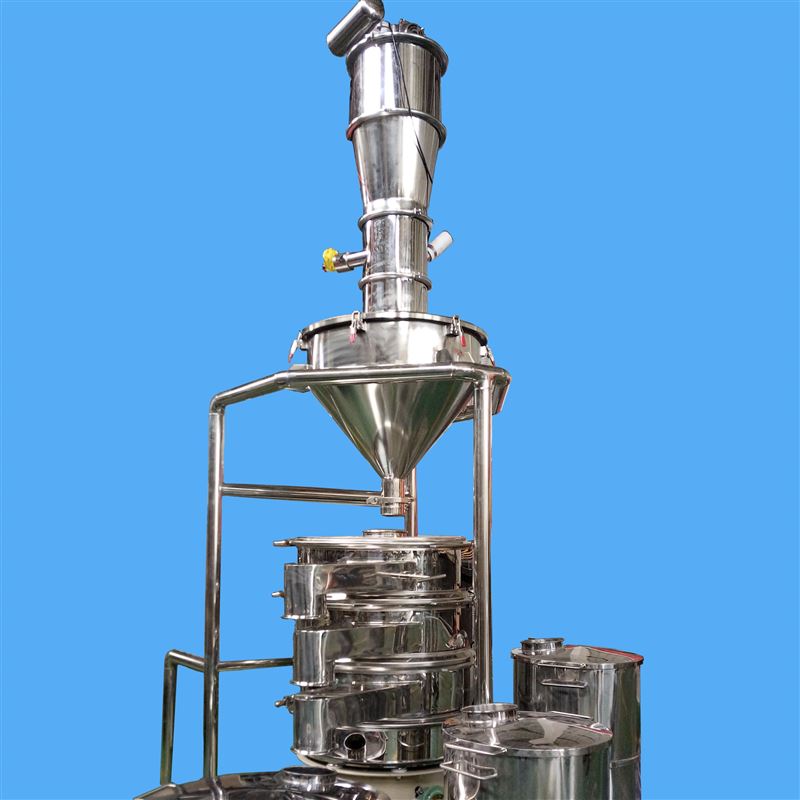
Ultrasonic grading filtration equipmentWorking principle:
1. Ultrasonic generation: The equipment is equipped with an ultrasonic generator inside, which can convert electrical energy into high-frequency sound waves. When these sound waves propagate in liquid, they cause rapid vibrations of liquid molecules.
2. Particle excitation: When ultrasound passes through a liquid containing suspended particles, the particles are excited by the sound waves. The response of particles to ultrasound varies depending on their size, density, and shape.
3. Graded separation: Due to the different forces exerted on particles of different sizes and characteristics under the action of ultrasound, the equipment can achieve graded separation of particles. Smaller particles will be pushed to the upper layer of the liquid, while larger particles will settle to the lower layer.
4. Filtration and Collection: After classification, the liquid flows through the filter, where larger particles are intercepted while smaller particles flow out with the liquid, completing the separation process.
Advantage:
1. High efficiency:
Ultrasonic grading filtration can complete large-scale separation operations in a short period of time, significantly improving production efficiency.
2. Fine separation:
This device can process very small particles with high separation accuracy, achieving separation effects at the micrometer or even nanometer level.
3. Energy conservation and environmental protection:
Ultrasonic grading filtration usually does not require a large amount of chemical reagents, reducing environmental pollution and lowering operating costs.
4. Easy to operate:
Equipped with an intelligent control system, it is easy to operate and maintain.
Application fields:
1. Pharmaceutical industry:
In the pharmaceutical process, it can be used to extract and purify drug components, improving the purity and quality of drugs.
2. Food processing:
The food industry uses ultrasonic technology to clarify and grade liquid food, remove impurities and bacteria, and extend the shelf life of food.
3. Environmental protection:
Ultrasonic grading filtration can be used for wastewater treatment to separate and remove suspended solids and pollutants from water, protecting water resources.
4. Materials Science:
In materials science research, this device can be used to synthesize nanomaterials and precisely control the size and distribution of particles.
Design points of ultrasonic grading filtration equipment:
1. Frequency selection:
The ultrasonic frequency of the equipment should be selected based on the properties of the material being processed. Generally speaking, lower frequencies are suitable for handling larger particles, while higher frequencies are suitable for handling fine particles.
2. Vibrator design:
The design of the vibrator directly affects the propagation effect of ultrasonic waves, and a reasonable structural design can improve the transmission efficiency of ultrasonic waves.
3. Filter material:
Choose appropriate filtering materials and pore sizes to ensure effective capture of target particles without causing excessive resistance to the liquid.
4. Temperature control:
In some applications, the temperature of the liquid can affect the separation efficiency, so it is necessary to design a temperature control system to ensure that the equipment operates at the optimal temperature.