-
E-mail
1256598140@qq.com
-
Phone
13764176823
-
Address
No. 1418 Zhuangliang Road, Zhuangxing Town, Fengxian District, Shanghai
Shanghai Haochao Machinery Equipment Co., Ltd
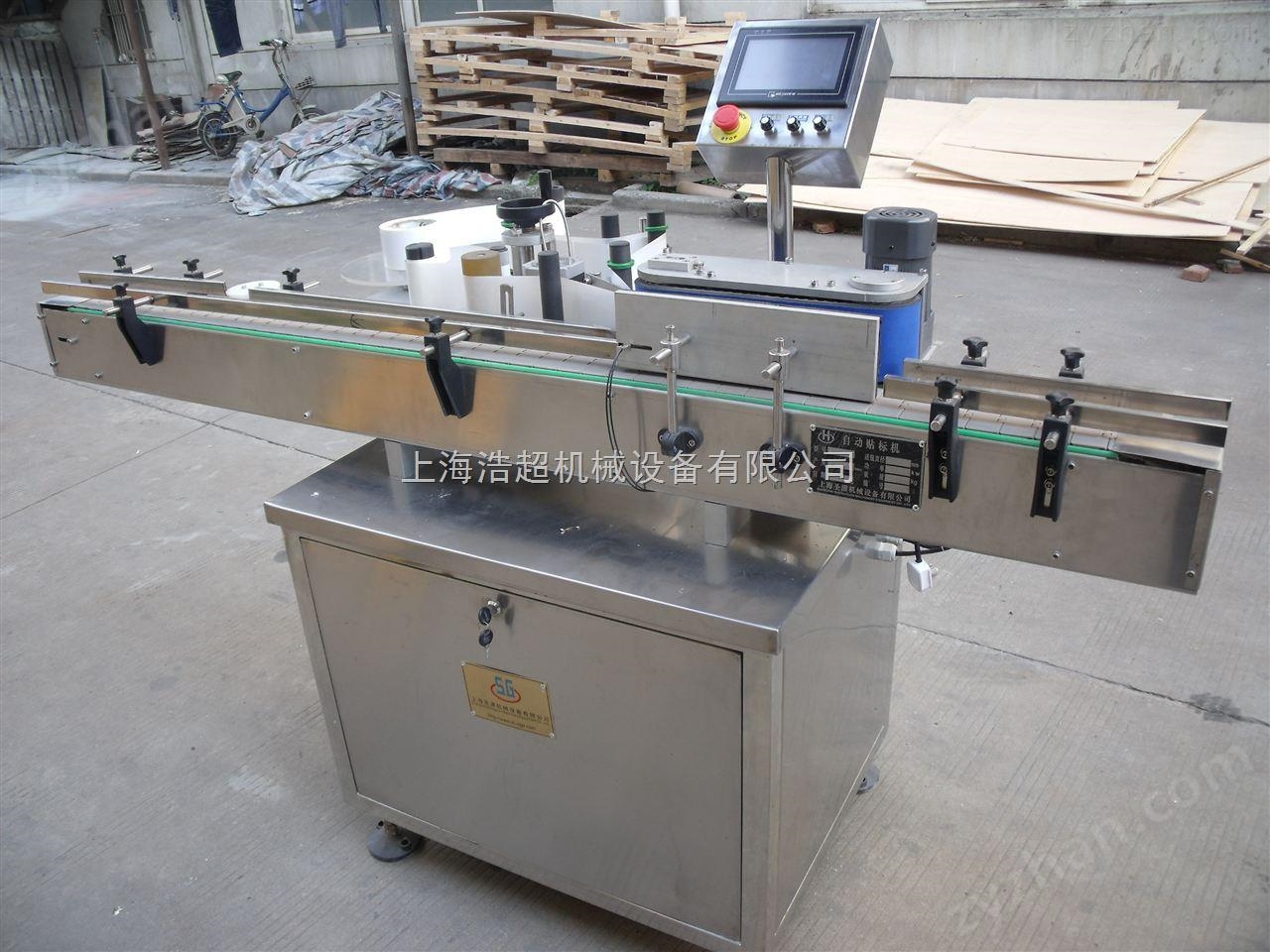
How to adjust the labels of the fully automatic self-adhesive labeling machine if they are not neat?
Date: 2025-12-30Read: 4
In modern production lines, the efficient labeling of fully automatic self-adhesive labeling machines is a key factor in ensuring the appearance quality of products. However, the issue of irregular labels may affect production efficiency and product image. This article systematically outlines adjustment methods to help quickly restore the optimal state of the device.
1、 Adjustment method for uneven labels
Label unevenness often manifests as wrinkling or skewing, mainly due to sensor position deviation, mismatched speed, or loose mechanical components. Here are the specific steps to solve the problem:
•Adjust the position of the photoelectric sensorEnsure that the extension length of the label on the label removal board is controlled within the range of 3-5 millimeters to optimize the labeling accuracy and avoid label folding or offset.
•Match labeling and delivery speedSynchronize the feeding speed and labeling time through the device control panel to eliminate label wrinkles caused by speed differences.
•Optimize the distance between the label belt and the backing boardAdjust the distance to 1-3 millimeters to prevent wrinkling caused by being too wide or deviation from the bottle's trajectory caused by being too narrow.
•Calibrate the distance between the detachment plate and the bottle bodyMaintain a parallel distance of 1-3 millimeters to ensure that the label smoothly detaches and adheres to the surface of the container.
•Check the gap between the pressure roller and the drumIf the gap is too large, it will cause the label paper to loosen. It is necessary to adjust the tension through a tension spring or friction block to ensure smooth label transportation.
2、 Solution to label misalignment
The misalignment issue may be caused by loose labels or inaccurate device positioning, which can be corrected through the following steps:
•Tighten the label tapeEnsure that the tape pressing device is firmly fixed to prevent label tape from loosening and deviation in electric eye detection.
•Align the position of the pasted objectMake the object parallel to the direction of the label to avoid label deviation caused by tilting.
•Stable object rotationLightweight objects need to be placed under a cover pole to ensure smooth rotation of the labeling station.
•Adjust the traction mechanismModerately press the traction mechanism to avoid the bottom paper being pulled off due to slipping or being too tight.
•Set label delayIn dual label mode, configure the delay signal for the second label to prevent premature rotation of the workpiece.
3、 Adjustment method for skewed labeling
Skewness problems are usually caused by mechanical components that are not parallel or subjected to uneven forces, and require careful calibration:
•Adjust the parallelism of the finger holderEnsure that the upper and lower finger holders are parallel and eliminate label skewness caused by tilting.
•Unified distance between finger holder and target plateCheck and adjust the distance between each point to ensure consistency and avoid uneven local stress.
•Balance finger forceSynchronize the calibration of the clamp finger force point to prevent excessive unilateral tension.
•Optimize cam positionAdjust the cam to synchronize the loosening time with the movement of the workpiece, avoiding premature or delayed peeling.
•Fixed label box installationEnsure that the label box is placed horizontally to prevent tilting and conveying the labels.
4、 Adjustment method for inaccurate labeling position
The positional deviation affects the appearance of the product, and we need to start with the design of the conveyor belt and label:
•Calibrate the height of the conveyor beltAdjust the position of the conveyor belt to match the label head, to avoid the label shifting up and down due to being too high or too low.
•Control the width of label waste edgesControl the width error of the waste edge within ± 1 millimeter to reduce positioning deviation caused by uneven width.
•Fixed paper blocking blockEnsure that the paper stopper is securely installed to prevent the label from deviating from the predetermined path during transportation.
5、 The impact of environment and materials
External factors and material characteristics are equally critical and require comprehensive management
•Control environmental humidityKeep the working environment dry to prevent changes in label stickiness caused by high humidity.
•Check the label materialChoose labels with strong tensile strength to avoid thin or irregular peeling of the material.
•Regularly clean equipmentRemove dust and oil stains, ensure the sticker head and container surface are clean, and improve the bonding effect.
6、 Maintenance and preventive measures
To ensure long-term stable operation, it is recommended to adopt the following maintenance strategies:
•Regularly inspect mechanical componentsIncluding the flatness of the conveyor belt, sensor sensitivity, and fastening of the sticker head, timely replacement of worn parts.
•Standardize operational proceduresTrain operators to operate according to regulations and reduce human errors.
•Establish a preventive maintenance planRegularly lubricating bearings and inspecting pneumatic components can extend equipment lifespan.