-
E-mail
2115911091@qq.com
-
Phone
13817861523
-
Address
No. 6, Lane 358, Wencheng Road, Xincheng, Songjiang District, Shanghai
Shanghai Hujing Medical Equipment Co., Ltd
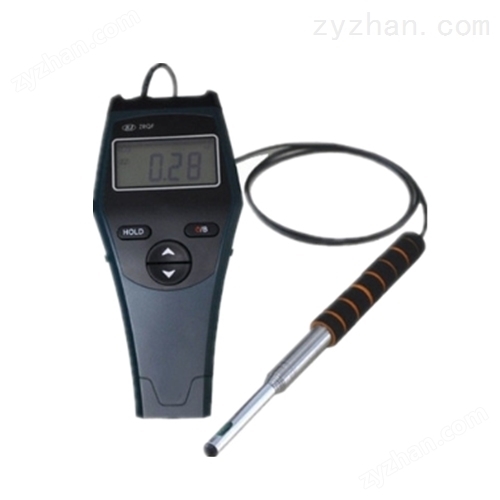
Detailed explanation of the process principle of the hot ball anemometer
Date: 2025-10-14Read: 3
A hot bulb anemometer is a precision instrument based on thermodynamic principles to measure wind speed. Its core process principle is to measure wind speed through the heat exchange relationship between the heating element and the airflow.
1、 Core Measurement Principles
The hot bulb anemometer adopts the principle of forced convection heat dissipation, and its measurement process is based on the following physical laws:
1. Thermal equilibrium equation: When a constant current passes through a heating element, the temperature of the element rises to a thermal equilibrium state, and the heating power is equal to the natural convection heat dissipation power.
2. Wind speed heat dissipation relationship: An increase in airflow velocity enhances the forced convection heat dissipation effect, leading to a decrease in the temperature of the heating element. This temperature change is a nonlinear function of wind speed.
3. Thermocouple feedback: Temperature changes are converted into thermoelectric potential signals through thermocouples, amplified by circuits, and displayed as wind speed values by instruments.
2、 Key component process
1. Probe structure
Glass sphere: precision glass sphere with a diameter of 0.6-0.8mm, internally encapsulated with nickel chromium wire heating coil and series thermocouple
Thermocouple array: using a phosphor copper pillar structure with a cold end directly exposed to the airflow to ensure temperature response sensitivity
Miniature packaging: Achieving miniaturization integration of heating elements and temperature measuring elements through special glass melting process
2. Circuit system
Constant current source circuit: provides stable heating current (usually 0.1-1A) to ensure initial thermal equilibrium state
Signal conditioning circuit: includes amplification, filtering, and temperature compensation modules to eliminate the influence of environmental temperature
Calibration system: Built in mechanical zero and full adjustment knobs, supporting on-site calibration
3、 Workflow
1. Preheating stage: After connecting the power, the nickel chromium wire heats the glass ball to the working temperature (usually 50-100 ℃)
2. Thermal equilibrium establishment: When there is no airflow, the system reaches a natural convection heat dissipation equilibrium state
3. Wind speed measurement:
When the airflow passes through, it takes away heat and the temperature of the glass ball decreases
Thermocouple output potential changes, converted into wind speed signals through circuits
The instrument displays the corresponding wind speed value (measurement range 0.05-30m/s)
4. Dynamic response: The system has low thermal inertia and a response time of less than 1 second, making it suitable for instantaneous wind speed measurement
4、 Technical features
1. High sensitivity: capable of detecting gentle winds of 0.05m/s, suitable for measuring low wind speeds such as air conditioning systems
2. Quick response: Small hot ball diameter, low heat capacity, fast dynamic response
3. Wide range ratio: The range ratio can reach 1:600, suitable for different wind speed environments
4. Temperature compensation: Eliminating environmental temperature effects through cold end temperature monitoring
5. Micro probe: probe diameter<1mm, capable of measuring in narrow spaces
This instrument is particularly suitable for precise measurement of low wind speed in situations such as automotive air conditioning vents and laboratory ventilation systems. Pay attention to regular calibration during use to avoid glass ball contamination affecting measurement accuracy.