-
E-mail
2462408924@qq.com
-
Phone
13701933845
-
Address
No. 6, Lane 358, Wencheng Road, Songjiang District, Shanghai
Shanghai Hujing Medical Equipment Co., Ltd
What is the working principle of a high flow dust particle counter?
Date: 2025-10-14Read: 6
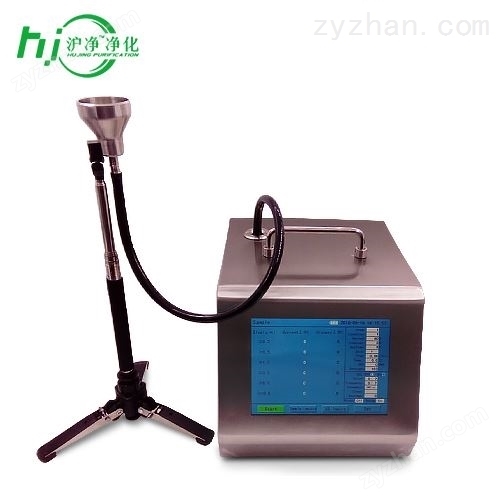
The working principle of the high flow dust particle counter is based on the light scattering effect, which achieves rapid detection and particle size analysis of particles in the air through precision optical systems and electronic signal processing. The core process can be divided into the following steps:
1、 Light scattering detection mechanism
When the air sample passes through the laser measurement chamber at a high flow rate (usually 28.3 L/min or higher), particles collide with a 635nm wavelength laser beam to produce scattered light. The scattered light intensity is proportional to the surface area of the particles, and is focused by a lens group onto a photodetector (such as a photomultiplier tube) to be converted into an electrical pulse signal.
2、 Signal processing and particle size determination
After being amplified by an amplifier, the electric pulse is classified and counted by a discriminator according to a preset particle size threshold (such as 0.3 μ m, 0.5 μ m, etc. channels). The pulse amplitude corresponds to the particle size, and the number of pulses reflects the particle concentration, which is ultimately converted into particle distribution data per unit volume (such as cubic meters) through algorithms.
3、 Implementation of high traffic characteristics
Air system: using high-power sampling pumps and flow controllers to ensure stable airflow through the detection chamber and avoid counting errors caused by flow fluctuations;
Optical compensation: By using temperature and humidity sensors to correct the influence of environmental parameters on light scattering, the detection accuracy under high flow rates is improved;
Parallel processing: The multi-channel electronic system synchronously processes six levels of particle size data to meet the dynamic evaluation requirements of cleanliness standards such as ISO14644.
This technology is widely used in scenarios such as pharmaceutical GMP workshops and semiconductor production lines that require real-time monitoring of high cleanliness environments. Its high flow design significantly improves sampling efficiency and representativeness.