-
E-mail
Ellasong@qiyi-china.com
-
Phone
13296018069
-
Address
Room A226, Building A, No. 58 Yindu West Road, Shanghai
Shanghai Qiyi Instrument Equipment Co., Ltd
Principle and application fields of vacuum quality extraction method detector
Date: 2025-08-15Read: 4
The vacuum mass extraction method detector works based on mass spectrometry principles and is mainly used for leak detection.
Firstly, gas molecules are ionized in a vacuum system and converted into charged ions (such as through electron bombardment or ionization sources).
Next, the ions are accelerated in an electric or magnetic field and separated according to the mass to charge ratio (m/z) (commonly used mass analyzers such as quadrupole or magnetic field deflectors).
Finally, the detector measures ion current or intensity and accurately identifies gas composition or partial pressure anomalies by analyzing signal changes, thereby locating small leakage points.
This technology achieves high-sensitivity leak detection by monitoring changes in gas quality in a vacuum environment, effectively avoiding safety or environmental issues caused by leaks.
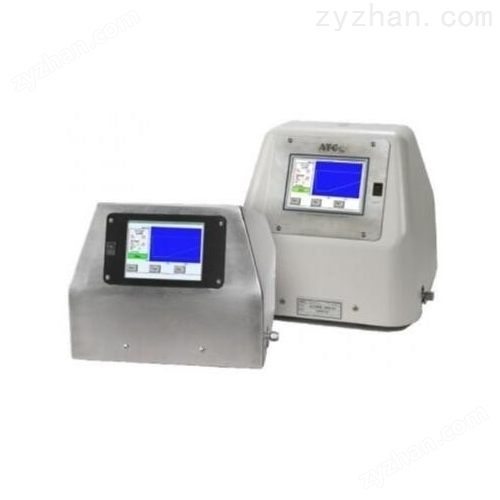
The vacuum quality extraction method detector is widely used in multiple industries to ensure sealing performance.
Packaging industry: used to test the sealing of packaging for food, pharmaceuticals, medical devices, and daily chemical products, and evaluate whether there is air leakage, deformation, or rupture by simulating a vacuum environment.
Industrial safety: In the fields of chemical, automotive, and electronics, preventing the release of toxic substances, explosion accidents, or environmental pollution caused by pipeline or equipment leaks.
Quality Inspection and R&D: Support sealing testing for cosmetics, stationery, and other products to improve product quality control accuracy.