-
E-mail
cnshsg@126.com
-
Phone
16602191291
-
Address
No. 2486 Xinjian 1st Road, Jiading District, Shanghai
Shanghai Shenggang Machinery Equipment Co., Ltd
Fully automatic closed-loop control: process optimization scheme for ball bottle essential oil filling and capping machine
Date: 2025-12-25Read: 6
In the production of ball bottle essential oil filling and capping, traditional open process often faces pain points such as large measurement deviation, asynchronous filling and capping, low product qualification rate, and frequent manual intervention, especially for high viscosity essential oils, which are prone to overflow and uneven capping tightness, directly affecting production capacity and product quality. The fully automatic closed-loop control technology uses a dynamic control logic of "perception feedback adjustment" to construct a full process process process optimization plan, accurately solving industry production pain points.
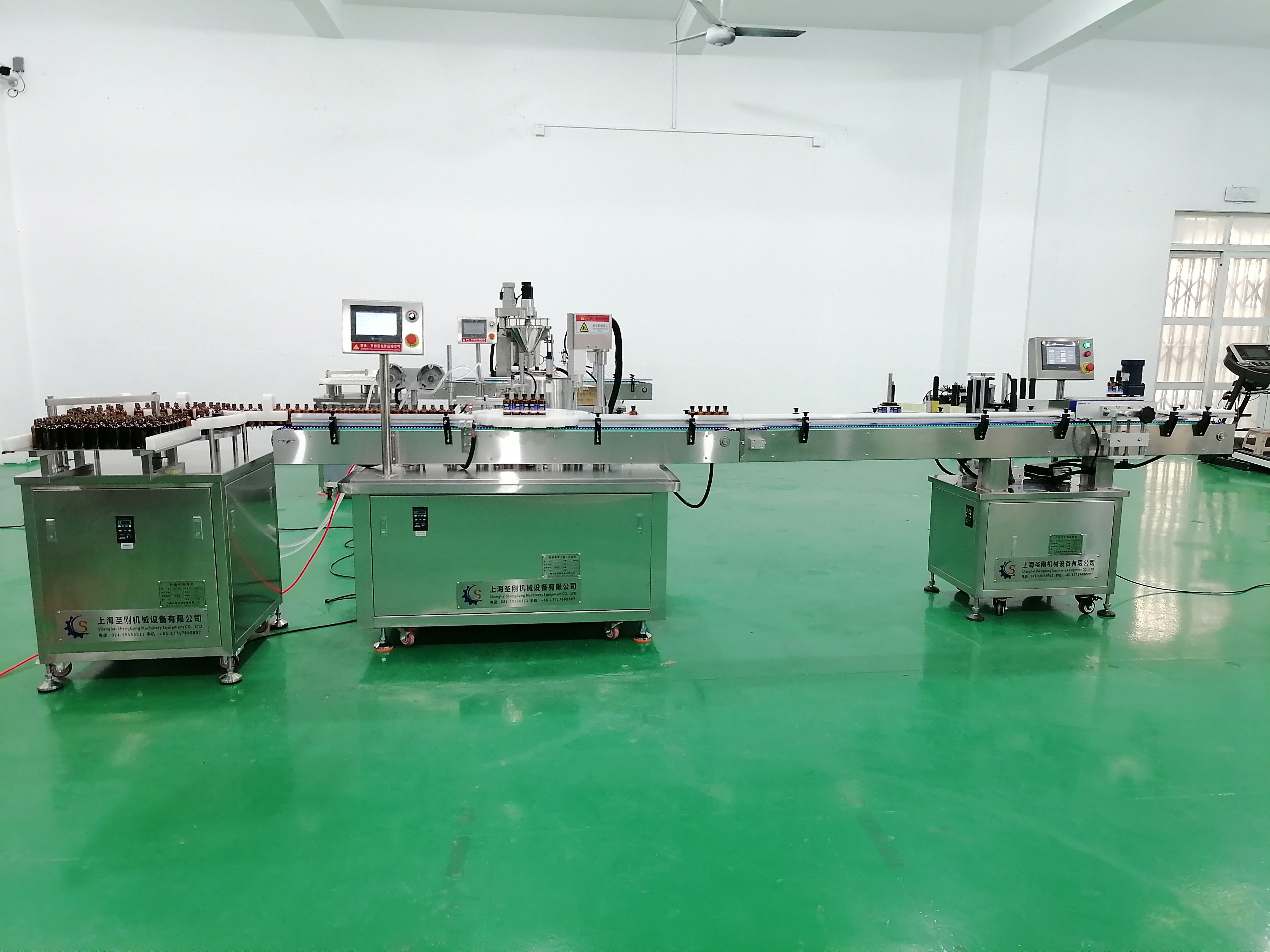
The core of this optimization plan lies in building a multidimensional sensing feedback system to solve the pain points of traditional process "blind control". By installing high-precision flow sensors on the filling head and configuring pressure sensors on the capping mechanism, key data such as filling volume and capping torque can be collected in real-time and synchronously transmitted to the control system. Compared to the traditional open process that relies on manual inspection and adjustment, the closed-loop system can capture small deviations in real time, such as fluctuations in filling volume, abnormal capping force, etc., and can initiate correction programs without manual intervention.
The solution has optimized the linkage mechanism between servo drive and closed-loop control to address the pain point of unstable filling caused by differences in essential oil viscosity. The system can preset filling speed and pressure parameters corresponding to different essential oil viscosities. During operation, the material flow status is monitored in real time through sensors, and the servo motor speed is dynamically adjusted to ensure uniform filling of viscous essential oils without wall hanging, precise control of thin essential oils without splashing, and stable measurement error control within ± 0.03ml. At the same time, in response to the problems of bottle displacement and leakage caused by asynchronous filling and capping, real-time tracking of bottle position is achieved through photoelectric positioning sensors, closed-loop control of conveying track speed and filling and capping rhythm, and precise timing matching of the entire process is achieved.
In addition, the plan has optimized the abnormal warning and traceability functions to solve the pain points of difficult traceability of traditional process quality problems. When three consecutive bottles of product parameters exceed the standard, the system immediately triggers an audible and visual warning and suspends production, while automatically recording abnormal data for subsequent process review. The full process data retention function of closed-loop control can also meet the requirements of GMP compliance audit for traceability of the production process, reducing compliance risks for enterprises.
In summary, the fully automatic closed-loop control optimization solution effectively solves the pain points of inaccurate measurement, poor synchronization, and difficult quality traceability in traditional processes through the core logic of dynamic perception, precise feedback, and intelligent adjustment. While improving product qualification rates, it reduces manual intervention and material waste, adapts to the production needs of multi viscosity and multi specification essential oils, and provides technical support for enterprises to build an efficient, stable, and compliant filling and capping production system.