-
E-mail
yhb_zwft@163.com
-
Phone
13916728674
-
Address
No. 98 Shuangzhu Road, Huating Town, Jiading District, Shanghai
Shanghai Zhikai Powder Machinery Manufacturing Co., Ltd
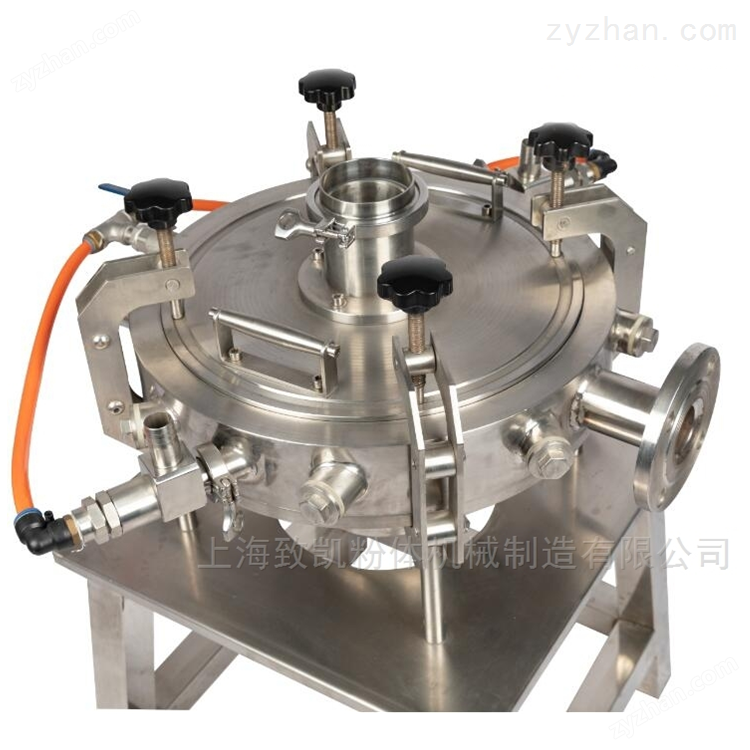
What is the process principle of the disc type airflow crusher?
Date: 2025-08-25Read: 0
The process principle of the disc type airflow crusher is mainly based on the synergistic effect of high-speed rotating machinery and airflow kinetic energy, achieving efficient crushing through the following core mechanisms:
1. Mechanical shock and airflow acceleration
After the material enters the crushing chamber through the feeding port, the high-speed rotating disk (usually equipped with cutting tools or gear rings) exerts strong impact and shear on the material. At the same time, the high-pressure airflow system sprays supersonic airflow from the nozzle, forming a vortex field, further enhancing the dispersion and impact effect of the material.
2. Particle collision dominated pulverization mechanism
Under the joint action of the disc and the airflow, the material particles are in a highly suspended state, and the collision frequency between particles is much higher than the contact with the equipment wall, mainly relying on mutual impact and friction to achieve crushing. This mechanism can effectively reduce equipment wear and improve crushing efficiency.
3. Classification and Separation Process
The crushed particles rise to the classification zone with the airflow, while the coarse particles are thrown back to the crushing zone for further processing due to centrifugal force. The fine particles are collected by the cyclone separator or dust collector through the classification wheel. The speed of the grading wheel can be adjusted to precisely control the particle size distribution of the finished product.
4. System design features
This process adopts dry crushing and is suitable for thermosensitive materials (such as pharmaceuticals and chemical raw materials), and the use of airflow cooling can avoid excessive temperature rise during the crushing process. Its annular crushing chamber design can form a high-intensity vortex field, especially suitable for ultrafine crushing of viscous materials.
Last Article: Process principle of fluidized bed airflow pulverizer