-
E-mail
lgy@schalod.com
-
Phone
15618110227
-
Address
3rd Floor, Building 22, No. 518 Xinzhuan Road, Songjiang District, Shanghai
Sharoten Industrial Technology (Shanghai) Co., Ltd
Working principle and wide application of thermal gas mass flowmeter
Date: 2025-10-24Read: 95
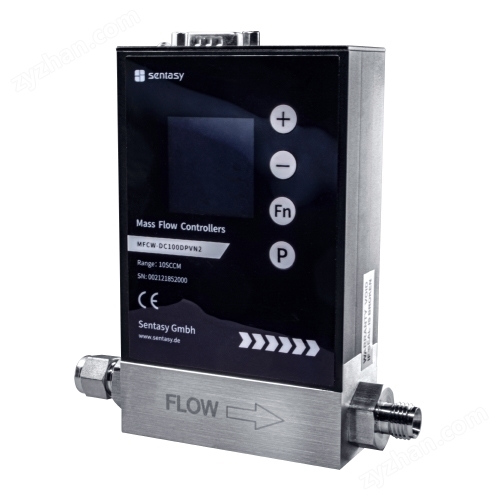
The working principle of a thermal gas mass flowmeter is based on the thermal diffusion effect, which directly obtains the mass flow rate by measuring the heat exchange relationship between the gas flow and the heat source. Its core components include heating elements (such as platinum resistance heating wires) and temperature sensors. During operation, the heating elements are heated to a temperature higher than the gas temperature, and the gas flow carries away heat, causing temperature changes. The mathematical relationship between temperature difference and flow rate is established through constant temperature difference method or constant power method. For example, the constant temperature difference method maintains a fixed temperature difference by dynamically adjusting the heating power, and the power consumption is proportional to the mass flow rate; The constant power rule infers the flow rate by measuring the temperature difference.
This technology has advantages such as no need for temperature and pressure compensation, low pressure loss, and wide range ratio (up to 1000:1), and is widely used in the following fields:
1. Petrochemical industry: Measurement of raw gas containing corrosive gases (such as H ₂ S), using Hastelloy alloy sensors can extend the service life; Torch gas emission monitoring utilizes its wide range and anti clogging characteristics.
2. Power industry: Boiler combustion air flow measurement can optimize gas ratio and save energy consumption; Monitoring blast furnace air volume improves fuel utilization efficiency.
3. Environmental monitoring: Real time monitoring of the total amount of pollutants at the exhaust outlet, combined with anti condensation design to adapt to high humidity environments.
4. Food and medicine: 316L stainless steel material that meets GMP certification is used for nitrogen flow measurement.
5. Wastewater treatment: Gas flow control in aeration tanks promotes microbial decomposition of pollutants.
Modern technology further improves accuracy through digital communication, temperature compensation, and corrosion-resistant materials such as Hastelloy, covering measurement ranges of 0.02~60m/s flow velocity and DN15~1000 pipe diameter conditions.