-
E-mail
marketing@gassensor.com.cn
-
Phone
13296672587
-
Address
No. 3 Fenghuangyuan 3rd Road, Fenghuangyuan Industrial Park, Donghu New Technology Development Zone, Wuhan City
Sifang Optoelectronics Co., Ltd
Breaking through the monitoring blind spot of large particle size, upgrading the safety defense line for lithium battery production
Date: 2025-12-26Read: 6
When industry standards and monitoring equipment focus on ultrafine particles, who is paying attention to those 'larger particles'?
In lithium battery manufacturing, the monitoring system for particles ≤ 5.0um has become increasingly mature. For particles larger than 5.0 μ m generated in the process, they often exceed the conventional monitoring range and remain in a neglected "regulatory blind spot" for a long time. At present, many lithium battery companies believe that as long as small particles are strictly controlled, the normal production of batteries can be guaranteed, and the focus of cleanliness control is almost placed on particles ≤ 0.5 μ m. In fact, these large particles are also potential threats to battery performance and safety, and their risks have not been fully recognized.
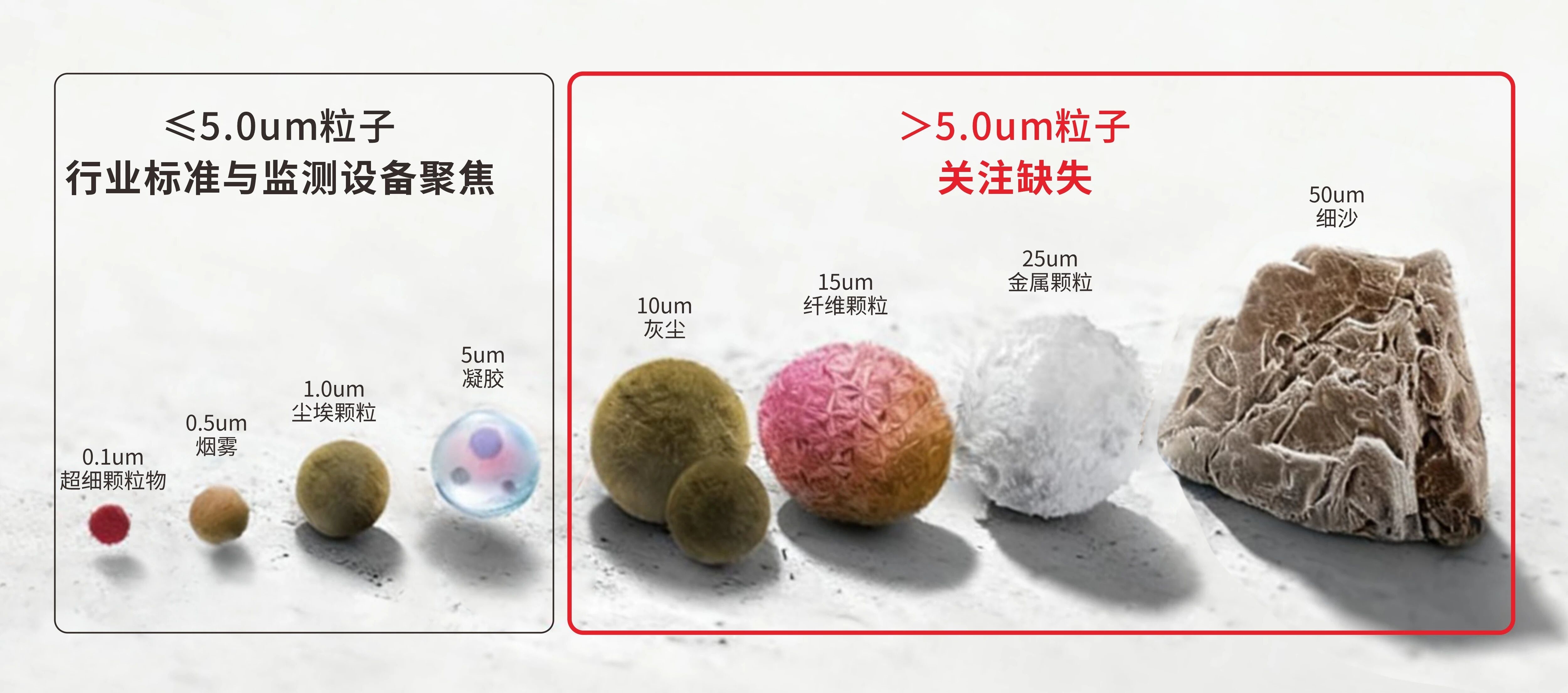
1、 The 'invisible killer' of lithium battery production: overlooked large particle size particles
Large particles are like "steel nails" scattered inside lithium batteries, which can easily pierce the separator and cause internal short circuits under the continuous compression of battery charging and discharging; Meanwhile, the migration of lithium ions within large particles is difficult, resulting in poor fast charging performance and low capacity, and the particles are prone to rupture during cycling, accelerating battery degradation; Even more dangerous is that repeated charging and discharging can induce lithium dendrite growth, further increasing the risk of short circuits and thermal runaway.

△ Image reference: "Science and Education Integration Series: The Past and Present of Lithium ion Batteries (Part 1) Starting from the Nobel Prize in Chemistry: The Past Brilliance of Lithium ion Batteries"
2、 Monitoring dilemma: why is it so difficult to capture large particle sizes?
•Rapid settlementIn the unidirectional airflow of the clean room, large particles quickly settle due to gravity, with short residence time and low concentration in the air, making it difficult to capture;
•Easy to deposit:Due to their large inertia, large particles are prone to detach from the airflow during the sampling process and adhere to the surface of optical components, resulting in distortion of test data;
•Uneven distribution:Dynamically formed in processes such as rolling and slitting, with high concentration of locally large particles, traditional fixed-point sampling is prone to missed detection;
•Identifying complexity:Different from small particles, large particles have a wide range of particle sizes and diverse shapes, which require higher recognition algorithms and hardware systems for monitoring equipment.
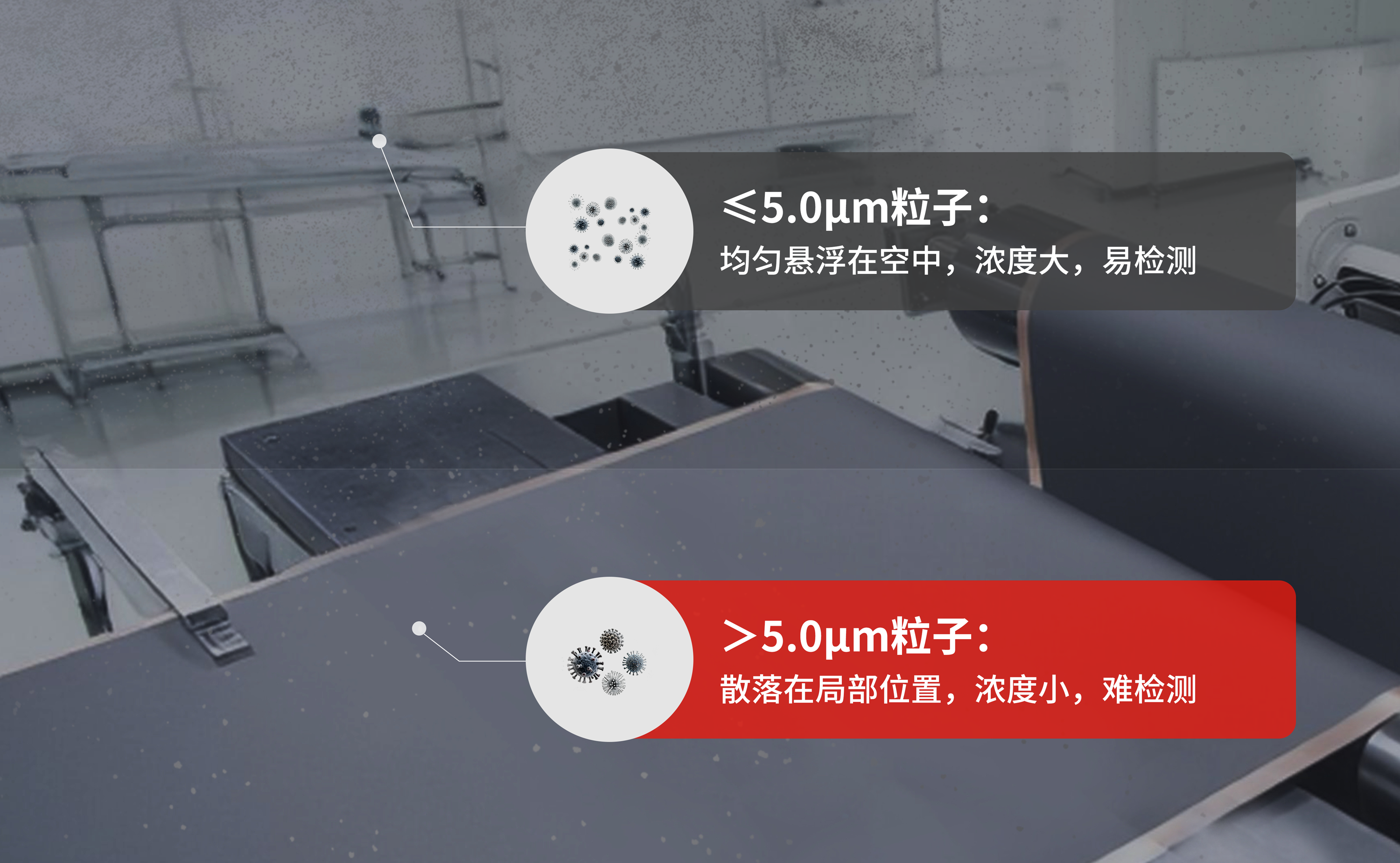
This has led the industry into a 'contradictory' situation: having a thorough understanding of small particles in the 'micro world', but lacking in monitoring the almost visible 'macro threats'.
3、 The way to break through: Four party photoelectric large particle counter OPC-6525DS
•To address the challenge of monitoring large particle sizes, Sifang Optoelectronics has developed a professional solution based on the principle of light scattering, integrating key technologies such as intelligent particle size recognition, sheath flow protection, and high flow sampling - the OPC-6525DS large particle counter.
•Equipped with a dust source intelligent recognition module, six channel synchronous collection, accurate measurement of particle size of 0.5-50 µ m for precise traceability and risk control;
•The core sheath flow structure design effectively prevents optical cavity surface dust, ensuring long-term stable operation and accurate data in high concentration dust environments;
•Supports mainstream industrial and IoT protocols such as Modbus/TCP/RTU/MQTT, making it easy to flexibly integrate into various monitoring systems;
•24-hour online monitoring provides 24/7 support for the production environment.
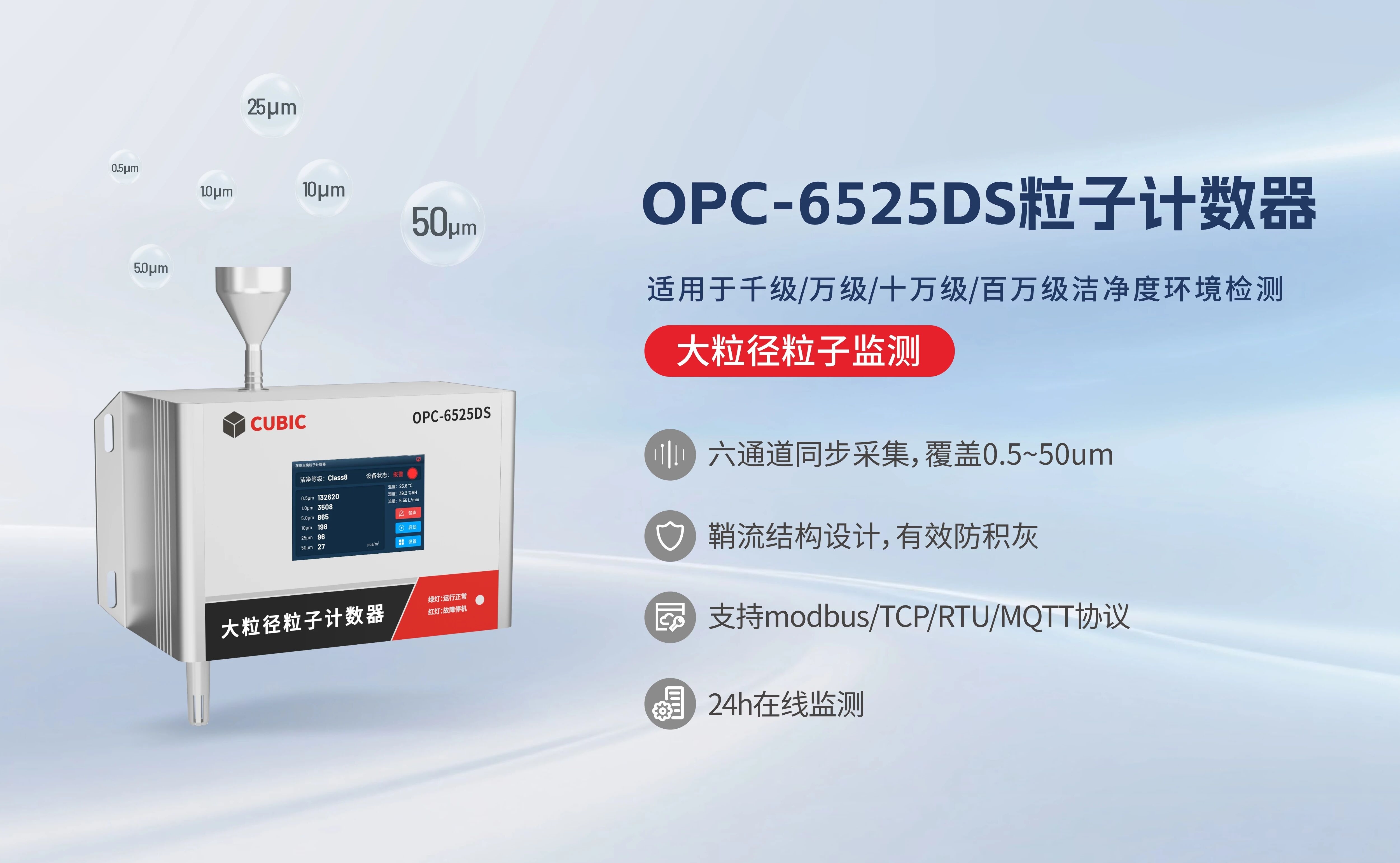
Only when risks are visible can quality be managed. The OPC-6525DS large particle counter from Sifang Optoelectronics is a key link in building a strong quality defense line for lithium battery manufacturing, helping customers move towards "zero defect" manufacturing.