-
E-mail
marketing@gassensor.com.cn
-
Phone
13296672587
-
Address
No. 3 Fenghuangyuan 3rd Road, Fenghuangyuan Industrial Park, Donghu New Technology Development Zone, Wuhan City
Sifang Optoelectronics Co., Ltd
Cold air strikes after the beginning of winter: beware of formaldehyde hazards under "tightly closed doors and windows"
Date: 2025-11-13Read: 6
After the beginning of winter, many places experienced cooling weather, with the lowest temperature in Beijing dropping to below zero. Many places in the north began to provide heating, and the time to close doors and windows increased, resulting in reduced indoor and outdoor air convection. This seasonal lifestyle change invisibly increases the risk of indoor formaldehyde accumulation, and formaldehyde concentration may inadvertently rise to dangerous levels.
Formaldehyde is classified as a Group I carcinogen by the World Health Organization (WHO) and the International Agency for Research on Cancer (IARC), and there is ample evidence to suggest its clear carcinogenicity to humans. Contrary to common understanding, the formaldehyde release cycle lasts for 3-15 years and does not stop at the end of summer, regardless of whether it is a new or old residence. The beginning of indoor heating in autumn and winter will also accelerate the release of formaldehyde from furniture and flooring. Short term low-dose inhalation may cause eye, nose, and throat irritation, as well as skin allergies; Long term exposure is associated with malignant diseases such as leukemia and nasopharyngeal carcinoma, and is particularly harmful to sensitive populations such as children, pregnant women, and the elderly.
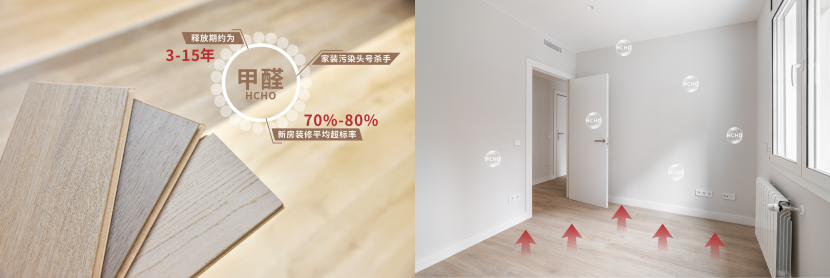
01► Formaldehyde detection, wrong selection=blind testing?
Many people who are accustomed to online shopping will choose "formaldehyde detection boxes" or portable detectors to test indoor formaldehyde, but you may not know - these seemingly convenient small tools may not even produce formaldehyde data at all!
Don't believe me? Why not try a simple experiment: place the basic color formaldehyde detection kit next to oranges, flowers, or even peanut butter, and the reagent will still change color. Why is that?
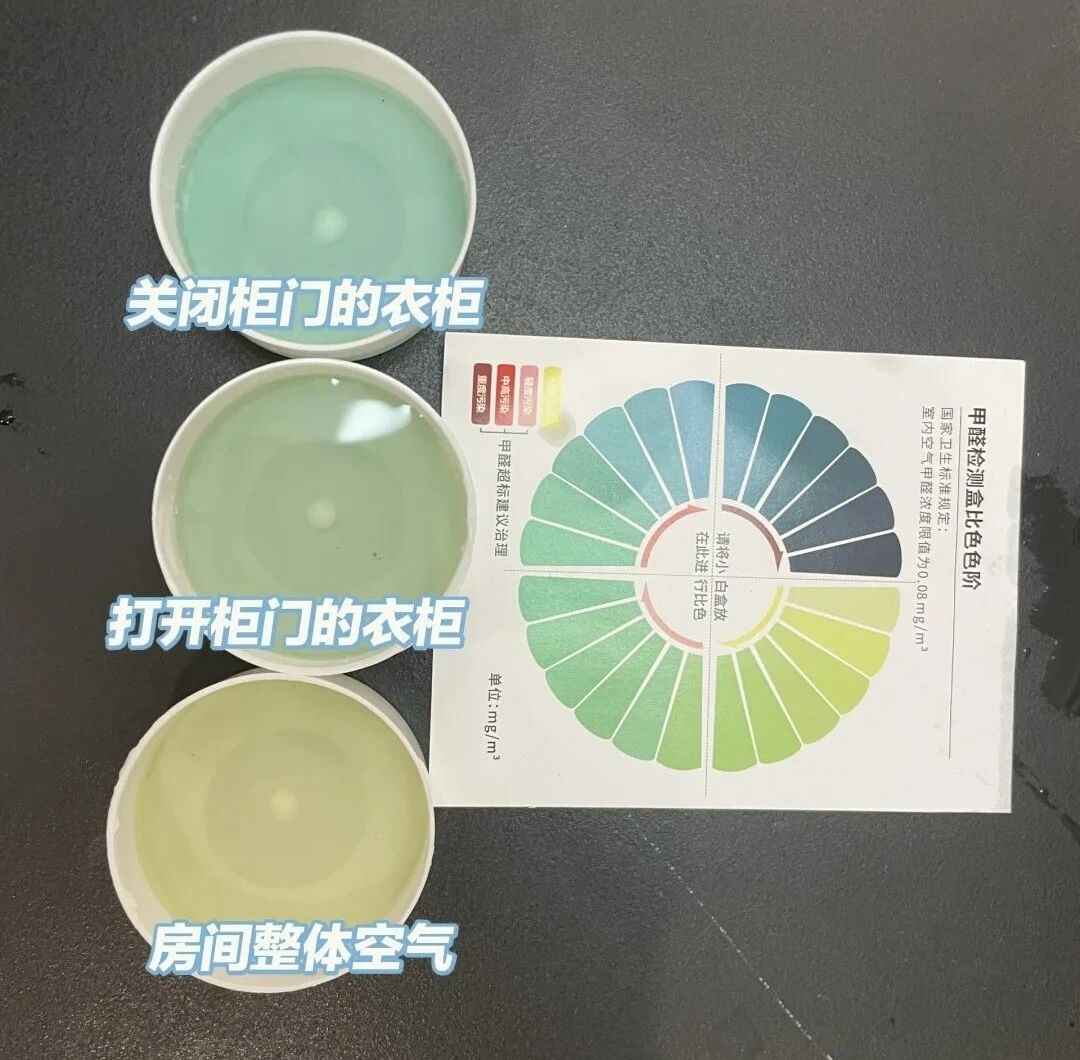
Formaldehyde detection kit placed in different areas of the same room for reagent change experiment (network diagram)
There are two main reasons:
1. Environment is the biggest variable: indoor sealing time, temperature and humidity changes, and other volatile organic compounds (such as olefins emitted from citrus fruits) may all interfere with chemical reactions, leading to "false positives" or false high readings;
2. Visual judgment is too subjective: the judgment relies solely on "sensation", relying on the naked eye to compare with the control color card. The color differences are subtle and difficult to distinguish, and the final "formaldehyde concentration" is likely only a psychological expectation.
CCTV has reported that the Shanghai Market Supervision Bureau has randomly inspected over 20 popular household testing devices - they are easy to operate, produce results in seconds, and look very "high-tech". But in the same sealed testing environment, the readings of these instruments are laughable: some explode, some barely meet the standard, and some directly display as 0. Experts point out that although these "detectors" are equipped with electrochemical sensors, they have a simple structure and are easily interfered with. At most, they can be considered as "harmful gas sensors". Do you want to accurately measure formaldehyde? It's almost an impossible task.
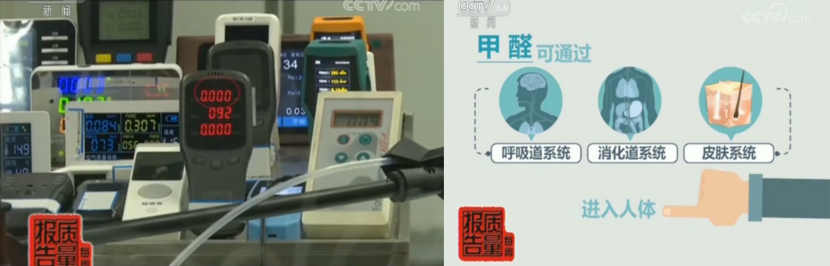
Formaldehyde can enter the human body through the respiratory system, down to the system, and skin system (as shown in the CCTV "Quality Report" section)
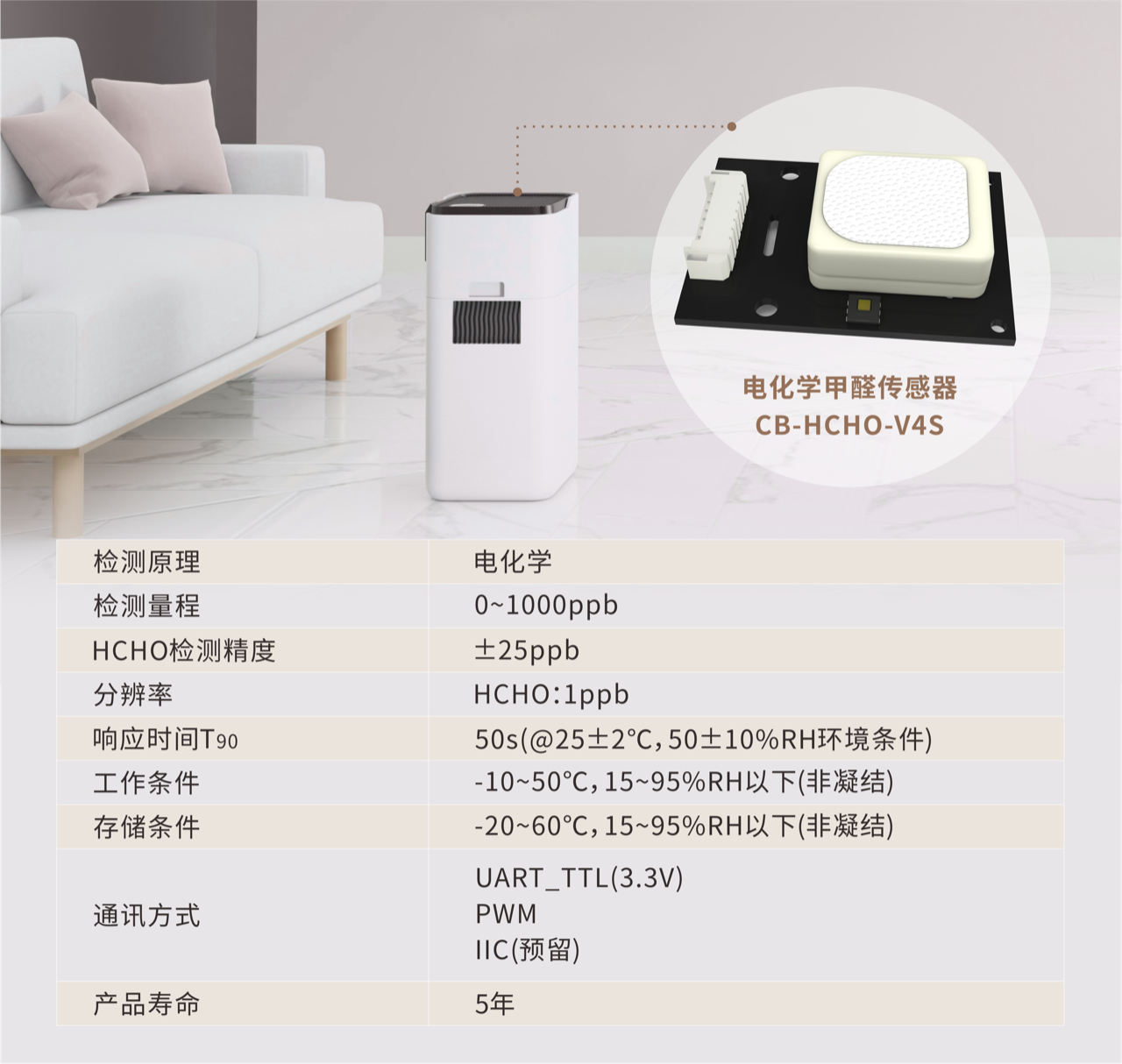
02► CB-HCHO-V4S Formaldehyde Sensor
The CB-HCHO-V4S fourth generation upgraded formaldehyde sensor from Sifang Optoelectronics provides accurate detection capability for air quality monitoring equipment with a resolution of up to 1ppb and comprehensive temperature compensation technology. The principle of electrochemical detection is precisely defined, and through unique electrolyte packaging technology and digital algorithm optimization, it can effectively identify and eliminate the cross effects of various common VOCs (such as alkenes released from citrus, ethanol, benzene derivatives, etc.), ensuring the authenticity and reliability of formaldehyde readings.
High selectivity&sensitivity
Dynamically tracking changes in formaldehyde concentration, with a detection limit of up to 0.8ppb, excellent anti-interference performance, suitable for various scenarios such as residential buildings, schools, offices, etc
Stable performance and long lifespan
Built in intelligent temperature and humidity compensation algorithm, significantly reducing calibration frequency, highly consistent signal output and reliability, aiming to provide continuous and reliable long-term health protection for terminals
Cost advantage&high yield
By utilizing innovative sensing structures and simplified calibration processes, we aim to reduce total cost of ownership and facilitate large-scale adoption
03► How to breathe peacefully with closed doors and windows in winter?
Although ventilation is an effective way to reduce formaldehyde concentration, it is not practical to open windows for a long time in cold seasons. We suggest:
Timely ventilation: opening windows for a short period of time during high temperature periods during the day to create air convection;
Continuous monitoring: Air quality equipment equipped with CB-HCHO-V4S sensors can capture real-time changes in formaldehyde concentration and provide timely warnings;
Auxiliary purification: Combined with an air purifier or fresh air fan with formaldehyde removal ability, it continuously purifies during the window closing period.
Choose truly reliable detection technology to protect the respiratory health of family members on every winter day when doors and windows are tightly closed.
Editor: Lily
Proofreading: Daniel
Reviewed by: Xiao Jinhua