-
E-mail
1403163800@qq.com
-
Phone
18913123961
-
Address
1st Floor, Block B, Building 6, No. 88 Changwang Road, Dongqiao, Huangdai Town, Xiangcheng District, Suzhou City
Suzhou Kaixu Purification Equipment Co., Ltd
Process principle and application advantages of biological reagent purification water equipment
Date: 2025-08-07Read: 4
1、 Process principle
1. Multi level purification architecture
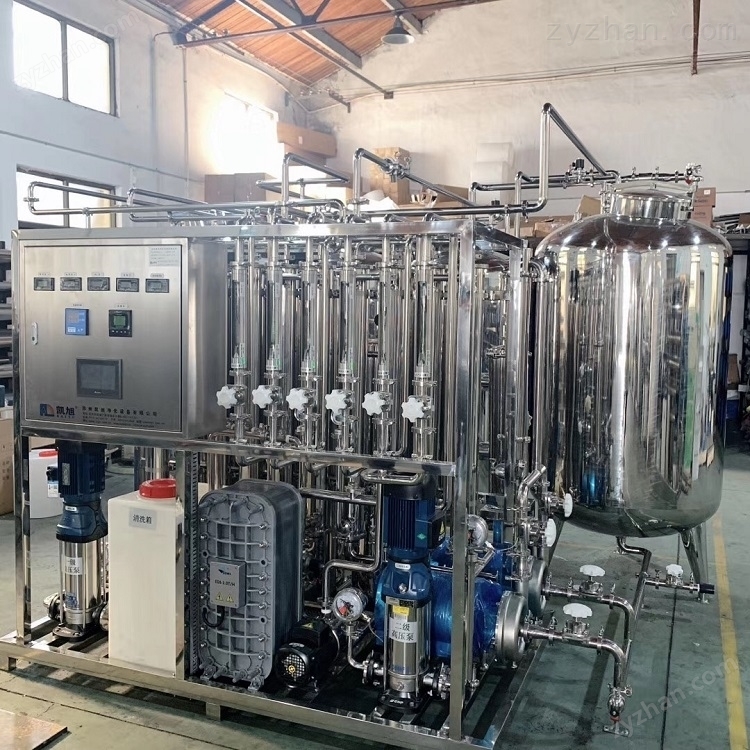
The biological reagent purification water equipment adopts a three-stage system of 'pretreatment reverse osmosis precision treatment': pretreatment removes suspended solids and organic matter through activated carbon adsorption and precision filtration; The reverse osmosis unit uses high-pressure driven semi permeable membranes to separate soluble impurities, with a retention rate of up to 99%; The precision processing stage achieves continuous desalination without the need for acid-base regeneration through EDI electro deionization technology, with a stable resistivity of over 15M Ω· cm.
2. Microbial control technology
The system integrates dual barriers of ultraviolet sterilization and ultrafiltration membrane. Ultraviolet radiation destroys DNA and inactivates microorganisms, while ultrafiltration membrane physically intercepts bacteria and endotoxins. The pipeline is designed with 316L stainless steel sanitary grade to prevent the growth of biofilms.
2、 Application advantages
1. Quality assurance
The produced water meets the purified water standards of the Chinese Pharmacopoeia, with bacterial endotoxins<0.25EU/ml, meeting the preparation requirements of biochemical reagents sensitive to water quality such as PCR experiments and cell culture. Modular design allows for flexible configuration of purification processes based on reagent grades.
2. Operational efficiency
EDI technology saves 30% water compared to traditional mixed beds and reduces the cost of hazardous waste treatment. The fully automatic control system realizes remote monitoring of water quality parameters and reduces manual intervention with fault self diagnosis function.
3. Compliance Design
The equipment meets the requirements of GMP Annex 1, and the validation documents cover the entire lifecycle of DQ/IQ/OQ/PQ, ensuring audit traceability of biopharmaceutical production. Closed storage tanks are equipped with nitrogen protection to eliminate the risk of secondary pollution.