-
E-mail
liuyuanzhi@eti-test.com
-
Phone
19201635557
-
Address
Wujiang to Tongli Economic Development Zone, Suzhou City
Suzhou Yitai Environmental Technology Co., Ltd
GB/T 16292-2025 "Test Method for Suspended Particles in Cleanrooms (Areas) of the Pharmaceutical Industry" differs from the old version
Date: 2025-11-04Read: 97
Weekly tip: Yitai Jingke announced today that the new regulations will soon implement GB/T 16292 "Testing Methods for Suspended Particles in Cleanrooms (Areas) of the Pharmaceutical Industry". Comparison and analysis of the differences between the 2010 and 2025 versions
GB/T 16292Test Method for Suspended Particles in Cleanrooms (Areas) of the Pharmaceutical Industry2010Version andComparative analysis of 2025 version tracking
GB/T 16292-2025Test Method for Suspended Particles in Cleanrooms (Areas) of the Pharmaceutical Industry2025year10moon10Daily release,2026year11moon1Daily implementation, alternative2010Version. specificchangeThe content is as follows:
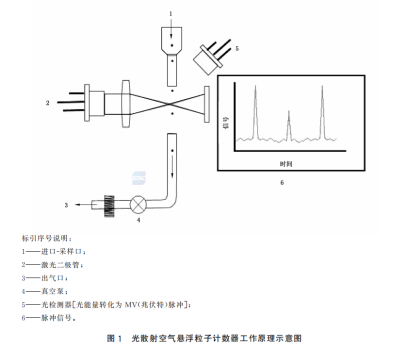
1. New content: Added the working principle and schematic diagram of the instrument, and refined the description of the working principle of the instrument; add“Suspended particle monitoring”Chapter; Add a calculation method for particle concentration per cubic meter.
2. Adjustment content: Change the suspended particle testing method; Modify the minimum number of sampling points, sampling point positions, and single sampling volume; adjust“Test Report”The relevant requirements; Add sampling time requirements for each sampling point.
3. Delete content: Cancel the limit on the number of sampling times; Remove standard deviation and95%Requirements and calculation methods for confidence upper limit; delete“result evaluation”Related content; delete“clean room(district)Sampling point arrangement”Appendix.
Here isGB/T 16292-2010Testing Method for Suspended Particles in Cleanrooms (Areas) of the Pharmaceutical IndustryGB/T 16292-2025Comparison of the testing methods for suspended particles in clean rooms (areas) of the pharmaceutical industry, organized according to the original content of the regulations
(Note:2025The version has not been officially implemented yet. Some content is based on the draft for soliciting opinions and the standard revision instructions. The final version will be subject to the official F release text
| chapter | Original text of GB/T 16292-2010 | Original text of GB/T 16292-2025 | Difference Description | ||||
| 1、 scope | This standard specifies the testing methods for airborne particulate pollution. This standard is applicable to the testing of airborne particles and environmental validation in clean rooms and clean areas, sterile rooms, or local air purification areas (including clean workbenches) in the pharmaceutical industry. This standard cannot be used to characterize the reproductive properties of physical, chemical, radiomic, or airborne particles. Note: Within the sampling particle size range, the actual particle concentration is unpredictable and significantly changes over time as the sampling volume increases. | This document describes the cleanroom in the pharmaceutical industryTest method for concentration of suspended particles in the air. This document is applicable to the testing of airborne suspended particles in clean rooms (areas) of the pharmaceutical industry. | In version 1.2025, the applicable expressions of "sterile room, local air purification area (clean bench)" have been removed, and the scope is more focused on "clean room (area)"; 2. In the 2025 version, remove the statement 'cannot characterize physical/chemical/reflectance spectroscopy/particle reproductive properties' and related annotations, simplify the scope Description. | ||||
| 2、 Normative reference documents | The clauses in the following documents become clauses of this standard by reference. Any referenced document marked with a date shall not be subject to any subsequent amendments (excluding errata) or revisions to this standard. However, parties to agreements based on this standard are encouraged to study whether the latest versions of these documents can be used. The latest version of any referenced document without a date is applicable to this standard.YY 0033-2000 Sterile Medical Device Production Management Specification | The contents of the following documents constitute essential provisions of this document through normative references in the text. Among them, for referenced documents with dates, only the version corresponding to that date is applicable to this document; The latest version (including all modifications) of the referenced document without a date is applicable to this document.GB/T 29024.4 Particle size analysis - Optical measurement methods for single particles - Part 4: Clean room light scattering - Dust particle counter - GB/T 36066 Cleanroom and related controlled environment detection technology requirements and applications | 1. Reference file replacement: The 2010 version references YY 0033-20002025 version references GB/T 29024.4 and GB/T 36066, which are more in line with particle counter technology and clean room testing requirements; 2. The citation rules have been fine tuned, and the 2025 version explicitly includes the "modification form" in the "latest version". | ||||
| 3、 Terms and definitions | 3.1 Clean Room (Area): A room or area where environmental control is required for dust particles and microbial contamination. The building structure, equipment, and usage all have the function of reducing the intervention, generation, and retention of pollution sources in the area. Other related parameters such as temperature, humidity, and pressure also need to be controlled. 3.2 Local air purification: a method of achieving a specified level of air cleanliness by only increasing the concentration of suspended particles in the air of indoor work areas or specific local spaces. 3.3 Unidirectional flow: an airflow with uniform wind speed on a section perpendicular to the direction of the airflow and parallel to the streamline in a single direction. The flow perpendicular to the horizontal plane is called vertical unidirectional flow, and the flow parallel to the horizontal plane is called horizontal unidirectional flow. 3.4 Non unidirectional flow: airflow with multiple circulation characteristics or non parallel airflow directions. 3.5 Suspended particles: Solid and liquid particles with a size range of 0.1 μ m to 1000 μ m used for air cleanliness classification. For suspended particle counting measuring instruments, the area or volume of a particle sphere produces a response value, and different response values are equivalent to different particle diameters. 3.6 Cleanliness: The cleanliness level is distinguished by the statistical quantity of suspended particles with a particle size greater than or equal to a certain value per unit volume of air in a clean environment. 3.7 Confidence upper limit (95% UCL): If the estimated upper limit of the actual mean obtained by sampling from a normal distribution with a given confidence level (here 95%) is greater than the actual mean, then the estimated upper limit of the calculated mean is called the confidence upper limit. 3.8 Empty state: The clean room (area) is in a state where the purification air conditioning system has been installed and fully functional, but there is no production equipment, raw materials, or personnel present. 3.9 Static: Static A: The clean room (area) is in a state where the production process equipment has been installed and there is no production in the clean room (area), with the purified air conditioning system installed and fully functional. Static B: All production operations in the clean room (area) have been completed, and production operators have evacuated the site and self purified for 20 minutes. 3.10 Dynamic: The clean room (area) is in normal production state, the equipment is being operated in the designated manner, and designated personnel are operating according to the specifications. 3.11 Clean Workbench: A workbench or similar enclosed workspace characterized by its ability to supply filtered air or gas, divided into vertical unidirectional flow workbench, horizontal unidirectional flow workbench, etc. according to the airflow form.
| 3.1 Clean Room (Area): A room or area where environmental control and classification are carried out for dust particles and microbial contamination. Note: Its building structure, equipment, and usage all have the function of reducing the entry, generation, and retention of pollution sources in the area. 3.2 Cleanliness: The degree of cleanliness distinguished based on the statistical quantity of suspended particles larger than or equal to a certain particle size per unit volume of air in a clean environment. 3.3 Suspended particles: Solid and liquid particles with a size range of 0.1 μ m to 100 μ m used for air cleanliness classification. Note: For suspended particle counting measuring instruments, the area or volume of a particle sphere produces a response value, and different response values are equivalent to different particle diameters. 3.4 Particle size: The diameter of a sphere measured by a particle size analyzer that is equivalent to the response of the measured particle. Note: The light scattering discrete particle counter provides the optical equivalent diameter. [Source: GB/T 25915.1-2021, 3.2.2] 3.5 Particle concentration: The number of particles per unit volume of air. [Source: GB/T 25915.1-2021, 3.2.3] 3.6 Unidirectional flow: A controlled airflow with stable and parallel wind speed that passes through the entire cross-section of a clean room or clean area. [Source: GB/T 25915.1-2021, 3.2.7] 3.7 Non unidirectional flow: The airflow distribution in which the supply air of a clean room or clean area mixes with indoor air in an induced manner. [Source: GB/T 25915.1-2021, 3.2.8] 3.8 Empty state: The state where all service facilities in a clean room or clean area are in place and operating, but without equipment, furniture, materials, or personnel present. [Source: GB/T 25915.1-2021, 3.3.1] 3.9 Static: The state where a clean room or clean area is built and equipment is in place, operating in the agreed upon manner, but without personnel present. [Source: GB/T 25915.1-2021, 3.3.2] 3.10 Dynamic: The state in which a clean room or clean area facility operates according to the agreed upon method, and a specified number of personnel work according to the agreed upon method. [Source: GB/T 25915.1-2021, 3.3.3] 3.11 Grading Test: Evaluate the air cleanliness level of a clean room (area) by measuring the concentration of suspended particles. 3.12 Monitoring: Measurement conducted according to prescribed methods and plans to verify facility performance. Note 1: Monitoring is usually continuous, intermittent, or periodic. If it is periodic, the frequency should be specified. Note 2: Monitoring information is usually used for observing dynamic trends and providing process support. [Source: GB/T 25915.2-2021, 3.2] 3.13 Action limit: Intervention value. When the parameter value set by the user exceeds this value, immediate intervention is required to identify the cause and take corrective measures. [Source: GB/T 25915.2-2021,3.3] 3.14 Warning limit: Warning value. The parameter values set by the user can provide early warning when they deviate from normal conditions. When the value is exceeded, it is advisable to strengthen attention or take corrective measures. [Source: GB/T 25915.2-2021,3.4] 3.15 Light Scattering Air Suspended Particle Counter: An instrument that counts and measures the diameter of particles in the air based on their optical equivalent diameter. [Source: GB/T 25915.1-2021, 3.5.1] 3.16 Resolution: The smallest variable that can be measured, which is the recognizable change that occurs in the corresponding display. [Source: GB/T 25915.1-2021, 3.4.1]
| 1. New terms: The 2025 version adds 8 new terms, including particle size, particle concentration, grading testing, monitoring, action limit, warning limit, light scattering airborne particle counter, and resolution, to supplement technical details; 2. Delete terms: The 2025 version will remove local air purification, confidence limits (95% UCL), and clean workbenches due to scope adjustments or integration with other standards; 3. Revised terminology: - Clean Room (Area): The 2025 version adds a requirement for "classification" and changes "intervention" to "entry"; -Suspended particles: The upper limit of particle size range has been changed from 1000 μ m to 100 μ m; -Empty/Static/Dynamic: Simplify the definition and refer to GB/T 25915.1-2021; 4. Source of terms: The 2025 version clarifies the sources of most terms to enhance standardization. | ||||
| 4、 test method/Working principle and instrument requirements
| 4.1 Method Summary: This method adopts the counting concentration method, which evaluates the cleanliness level of suspended particles in a clean room (area) by testing the number of suspended particles with a particle size greater than or equal to a certain particle size per unit volume of air in the clean environment. 4.2 Responsibilities and Training of Personnel: Cleanroom (area) testing personnel must undergo professional training and obtain qualifications before they can perform their duties for cleanroom (area) testing, including hygiene knowledge and basic microbiological knowledge. The testing personnel in the clean room (area) should choose a wearing style that is suitable for the air cleanliness level requirements of the production operation, and external clothing should not be brought into areas above level 100000. 4.3 Instruments: 4.3.1 Principle of light scattering particle counter: Suspended particles in the air produce light scattering phenomenon under the irradiation of light, and the intensity of scattered light is proportional to the surface area of suspended particles. 4.3.2 Principle of Laser Particle Counter: Suspended particles in the air undergo diffraction under the irradiation of a laser beam, and the intensity of the diffracted light is proportional to the volume of the suspended particles. The instrument should use any of the following: a) Light scattering particle counter (used for counting suspended particles with a particle size greater than or equal to 0.5 μ m); b) Laser particle counter (used for counting suspended particles with a particle size greater than or equal to 0.1 μ m). 4.4 Test points: 4.4.1 The testing instruments must be calibrated regularly according to the calibration cycle of the testing instruments. Instruments that have passed verification and are within their validity period should be used. 4.4.2 When the testing instrument is not in the tested area, if necessary, clean the surface first or prepare and store it in the corresponding clean room (using a protective cover or other appropriate outer cover to protect the instrument). 4.4.3 When using paper in a Class 100 cleanroom, a transparent, dust-free cover should be placed on top. Pencils and erasers should not be used in a Class 100 cleanroom. 4.4.4 When using testing instruments, strictly follow the instrument manual for operation: 4.4.4.1 After the instrument is turned on and preheated to stability, it can be calibrated according to the instructions of the testing instrument, and the sampling flow rate and isokinetic sampling head should be checked at the same time. 4.4.4.2 When placing the sampling nozzle at the sampling point for sampling, start reading continuously after the count stabilizes. 4.4.4.3 The sampling tube must be clean and leakage is strictly prohibited. 4.4.4.4 The length of the sampling tube should be based on the allowable length of the instrument. Unless otherwise specified, the length shall not exceed 1.5m. 4.4.4.5 The sampling port of the particle counter and the working position of the instrument should be at the same pressure and temperature to avoid measurement deviation.
| 4. Working principle and general requirements for instruments
(Index number description: 1- Import - Sampling port; 2- Laser diode; 3- Gas outlet; 4- Vacuum pump; 5- Light detector [Conversion of light energy into MV (megavolt) pulses]; 6-pulse signal). 4.2 General requirements for the instrument: The particle counter should have a stable light source system, an accurate and stable flow rate measurement system, and a particle detector; It should have the ability to distinguish particle size, display or record the number and size of particles in the air, and determine the total concentration of particles within the appropriate particle size range based on the cleanliness level. The instrument resolution and maximum allowable measurement error should meet the basic requirements of GB/T 36066. The instrument should be calibrated using standard particles, and there should be a valid calibration certificate. The calibration frequency and method should comply with the current recognized regulations of GB/T 29024.4 or relevant national metrology standards. Particle counters with other working principles can also be applied to this document after calibration and qualification. Note: If certain particle counters cannot be calibrated using the method specified in GB/T 29024.4, record the reason for using the counter in the testing report.
| 1. Chapter splitting and renaming: The 2025 version will split the "Testing Methods" into "Working Principles and Instrument Requirements" and add a new "Test Preparation" chapter (see next line) for a clearer structure; 2. Refinement of working principle: The 2025 version provides a detailed description of the particle counter components and the process of scattering light conversion, with accompanying schematic diagrams. The 2010 version only briefly describes the principles of two types of instruments; 3. Instrument requirements upgrade: The 2025 version specifies the performance, resolution/error standards (GB/T 36066), and calibration criteria (GB/T 29024.4) for light sources/flow rates/detectors, while the 2010 version only specifies instrument types and calibration requirements; 4. Delete content: The 2025 version will remove "personnel responsibility training" and "paper requirements for Class 100 cleanrooms" seek”Details such as "sampling tube length limit" are required to be included in "test preparation" by personnel, and some operational details are included in "sampling steps".
| ||||
| 5 Test Preparation
| (The 2010 version does not have this chapter, and the relevant content is scattered in sections 4.2, 4.4, and 5.1
| 5. Test preparation 5.1 Personnel: Testers should receive necessary training. Note: The training content includes but is not limited to: personnel awareness, quality culture, quality risk management, and scientific knowledge. Testers should wear clean work clothes that meet the requirements of the cleanroom level. 5.2 Instrument: Adjust the particle counter according to the product manual, including zero count rate verification. 5.3 Environment: Before testing, ensure that all parameters related to the sealing of the clean room (area) have been debugged and operated according to performance requirements. Physical parameters such as temperature, humidity, and pressure can be controlled as required. If necessary, pre testing of relevant parameters can be conducted, such as: a) temperature and relative humidity testing; b) Testing of indoor air supply volume or wind speed; c) Differential pressure testing; d) Leak testing of high-efficiency filters. Determine the occupancy status of the testing environment, such as "empty", "static", "dynamic", and adjust the testing plan based on the status. During empty or static testing, unidirectional flow cleanrooms (zones) should be tested after the purification air conditioning system has been running normally for no less than 10 minutes, while non unidirectional flow cleanrooms (zones) should be tested after the purification air conditioning system has been running normally for no less than 30 minutes. | 1. Add a separate chapter: The 2025 version will integrate personnel, instruments, and environmental preparation into a "test preparation" chapter, while the 2010 version will distribute relevant content in different chapters; 2. Personnel training: The 2025 version specifies the training content (awareness, quality, risk management, etc.), while the 2010 version only mentions "professional training"; 3. Instrument preparation: "Zero count rate verification" has been added in the 2025 version, which is not required in the 2010 version; 4. Environmental preparation: The 2025 version specifies "sealing parameter debugging", and the pre-test items are consistent with the 2010 version, but the description is more systematic.
| ||||
| 5 Testing Rules(6-level testing)
| 5.Test Rules 5.1 Testing conditions: Prior to testing, relevant parameters of the clean room (area) need to be pre tested, which will provide environmental conditions for testing suspended particles, such as: a) temperature and relative humidity testing. The temperature and relative humidity of the clean room (area) should be suitable for its production and process requirements (if there are no special requirements, the temperature should be between 18 ℃~26 ℃ and the relative humidity should be between 45%~65%), and should also meet the requirements for the use of testing instruments; b) Testing of indoor air supply volume or wind speed, or testing of pressure difference; c) Leak testing of high-efficiency filters. 5.2 Test Status: The test can be conducted in three states: empty, static, and dynamic. During empty or static testing, no more than 2 indoor testers are allowed. The test report should indicate the state used during the test and the number of testing personnel indoors. 5.3 Testing time: 5.3.1 During empty or static testing, for unidirectional flow cleanrooms (areas), testing should begin no less than 10 minutes after the normal operation time of the purified air conditioning system. For non unidirectional flow cleanrooms (areas), testing should begin no less than 30 minutes after the normal operation time of the purified air conditioning system. During static testing, for unidirectional flow cleanrooms (areas), testing should begin after production operators have evacuated the site and undergone 10 minutes of self-cleaning; For non unidirectional flow clean rooms (areas), testing should begin after production operators have evacuated the site and self cleaned for 20 minutes. 5.3.2 During dynamic testing, the start time of production and the testing time must be recorded. 5.4 Suspended particle counting: 5.4.1 Number and arrangement of sampling points: During empty or static testing, the number and arrangement of suspended particle sampling points should be as uniform as possible and should not be less than the minimum number of sampling points. The sampling point arrangement rules are shown in Appendix A. During dynamic testing, the number and arrangement of suspended particle sampling points should be set according to the production and key operation areas of the product. 5.4.1.1 Minimum number of sampling points: The minimum number of sampling points for suspended particle testing can be selected from one of the following two methods: a) B) The minimum number of sampling points can be found in Table 1 5.4.1.2 Sampling Point Location: The sampling point location should meet the following requirements: a) The sampling points are generally evenly arranged on a horizontal plane at a height of 0.8m from the ground. b) When there are more than 5 sampling points, they can also be arranged in layers within an area 0.8m~1.5m above the ground, but each layer should have no less than 5 points.
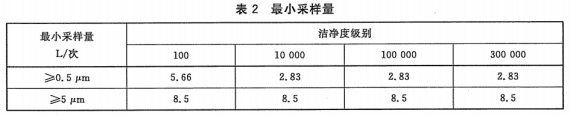
5.4.3 Sampling Quantity: The minimum sampling quantity for each cleanliness level is shown in Table 2 5.4.4 Sampling precautions: 5.4.4.1 For unidirectional flow clean rooms (areas), the sampling port of the particle counter should be facing the direction of the airflow; For non unidirectional flow clean rooms (areas), the sampling port of the particle counter should be facing upwards. 5.4.4.2 When arranging sampling points, try to avoid the return air outlet as much as possible. 5.4.4.3 During sampling, the testing personnel should be on the downwind side of the sampling port and try to move as little as possible. After sampling, it is advisable to perform self purification on the particle counter. 5.4.4.5 All measures should be taken to prevent contamination during the sampling process.
| 6. Grading test 6.1 General rule: Cleanrooms (areas) should be graded and tested in one or several occupancy states, including "empty state", "static state", and "dynamic state". Normally, cleanrooms (areas) should be graded and tested regularly based on risk assessment. If the cleanroom (area) is equipped with instruments for continuous or frequent monitoring of particle concentration or other performance parameters, and the monitoring results remain within the specified monitoring limits, the interval between grading tests can be appropriately extended. 6.2 Determine the minimum number of sampling points: Table 1 provides the minimum number of sampling points for each clean room (area) to be classified, and specifies that at least 90% of clean rooms (areas) will not exceed the grade limit with a confidence level of at least 95%. When selecting the minimum number of sampling points, attention should be paid to: when the minimum number of sampling points includes decimals, rounding up to take integers; If the area being considered is between two values in the table, it is advisable to choose the larger of the two values; When dealing with unidirectional flow, it is advisable to consider using a cross-sectional area perpendicular to the direction of airflow; In other cases, the flat area of the clean room (area) may be considered for use.. 6.3 Sampling points for large clean rooms (areas): When the area of the clean room or clean area is greater than 1000 (m ^ 2), use the formula to determine the minimum number of sampling points required: Where:(N_L) - The minimum number of sampling points to be evaluated, rounded up to nearest integers; A - The area of the clean room (zone), measured in square meters (m ^ 2); 27- The minimum number of sampling points for a clean room (area) with an area of 1000 (m ^ 2). 6.4 Determine Sampling Point Location: Follow these steps to determine the sampling point location: a) Use Table 1 to find the minimum number of sampling points (N_L); b) Divide the entire clean room (area) into (N_L) equal area zones; c) Each block selects a sampling point that can represent the characteristics of the block; d) At each sampling position, place the sampling probe of the particle counter at the height of the working face or other positions; e) For areas considered as key points, additional sampling points can be selected, and their number and location should be confirmed and specified; f) Additional blocks and related sampling points can be subdivided into equally sized blocks; g) For clean rooms (areas) with non unidirectional flow, if they are located below the air supply outlet of the non diffusing air device, the sampling point will not be representative. 6.5 Determine the single sampling amount and sampling time for each point: The selected maximum particle size concentration is exactly the upper limit of the specified cleanliness level (ISO), and the air volume collected at each sampling point is sufficient to detect at least 20 particles. The single sampling amount (V_s) of each sampling point should be calculated according to formula (2): the sampling amount of each sampling point should be at least 2L, the minimum sampling time for each sampling point should be 1 minute, and the sampling amount for each sampling point should be consistent. 6.6 Sampling steps and precautions: The following precautions should be taken during sampling: a) Clean or disinfect the surface of the instrument before entering the tested area. b) To obtain uniform and statistically representative particle samples in the environment, an isokinetic sampling probe should be used; When selecting direct sampling and connecting the instrument and sampling probe through a sampling tube, the physical characteristics of the sampling tube, such as material, inner wall, length, diameter, as well as the position and bending radius of the sampling tube relative to the instrument, need to be considered to affect the test results. Especially for particles larger than or equal to 1 μ m, the sampling tube should not exceed the length and diameter recommended by the instrument manufacturer, and should be as short and straight as possible. c) The sampling probe should be oriented vertically towards the direction of the airflow; When the direction of the sampled airflow is uncontrollable or unpredictable (such as non unidirectional airflow), the opening of the sampling probe should be vertically upward. d) When an abnormal count is found at a sampling point due to abnormal conditions, the count can be removed based on experience and explained in the detection report, and then resampled. e) When the unqualified count of a sampling point is caused by a technical malfunction of the clean room or equipment, it is advisable to identify the cause, take remedial measures, and retest the point and its surrounding adjacent points or other affected sampling points. This situation should be clearly recorded and explained for reasonableness. f) After sampling, the particle counter should be self cleaned. 6.7 Result Calculation (Individual Column Row Comparison) 6.8 Test Report (Separate Column and Row Comparison)
| 1. Chapter renaming: The 2025 version will change the "testing rules" to "graded testing", focusing on cleanliness level evaluation; 2. General Provisions Addition: The 2025 version adds "Risk Assessment Fixed Cycle" and "Continuous Monitoring with Extended Interval", 2010 version none; 2. Minimum number of sampling points: -Method change: In the 2010 version, choose one of the two (formula or Table 1). In the 2025 version, use Table 1+large-area formula uniformly, and Table 1 does not differentiate cleanliness levels; 3. Large scale regulations: The 2025 version specifies the calculation formula for>1000 (m ^ 2), while the 2010 version does not; 4. Sampling point location: In the 2025 version, "equal area zoning", "additional placement of key points", and "avoidance of selection below the air supply outlet" have been added, while in the 2010 version, only the degree and layering have been improved; 5. Sampling quantity and time Between: -Sampling quantity: The minimum amount is determined according to the cleanliness level in the 2010 version, and is calculated according to the formula in the 2025 version (ensuring ≥ 20 particles) and ≥ 2L; - Sampling time: The 2025 version adds "minimum 1 minute per time", which is not available in the 2010 version; 6. Sampling precautions:The 2025 version adds "instrument disinfection", "equal power sampling", and "abnormal counting processing", and removes "avoiding return air vents" and "personnel downwind side", making the operation more refined. 7. The description of sampling point location requirements has also changed. Based on specific data0.8-1.5M, It has become the height of the working face. change toEspecially for those greater than or equal to1 μ m particles, the sampling tube should not exceed the length and diameter recommended by the instrument manufacturer, and should be as short and straight as possible.
| ||||
| 6 Results Calculation
| 6.Result Calculation 6.1 Average suspended particle concentration of sampling point A: Calculate the average suspended particle concentration of sampling point A according to equation (2): 6.2 Mean value of mean M: Mean value of mean M calculation: 6.3 Standard deviation SE: Standard deviation SE is calculated according to mode (4): 6.4 95% upper confidence limit: Calculate the 95% upper confidence limit (UCL) according to equation (5):
| 6.7 Result Calculation 6.7.1 Result recording: Record the results of each sampling measurement, that is, the unit cubic meter particle concentration of the particle size of interest for the corresponding cleanliness level. Note: For particle counters with concentration calculation mode, manual calculation is not required. 6.7.2 Average particle count at each sampling point: When sampling twice or more at a certain point, calculate and record the average particle count of the particle size of interest at that point based on the number of particles in each single sampling according to formula (3): 6.7.3 Unit cubic meter particle count: Unit cubic meter particle count calculated according to formula (4): 6.7.4 Explanation of Results: If the particle concentration (particles/(m ^ 3)) measured at each sampling location does not exceed the concentration limit specified by relevant regulations, the clean room or clean area is considered to have met the prescribed air cleanliness classification requirements. An investigation should be conducted into the situation of unqualified counting. The inspection report should indicate the investigation results and the remedial measures taken.
| 1. Delete calculation items: In the 2025 version, remove the "mean of mean M", "standard deviation SE", and "95% confidence upper limit" to simplify the calculation; 2. New calculation item: The 2025 version has added a formula for "number of particles per cubic meter", which directly relates the sampling amount to the number of particles; 3. Result explanation: The 2025 version specifies that "single site concentration meets the standard and is qualified", while the 2010 version requires "single site average+95% UCL"expression”;Cancelling the statement of confidence does not mean that there is no confidence anymore, it is just that confidence has been pre calculated during testing grading and point confirmation 4. Record requirements: The 2025 version proposes "automatic calculation of particle counters", while the 2010 version does not. | ||||
|
7 Results Evaluation(The 2025 version has removed this chapter
|
7.Result evaluation: The cleanliness level of suspended particles should meet both of the following conditions simultaneously: a) The average suspended particle concentration at each sampling point must not exceed the specified level limit, i.e. (A_i ≤ level limit); b) The 95% confidence upper limit of the average suspended particle concentration at all sampling points must not exceed the specified level limit, i.e. (UCL ≤ level limit).
|
(2025newDelete this chapter and related contentIn6.7.4 Interpretation of ResultsThe description states)
|
In the 2025 version, the independent "result evaluation" chapter will be removed, and the standard judgment will be simplified and included in the "result explanation" of "result calculation". The "95% confidence upper limit" standard requirement will be cancelled, and only single point concentration standards need to be met.
| ||||
| 8 Test Report
| 8.Test report: from every clean roomThe test results obtained from the area should be recorded, and reports with consistent or inconsistent calculations should also be submitted. The test report should include the following contents: a) Name and address of the tester, testing date; b) Test basis; c) The plan position of the tested clean room (area) (mark the plan position of adjacent areas if necessary); d) Particle size of suspended particles; e) Description of testing instruments and methods: including testing environmental conditions, number and layout of sampling points, number of tests, sampling flow rate, or possible changes in testing methods, calibration certificates of testing instruments, etc; If it is a dynamic test, the number and location of on-site operators, as well as the number and location of on-site operating equipment, should also be recorded; f) Test results: including all statistical calculation data.
| 6.8 Test report: The test results of each clean room (area) should be recorded and submitted in the form of a comprehensive report, indicating whether it meets the prescribed air cleanliness level classified by particle concentration. The test report should include the following contents: a) Name, address, and testing date of the testing institution; b) Test and judgment criteria, and indicate the national standard number on which they are based; c) Name of the commissioning unit, name and specific location of the clean room (area) or facility being tested (referring to adjacent areas if necessary); d) Pre test the results of the experiment, such as temperature, relative humidity, pressure difference, etc., to see if they meet the requirements; e) The occupancy status of the testing room should indicate one or several states, including empty, static, and dynamic; f) A detailed description of the testing method should include sampling points (including the basis for selecting sampling points, whether they are based on risk assessment or daily testing results, and the coordinates of all sampling points should be marked in the attached figure), sampling volume, sampling time, particle size of concern, specifications, models, numbers, and calibration dates of the testing instruments. If it is a dynamic test, the number and location of on-site operators and the number and location of on-site operating equipment should also be recorded; g) The measurement results should include particle concentration data from all sampling points and specify the calculation results.
| 1. New content: The 2025 version adds "Name of commissioning unit", "Pre test results", "Selection basis for sampling points (risk assessment)", "Sampling point coordinate annotation", and "Instrument number/calibration date"; 2. Refined content: The 2025 version specifies the "criteria for judgment" andstandard”;Added pre testing requirements for temperature, humidity, pressure differential microenvironment, andSubdivision of occupancy status,compared to2010 version statement,The 2015 version is even clearer and more concise 3. Structural adjustment: The 2025 version will integrate "instrument description" and "sampling information" into the "testing method description", making the logic clearer.
| ||||
| 7 Monitoring (This section isNew content added in the 2025 version) | This chapter is not available in the 2010 version | 7. Monitoring 7.1 General rule: In order to ensure good performance of the clean room (area) and that the particle concentration meets the control requirements, the clean room (area) should be monitored, and a monitoring plan should be developed, implemented, and continuously improved. The monitoring plan should consider the level of air cleanliness, key locations, and factors that affect the performance of clean room (area) facilities. When developing, implementing, and continuously improving monitoring plans, the following steps should be included: using appropriate risk assessment methods to understand, evaluate, and record the risks of adverse pollution events; Develop a written monitoring plan, review and approve the monitoring plan; Implement monitoring plan; Analyze the data obtained from monitoring activities, conduct trend analysis, and report in a timely manner; Implement and record the actions and corrective measures taken, and regularly review the monitoring plan. 7.2 Risk assessment: Risk assessment is a systematic process of identifying hazards and analyzing and evaluating risks associated with hazards. The considerations for risk assessment are outlined in Appendix A. The risk assessment should achieve the following objectives: identify factors that may affect the maintenance of air cleanliness in the cleanroom (area), and develop a monitoring plan accordingly; Determine monitoring requirements that can demonstrate the performance of the clean room (area). 7.3 Development, Implementation, and Continuous Improvement of Monitoring Plans: 7.3.1 Development of Monitoring Plans: Risk assessment results should be considered when developing monitoring plans; List all parameters to be monitored and demonstrate their rationality, including parameters that may affect air particle concentration; Explain the monitoring method and demonstrate its rationality. 7.3.2 Monitoring Plan Execution: Ensure the accuracy, maintenance, and calibration of monitoring instruments; Identify the monitoring location and explain its rationality. The monitoring location should be described in three-dimensional coordinates; Determine acceptable standards for monitoring limits and explain their reasonableness, including establishing alert and action limit mechanisms; Perform data trend analysis using statistical methods and other analytical techniques. 7.3.3 Continuous improvement of monitoring plan: The monitoring plan should be regularly reviewed and modified according to the actual situation of the clean room (area). 7.4 Determine the minimum number of sampling points: Risk assessment should be used to determine the minimum number of sampling points, with a focus on sampling at key process locations. For particles generated by the process itself that do not pose a hazard to the process or product, the dynamic particle concentration may not be monitored, and regular static grading tests or dynamic grading tests under simulated operating conditions may be performed. 7.5 Determine the location of sampling points: Operations, interventions, personnel and logistics that pose significant risks to key areas are the key sampling locations. Sampling in key production areas should focus on initial airflow coverage and be combined with airflow visualization research. The key sampling locations include but are not limited to: areas close to product openings, areas in contact with product surfaces, critical process locations, locations that disrupt airflow, locations related to intervention behavior, locations that are difficult to access or clean/disinfect, areas with frequent personnel movements, and areas with frequent logistics activities. 7.6 Response measures for deviations during monitoring: If the monitoring results exceed the specified limit, an investigation should be conducted to identify the cause, and remedial measures should be taken if necessary. If the remedial measures have a significant impact on the facilities and equipment, they should be re graded and tested according to Chapter 6. The monitoring plan should be re audited based on changes in facilities and equipment. When the grading test meets the requirements, resume monitoring.
| The 2025 version has added a "Monitoring" chapter, while the 2010 version has no relevant content 1. Clarify the monitoring process: including risk assessment, plan development/execution/improvement, sampling point setting, and deviation handling; 2.Emphasize risk orientation: sampling points and monitoring parameters must be based on risk assessment; 3. Introduce warning/action limits: Establish a deviation warning and intervention mechanism; 4. Association grading test: After deviation, it is necessary to re grade the test to ensure stable performance.
| ||||
| AppendixA
| AppendixA(Normative Appendix) Cleanroom(district)Sampling point arrangement
A.1clean room(district)The arrangement of sampling points should strive for uniformity to avoid overly sparse sampling points in local areas. The following diagram of sampling point arrangement for multi-point sampling can be used as a reference (see figure)A.1).
A.2 100Sampling points for clean workbenches or local air purification facilities in the unidirectional flow area should be arranged on the working surface facing the direction of the airflow. The airflow pattern can refer to the diagramA.2, pictureA.3.
| AppendixA (informative) Considerations for developing an environmental monitoring plan A. 1. Risk assessment A. 1.1 Choose appropriate risk assessment tools: Use risk assessment tools including but not limited to hazard source analysis and critical control points(Hazard Analysis and Critical Control Points,HACCP)Failure Mode and Effects Analysis(Failure Mode and Effects Analysis,FMEA)Preliminary Hazard Source Analysis(Preliminary Hazard AnalysisPHA)Fault Tree Analysis(FaultTree AnalysisFTA)Hazard and Operability Analysis(Hazard andOperability AnalysisHAZOP)Risk assessment tools can be used individually or in combination. A. 1.2 Elements and scenarios that require risk assessment: including identifying the impact of pollution sources on clean rooms (areas) and critical areas, factors that affect cleanliness levels (such as pressure difference, air volume, temperature and relative humidity, air flow uniformity, etc.), daily operating or energy-saving modes of clean rooms (areas), static or dynamic, activity intensity, carrying capacity, shift changes, etc. A. 2 General considerations A. 2.1 Testing techniques, including the selection of manual testing or automatic monitoring modes. A. 2.2 Resolution, accuracy, calibration requirements, sampling efficiency, and counting limits of air suspended particle counters. A. 2.3 Data integrity requirements for air suspended particle counters, including permission requirements for maintenance and calibration. A. 2.4 The position, structure, and orientation of the airborne particle counter and its sampling probe. A. 2.5 Determine the sampling frequency and promptly identify any deviations. A. 2.6 Consideration of factors that may affect the monitoring system or monitoring results, including at least temperature, humidity, cleaning procedures, cleaning agents, disinfectants, production processes or product materials, convective air caused by hot surfaces, etc. A. 2.7 Potential adverse effects of the sampling system on the process or environment. A. 2.8 Visualize airflow through smoke testing, computer airflow simulation, and other methods. A. 2.9 Understand the ventilation method of clean rooms (areas), as it may be affected by research such as air exchange rate, self-cleaning (recovery) time, etc. A. 2.10 The impact of the area and frequency involved in cleaning and maintenance operations such as equipment disassembly, repair, assembly, etc. on particle levels. Monitor the environmental recovery time after cleaning and maintenance is completed and before resuming normal production operations. A. 2.11 Position and activity path of personnel in key production processes. A. 2.12 Estimation of the number of personnel, work characteristics, and working hours in the cleanroom (area). A. 2.13 Evaluate the impact of equipment operation on airflow patterns. A. 2.14 Evaluate potential particle sources generated by equipment, such as particles generated by surface wear of transmission systems, particles generated by bottle sealing and welding processes. A. 2.15 Data recording and management, including data integrity, data storage, and data retrieval. A. 2.16 Develop appropriate methods for raw data evaluation, trend analysis, and report preparation. A. 2.17 Establish mechanisms for warning limits and action limits. A. 2.18 Develop requirements for debugging, testing, and maintenance of monitoring systems. A. 2.19 The authority control, hygiene awareness, health status, changing procedures, training courses, etc. of personnel in the clean area (room) shall be included in the development of the environmental monitoring plan.
| 1. Change in nature of appendix: The 2010 version is a "normative appendix" (mandatory sampling point arrangement), and the 2025 version is a "informative appendix" (guiding monitoring plan); 2. Complete replacement of content: The 2010 version shows the layout of sampling points, while the 2025 version considers monitoring plan considerations (risk assessment tools, elements, general factors); 3. Change in purpose: From "guiding deployment" to "guiding the establishment of monitoring systems", with a greater emphasis on systematic management.
| ||||
| AppendixB
| AppendixB(Informative Appendix) Cleanroom(district)Technical requirements for suspended particles B.1
B.2
| The 2025 version has removed Appendix B | Delete the appendix "Technical Requirements for Suspended Particles in Cleanrooms (Areas)" from the 2025 version, as the technical requirements have been integrated into GB/T 25915.1-2021 to avoid duplication.
| ||||
| References
| 2010 did not explicitly list references, but it was stated in the preface that it was developed with reference to ISO14644-1 "Cleanrooms and Related Environmental Control Part 1: Air Cleanliness Levels" and JGJ71-90 "Code for Construction and Acceptance of Cleanrooms". | References [1] GB/T 25915.1-2021 Cleanrooms and Related Controlled Environments Part 1: Classification of Air Cleanliness Levels by Particle Concentration [2] GB/T 25915.2-2021 Cleanrooms and Related Controlled Environments Part 2: Monitoring of Air Particle Concentration in Cleanrooms
| In the 2025 version, new references will be added to clearly cite the GB/T 25915 series standards, enhancing the coherence of the standards; 2010 version none
|