-
E-mail
172089539@qq.com
-
Phone
13626546557
-
Address
No. 5 Yonggong South Road, South Industrial Zone, Shacheng Street, Longwan District, Wenzhou City, Zhejiang Province
Wenzhou Tianwo Machinery Technology Co., Ltd
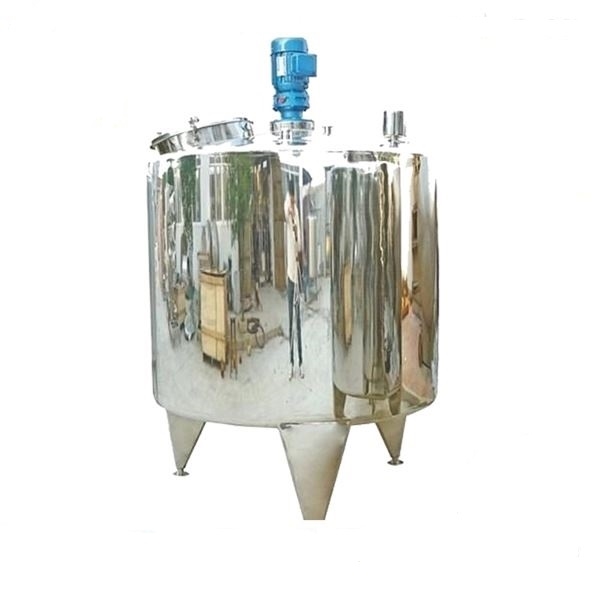
Introduction to Emulsification Tank (Core Equipment for Efficient Homogenization Emulsification)
Date: 2025-10-22Read: 5
In food, pharmaceutical, cosmetics, fine chemicals and other industries, we often need to stably mix two mutually insoluble liquids (such as oil and water) to form a dispersion system called "lotion". The core equipment for implementing this process is the emulsification tank. This article will provide a rigorous analysis of emulsion tanks from the perspectives of scientific principles and engineering design.
1、 Definition and core functions
Emulsification tank, also known as emulsification reaction tank, is a precision chemical container that integrates multiple functions such as mixing, dispersion, homogenization, emulsification, heating, and cooling. Its core function is to uniformly and stably disperse one liquid into another immiscible liquid in the form of tiny droplets (usually up to micron level) by applying high strength mechanical shear force, so as to form a stable lotion.
A successful emulsification process is not just about simple mixing, it must overcome the enormous interfacial tension between liquids and ensure that newly formed tiny droplets do not re aggregate and stratify.
2、 Working principle: Shear force is the core
The working principle of an emulsion tank is based on a core physical concept: shear force.
1. Pre treatment and initial mixing: Firstly, the oil and water phase raw materials are preliminarily mixed in a tank using conventional agitators (such as anchor and paddle) to form a coarse dispersion system. At this point, the droplet size is large and the system is very unstable.
2. High shear emulsification: This is the most crucial step. The high shear emulsifying head located at the bottom or side of the tank begins to rotate at high speed. The emulsifying head is usually composed of a rotor and a stator:
Rotor: high-speed rotating blades (with a speed of 0-3000 rpm or higher and a linear velocity of 20-40 m/s).
Stator: a fixed sleeve with precision slits or holes.
During operation, the coarse mixed material is forcefully sucked into the emulsion head by the high-speed rotating rotor, and is thrown towards the narrow slit of the stator under the action of enormous centrifugal force. When materials are forced to pass through these micrometer sized narrow slits, they will experience a combination of intense mechanical shear forces, high-frequency hydraulic friction, squeezing impact, and turbulence.
3. Droplet fragmentation and homogenization: In this high-intensity shear field, giant droplets are instantly torn and fragmented into smaller micrometer sized droplets. The newly generated tiny droplets greatly increase the contact area between the two phases, enabling the subsequent emulsifiers to quickly adsorb on the droplet interface, forming a solid interface facial mask, effectively reducing the interfacial tension and preventing the re merging of droplets.
4. Circulation and final stabilization: the materials treated by the emulsion head are ejected at high speed, mixed with other materials in the tank again, and formed circulation with the cooperation of the agitator, to ensure that every part of the materials in the tank can pass through the high shear zone for many times, and finally obtain a stable lotion with narrow droplet size distribution and uniform height.
3、 Main Structure and Components
A complete emulsion tank is a complex system, mainly composed of the following parts:
1. Tank body:
Material: SUS304 or SUS316L stainless steel is usually used to ensure corrosion resistance, easy cleaning, and compliance with GMP (Good Manufacturing Practice) requirements.
Design: Jacket design, used to introduce steam/hot water (heating) or cooling water (cooling) for precise control of process temperature. The inner surface is usually polished with a mirror finish to reduce material residue.
2. Mixing system:
Main mixing: usually a slow speed mixer (such as anchor type, frame type), used for macroscopic mixing, wall scraping, preventing material coking on the wall surface, and assisting in the formation of circulation.
High shear emulsifying head: the core working component responsible for providing the main shear force. Different stator head forms (such as circular holes, long holes, mesh holes, etc.) can be selected according to process requirements to achieve different cutting effects.
3. Transmission system: composed of motors, reducers, etc., providing power for mixing and emulsification. Usually using frequency conversion control, the speed can be infinitely adjusted.
4. Other auxiliary systems:
Vacuum system: used to remove bubbles from materials during the emulsification process, prevent product oxidation, and improve the density and glossiness of the final product.
Heating/cooling system: achieved through jacket or coil.
Control system: PLC or human-machine interface, used to set and record process parameters such as temperature, speed, time, vacuum degree, etc., to achieve automated production.
Import and export and sight glass: used for feeding, discharging, cleaning, and observing internal conditions.
4、 Key performance parameters and selection considerations
When selecting or evaluating an emulsion tank, it is important to focus on the following parameters:
1. Shear rate and shear force: directly determine the ability of liquid droplets to break, closely related to the rotor linear velocity and the clearance between the stator and rotor.
2. Rotor linear velocity: a key indicator for measuring the working strength of the emulsifying head. The higher the linear velocity, the stronger the shear force is usually.
3. Power input: The motor power determines the equipment's ability to handle high viscosity materials and overall efficiency.
4. Fixed rotor structure: Different structural combinations are suitable for materials with different viscosities and final particle size requirements.
5. Sealing form: The reliability and hygiene level of mechanical seals are crucial.
6. CIP/SIP function: Whether it has online cleaning and online sterilization functions is a mandatory requirement for the pharmaceutical and food industries.
5、 Main application areas
1. Food industry: dairy products (yogurt, flavored milk), beverages, ice cream, sauces (mayonnaise, salad dressing), cream, seasonings, etc.
2. Cosmetics industry: face cream, lotion, essence, shampoo, bath gel, toothpaste, etc.
3. Pharmaceutical industry: emulsions, ointments, creams, suppositories, liposomes, cell culture media, etc.
4. Fine chemicals: pesticide emulsion, coatings, inks, lubricants, nano material dispersion, etc.
6、 Summary
The emulsion tank is far from a simple mixing container, it is a high-strength shear homogenization device designed based on the principles of precision fluid mechanics. It generates local energy density by rotating the stator structure, efficiently converting mechanical energy into interfacial energy, thereby overcoming intermolecular forces and achieving refinement and stabilization of matter. The quality of its performance directly determines the stability, texture, appearance, and shelf life of the final product. Therefore, a deep understanding of the working principle and structure is of crucial importance for process development, equipment selection, and product quality control in related industries.