-
E-mail
2109676989@qq.com
-
Phone
15961853932
-
Address
No.1 Zhangjingjingshi Road, Xibei Town, Xishan District, Wuxi City
Video
Wuxi Shenyu Environmental Protection Equipment Co., Ltd
Brief Introduction
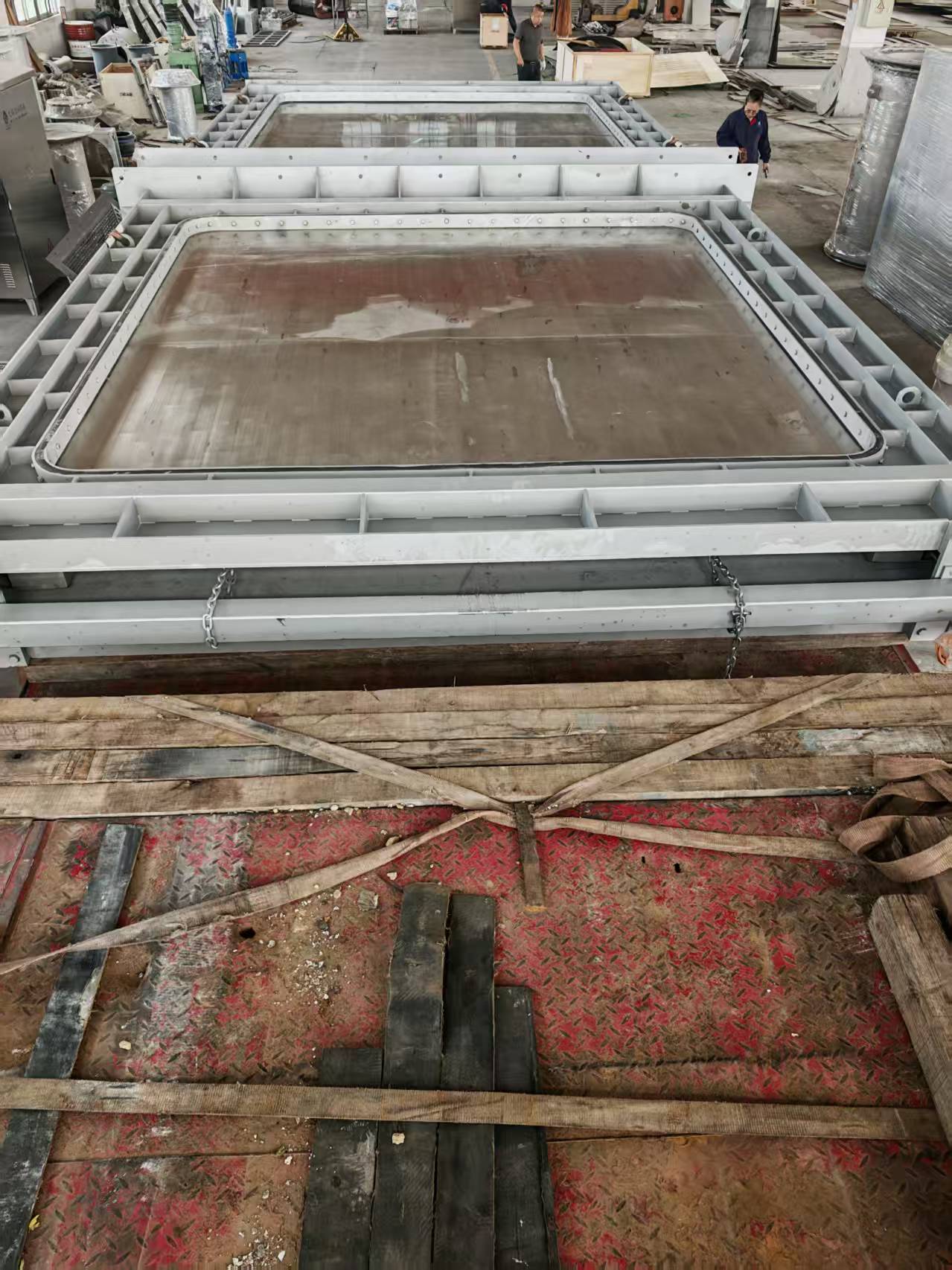
Regarding the shipment, unloading, installation, and commissioning of the hydraulic downward opening barrier gate (3000 × 3000mm, sealed on all sides) in the water accumulation treatment project of the Hedong Airport area in Linyi, Shandong, the following are some key precautions and recommended procedures:
1. Precautions for unloading equipment inspection: Before unloading, check the specifications of the barrier gate (3000 × 3000mm), sealing (four sided sealing), and the integrity of the accessories to ensure consistency with the contract requirements. Lifting safety: Use a crane of appropriate tonnage (recommended ≥ 15 tons), and the lifting point should be fixed on the dedicated lifting ear of the dam gate to avoid collision or deformation. Site preparation: The unloading area should be flat and solid, and steel plates should be laid if necessary to distribute the load and prevent equipment overturning or ground collapse.
2. Key points for installation and debugging: Basic acceptance: Confirm that the position and levelness of embedded parts (such as guide rails and anchor bolts) meet the design requirements (error ≤ ± 3mm). Sealing test: After installation, a four sided sealing test is required (which can be conducted using pressurized water injection or light transmission method). Hydraulic system debugging: Check that there is no leakage in the hydraulic oil circuit and that the pressure pump is running normally (referring to the design pressure, usually 0.5-1MPa). Test the opening and closing stroke (fully open/fully closed time) and synchronicity (synchronous action is required when driving with dual cylinders) of the barrier gate. Electrical linkage: Coordinate with PLC control system to verify the signal feedback and emergency shutdown function of remote/manual mode.
3. Suggestions for project coordination: Multi party collaboration: Confirm interface conditions with civil engineering, electrical and other units (such as embedded sleeve positions, control cabinet wiring). Document organization: Keep equipment qualification certificates, installation records, debugging reports and other materials for easy acceptance.
For more specific installation manuals or technical parameters, it is recommended to contact the equipment supplier or refer to the accompanying technical documents. If the project has other special requirements (such as anti-corrosion level, opening and closing frequency), the acceptance criteria need to be adjusted accordingly.
(Note: The above content is based on the general barrier gate installation specifications, and specific requirements shall be subject to the project design drawings and contract terms.)


Last Video: Delivery of integrated axial flow pump station
Next Video: Hydraulic downward opening barrier gate