-
E-mail
shawchinasadp@163.com
-
Phone
17317608376
-
Address
No. 173 Guangji Road, Hongkou District, Shanghai
Yingxiao Instrument (Shanghai) Co., Ltd
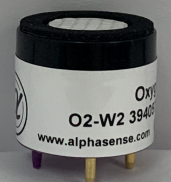
Alphasense oxygen sensor O2-W2 from the UK: the 'golden eye' that safeguards battery safety
Date: 2025-12-29Read: 10
In the large-scale application of electric vehicles and energy storage power stations, fire and explosion accidents caused by battery thermal runaway have become the core challenge for industry safety. Lithium ion batteries may decompose electrolytes, release flammable gases such as oxygen and hydrogen, and form a "chain reaction" that can lead to combustion or even explosion in overcharge, overdischarge, mechanical damage, or high-temperature environments. The O2-W2 oxygen sensor launched by Alphasense in the UK, with its high precision, fast response, and resistance to environmental interference, has become a "key defense line" for monitoring oxygen concentration in battery compartments and energy storage power plants, providing technical support for the safe operation of the new energy industry.
Accurate monitoring and early warning of thermal runaway risks
In the early stage of battery thermal runaway, the decomposition of electrolyte will release trace amounts of oxygen (concentration can reach 5%~20%), far exceeding the normal environmental level (20.9%). The Alphasense oxygen sensor O2-W2 in the UK uses electrochemical principles to maintain high linearity in the low oxygen concentration range (1%~25%). The output current strictly corresponds to the oxygen concentration, with a deviation of<0.5%, and can accurately capture the abnormal increase of oxygen in the early stage of thermal runaway. Its fast response time (short t90 time) can immediately trigger an alarm when the oxygen concentration exceeds the safety threshold (such as 10%), providing 30 seconds to several minutes of warning time for the battery management system (BMS) to promptly initiate cooling, power-off or exhaust measures, and block the combustion chain reaction.
resistExtreme. endEnvironment, adapted to battery compartment conditions
The environment of battery compartments and energy storage power stations is complex, and the coexistence of high temperature, electromagnetic interference, vibration, and combustible gases imposes strict requirements on the performance of sensors. The UK Alphasense oxygen sensor O2-W2 has been specially designed for this:
·High temperature tolerance: The working temperature range covers -30 ℃~85 ℃, suitable for high temperature conditions in battery compartments (such as battery surface temperature reaching 60 ℃ during fast charging);
·Anti electromagnetic interference: Adopting a shielding layer design, the output fluctuation is less than 0.2% under strong electromagnetic fields (such as motor start-up or inverter operation), avoiding false alarms;
·Explosion proof structure: certified by ATEX, the shell is made of flame-retardant materials and can be safely used in flammable gas environments such as hydrogen and methane;
·Low gas cross sensitivity: At concentrations of 5% CO ₂ or 100ppm electrolyte volatiles (such as DMC, EC), the oxygen reading changes by only 0.1%/%, eliminating environmental gas interference.
Long lifespan and low power consumption, ensuring long-term safety
The battery compartment requires long-term continuous monitoring, and the lifespan and power consumption of sensors directly affect operation and maintenance costs and safety. The UK Alphasense oxygen sensor O2-W2 has a design lifespan of over 5 years (the time required for the output to drop to 85% of the initial value) and extremely low power consumption (<10mW). It can be integrated into BMS or energy storage plant monitoring systems to reduce additional energy consumption of the battery pack. Its compact structure (diameter 20mm, height 17.4mm) facilitates installation in battery module gaps or corners of the cabin, while the sealed design (IP67 protection level) can resist dust and liquid intrusion, extending its service life.
Practical application case: From early warning to fire extinguishing
After introducing the British Alphasense oxygen sensor O2-W2 in battery compartment testing, a certain electric vehicle manufacturer successfully alerted to a thermal runaway event: the sensor detected a sudden increase in oxygen concentration from 20.9% to 12%. The BMS immediately cut off the power and started the liquid cooling system, while triggering the injection of inert gas (such as nitrogen) into the compartment, extinguishing the fire risk in its infancy. In addition, a certain energy storage power station used this sensor to construct a "oxygen temperature gas" multi parameter monitoring network, reducing the thermal runaway accident rate by 90% and significantly improving the safety of energy storage in the power grid.
In today's rapidly developing new energy industry, battery safety is the cornerstone of sustainable development in the industry. The Alphasense O2-W2 oxygen sensor from the UK empowers electric vehicles and energy storage stations with its technological strength, providing accurate and reliable oxygen concentration monitoring solutions for battery compartments. In the future, with the popularization of new technologies such as solid-state batteries and hydrogen energy storage, the high precision and long lifespan characteristics of such sensors will further promote the upgrading of new energy security standards and become the "invisible guardians" guarding green energy.