-
E-mail
905799038@qq.com
-
Phone
13812874618
-
Address
No. 888 Jingang Avenue, Tangshi Town, Zhangjiagang City
Zhangjiagang Kaichuang Machinery Manufacturing Co., Ltd
More efficient laboratory granulation: scene and process adaptation of dry granulation machine
Date: 2025-10-27Read: 3
Related enterprises have long been concerned about the material processing needs in the laboratory field. Recently, the laboratory dry granulation machine has been launched, which focuses on the characteristics of small batch and multi batch granulation experiments in the scientific research stage. Targeted optimization has been carried out in equipment design and process coordination. Currently, it has gradually served the research and development scenarios in the fields of food, medicine, chemical engineering, etc., providing support for the exploration of granulation processes in the laboratory stage.
1、 Equipment development meets the core requirements of laboratory scenarios
In the development process of the laboratory dry granulation machine, the R&D team focused on designing the laboratory space, operational convenience, and experimental flexibility. Considering the limited space in laboratories, the equipment adopts a compact body design, which further reduces the footprint compared to traditional small granulators and facilitates installation and placement on laboratory workbenches or in narrow areas; On the operational level, equipped with a simple control panel, key parameters such as granulation pressure and speed can be quickly adjusted, and the parameter settings take effect immediately, adapting to the frequent process adjustments during the research and development stage.
At the same time, in response to the characteristics of small batch material processing in the laboratory, the equipment has optimized the feeding and granulation components, which can adapt to small batch material processing of 100g-5kg, reducing material waste; The granulation component adopts a detachable design, which is easy to disassemble and clean after testing, avoiding cross contamination of different batches of materials and meeting the hygiene requirements of laboratory multi variety testing. In addition, the noise level of the equipment during operation is controlled within a low range, reducing interference with the surrounding environment of the laboratory and meeting the environmental requirements of scientific research sites.
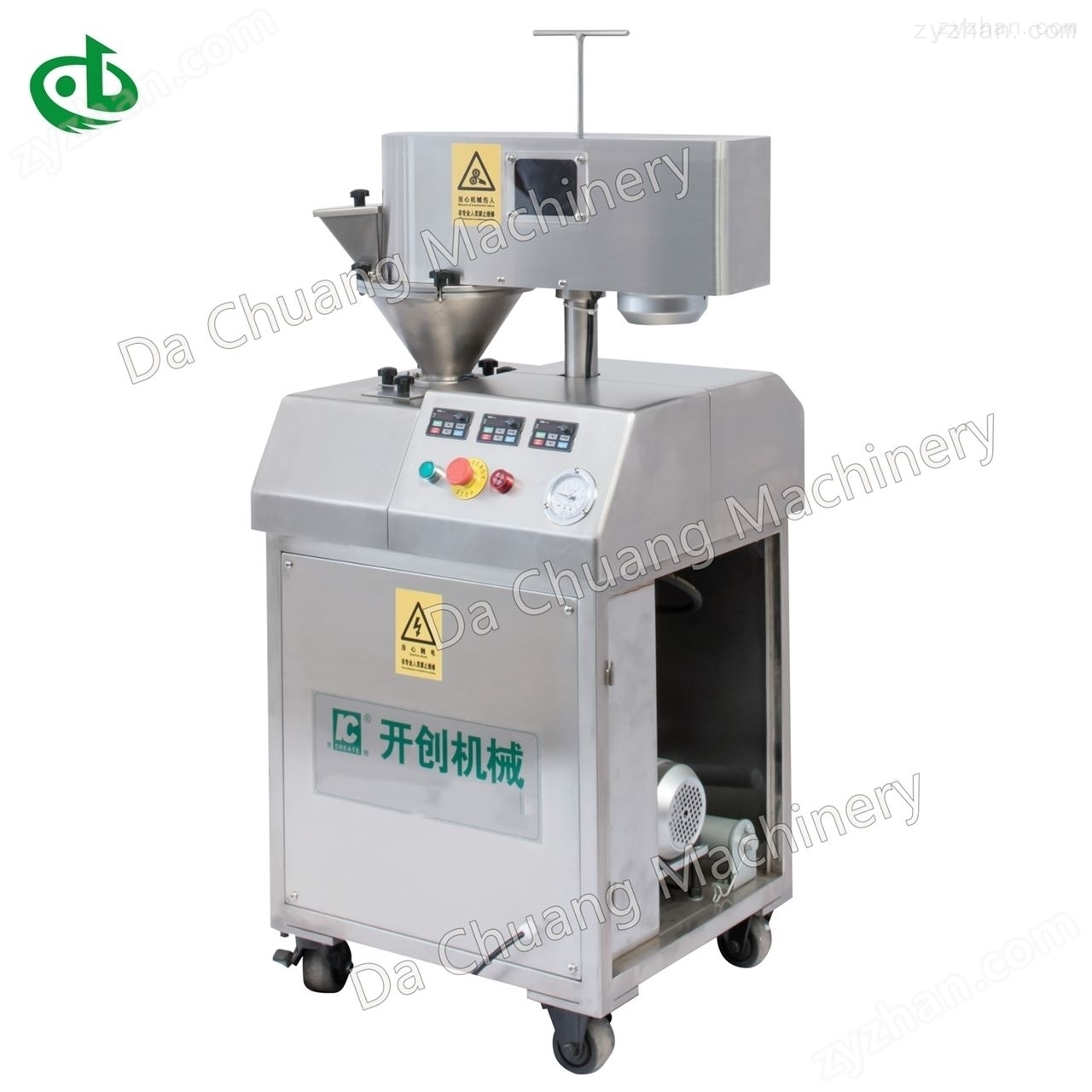
2、 Collaborative adaptation optimization of equipment and laboratory processes
In order to better connect with the laboratory granulation process exploration, the equipment R&D team carried out process collaborative optimization on equipment details. Based on the material characteristics of different industry laboratories (such as thermosensitive materials in food laboratories and micro powder materials in pharmaceutical laboratories), multiple specifications of granulation molds are available for selection. They can be quickly replaced according to material hardness and particle size requirements, without the need for significant adjustments to the equipment structure, and are suitable for multiple process testing needs.
At the same time, the equipment reserves a data recording interface that can be connected to commonly used data analysis equipment in the laboratory to record real-time parameters such as pressure, speed, and time during the granulation process, making it easier for R&D personnel to trace process data and optimize granulation plans; In response to the material collection requirements after granulation in the laboratory, the equipment outlet is equipped with an adjustable collection device that is compatible with different specifications of collection containers, reducing losses during material transfer and further conforming to the operational habits of laboratory refined research and development.