-
E-mail
psf@china-jianan.com
-
Phone
15057360160
-
Address
No. 1188 Jiangnan Avenue, Oubei Street, Yongjia County, Wenzhou City, Zhejiang Province (Canaan Technology)
Zhejiang Canaan Technology Co., Ltd
The core value of aseptic packaging isolator: a barrier to ensure aseptic safety in drug production
Date: 2025-11-24Read: 0
In the field of aseptic drug production, the packaging process is one of the processes with the highest risk of microbial contamination.As a key protective equipment in modern pharmaceutical industry, aseptic packaging isolators provide a revolutionary solution for high-risk aseptic operations by constructing a dual barrier of physical and microbiological isolation.Its application purpose has surpassed simple environmental control and become a strategic technical means to ensure drug safety and patient health.
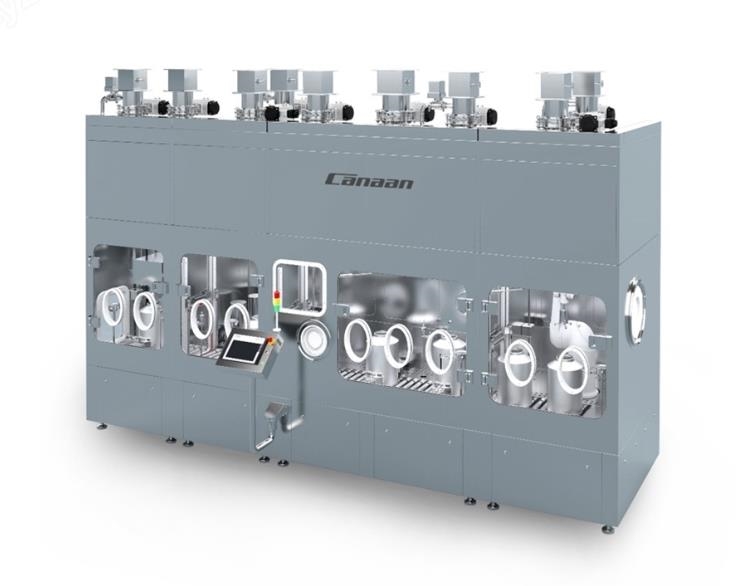
1、 Build an absolutely sterile operating space
The core function of sterile packaging isolators is to create a local clean environment above ISO level 5 (level 100), and to control the concentration of suspended particles in the chamber to ≤ 3.5 particles per cubic meter (≥ 0.5 μ m) through an efficient air filtration system (HEPA/ULPA), with microbial survival approaching zero. Compared to traditional cleanrooms, the equipment adopts a positive pressure barrier design, combined with RTP and glove operation interfaces, to completely block the invasion path of external environmental microorganisms. In the packaging process of high-risk preparations such as vaccines and monoclonal antibodies, this absolutely sterile environment can reduce the risk of bacterial infection from 0.1% in traditional processes to below 0.001%.
2、 Realize precise protection for high-risk operations
For highly allergenic drugs, hormone preparations, and cell therapy products, the equipment provides a three-level protection system: a physical barrier isolates direct contact between operators and drugs, a gas sterilization system periodically sterilizes the chamber, and a real-time environmental monitoring system.
3、 Meet strict regulatory and certification requirements
The application of isolators is a critical technical pathway that complies with international regulations such as EU-GMP Annex 1 and FDA 21 CFR Part 11. Its fully enclosed design meets the regulatory requirements of 'closed production systems' and minimizes human intervention through automated material transfer. In the GMP inspection of sterile drugs in the European Union, the validation documents of isolators (including DQ/IQ/OQ/PQ) have become a mandatory item, and their sterilization process validation data needs to prove that the killing effect on thermophilic Bacillus subtilis reaches 10 ⁻⁶ SAL.
4、 Promote the innovation and upgrading of production modes
Modern equipment integrates robot packaging systems, visual inspection technology, and MES data management to achieve full process intelligence from material transfer to finished product packaging. Its modular design supports rapid process switching, coupled with online cleaning (CIP) and online sterilization (SIP) functions, reducing the production cycle of a single batch by 40%. More noteworthy is that its technology is extending towards continuous production, promoting the development of sterile formulation production towards a safer and more efficient direction through the combination application of 'isolators+disposable technology'.
Aseptic packaging isolators have evolved from simple protective equipment to the core hub of drug production quality systems. In emerging fields such as biopharmaceuticals and cell gene therapy, their value is not only reflected in microbial control, but also in strategic technological investments for enterprises to achieve compliant production, enhance product competitiveness, and safeguard patient medication safety. As the pharmaceutical industry advances towards higher standards, isolator technology will continue to drive innovation in aseptic production modes.