-
E-mail
zzcc8162@zzgwsit.cn
- Phone
-
Address
1119 Science Avenue, Shangjie District, Zhengzhou City
Zhengzhou Changcheng Technology Industry and Trade Co., Ltd
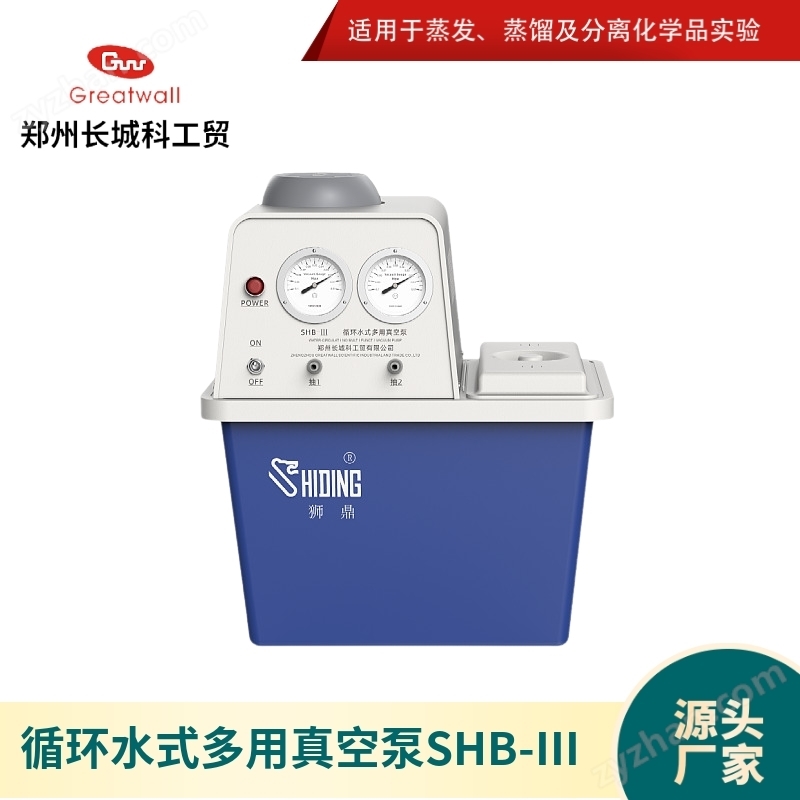
Introduction to the structural components and principles of desktop circulating water vacuum pump
Date: 2025-11-04Read: 1
Desktop circulating water vacuum pump is a common laboratory equipment with a relatively simple structure and working principle, mainly relying on the circulation flow of water to generate vacuum. The following is an introduction to its main structural components.
Pump body: The pump body is the core structure of the equipment, usually made of corrosion-resistant materials (such as engineering plastics), with impellers and nozzles inside. The impeller is driven to rotate by a motor, driving water flow, and the design of the nozzle is crucial for forming high-speed jets, directly affecting the pumping efficiency.
Impeller: The impeller is a key component that generates power. When the motor drives the impeller to rotate at high speed, water is driven to form a high-speed flow. At the nozzle of a specific design, the water flow accelerates to form a high-speed jet, which then creates a low-pressure area near the intake pipe and sucks in gas.
Water tank: The water tank is used to store working water and ensure the recycling of water. It is usually equipped with a water level indicator device for users to monitor the water level. The working fluid (usually water) will decrease during circulation due to carrying gas, so it needs to be continuously replenished to maintain internal balance.
Inlet and exhaust pipes: The inlet pipe is connected to the container to be evacuated, and gas is drawn in through this pipe. The exhaust pipe is used to discharge the mixture of water and gas, and the separated gas is released into the atmosphere from there.
Motor: The motor is the power source that drives the impeller to rotate, and its power and speed depend on the equipment specifications.
Separation device: After the inhaled gas is mixed with water, it will enter the separation device. Under the action of gravity or centrifugal force, gas and water leave, and the gas is discharged through the exhaust pipe, while the water returns to the water tank, ready to participate in the cycle again.