-
E-mail
zzcc8162@zzgwsit.cn
- Phone
-
Address
1119 Science Avenue, Shangjie District, Zhengzhou City
Zhengzhou Changcheng Technology Industry and Trade Co., Ltd
How to achieve precise fractionation using a rotary evaporator?
Date: 2025-09-03Read: 1
Product recommendation
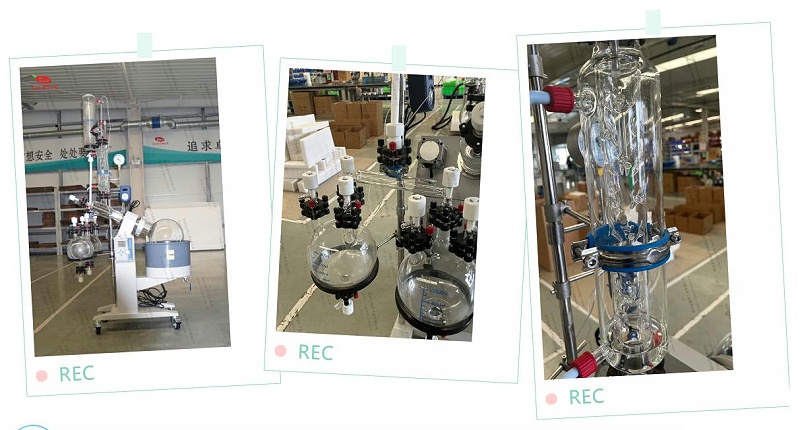
Installing a rotary evaporator (referred to as "rotary evaporator")Spike type distillation columnThe core value is to make up for the shortcomings of traditional rotary distillation, which can only roughly concentrate/desolventize and cannot finely separate. It upgrades from a "single solvent removal tool" to an "equipment that combines concentration and fine separation of light components", ultimately bringing practical benefits to users in terms of experimental efficiency, separation accuracy, operational convenience, and reduced experimental costs,Specifically, it can be broken down into the following three core values:
01
Increase score Deviation from precision: from 'extensive' to 'rough' Dissolve "into" precise fractionation "to solve the separation pain points of traditional rotary distillation
The core function of traditional rotary evaporation is to quickly remove low boiling point solvents by reducing pressure and rotating to increase the evaporation area. However, when faced with scenarios where solvents coexist with trace low boiling impurities and two light components with similar boiling points (such as solvents and low boiling by-products) are mixed, the lack of a gas-liquid mass transfer separation structure can lead to poor separation efficiency. For example, when using rotary evaporation to recover ethanol, if a small amount of low boiling impurities with a boiling point of only 50 ℃ are mixed into the system, traditional rotary evaporation will evaporate both together, resulting in low purity of the recovered ethanol; When concentrating samples, if the sample contains trace amounts of low boiling volatile components (such as small molecule organic intermediates), traditional rotary evaporation will cause these components to be lost along with the solvent, affecting subsequent experimental results.


02
Reducing experimental costs: achieving efficient solvent recovery and recycling
The organic solvents commonly used in laboratories, such as methanol, ethanol, ethyl acetate, etc., if only recovered by traditional rotary evaporation, often have insufficient purity and cannot be directly used for subsequent experiments. They can only be treated as waste liquids, which not only increases the cost of reagent procurement but also adds to environmental pressure.

03
Simplify the experimental process: "One step concentration+separation" to reduce operational steps and errors
In traditional experiments, if both "sample concentration" and "light component separation" need to be achieved simultaneously, it usually requires a two-step operation:
Summary: Core Value Positioning
For users, the core value of the spike distillation column for rotary distillation is to add the ability of 'fine separation' without sacrificing the advantages of 'fast and convenient' rotary distillation, ultimately achieving multiple benefits of 'efficiency improvement, cost reduction, and process simplification', especially suitable for experimental scenarios that require high-frequency processing of 'solvent+low boiling impurities' systems or have high requirements for sample purity/recovery rates (such as organic synthesis, natural product extraction, drug development, environmental testing, etc.).