-
E-mail
848186302@qq.com
-
Phone
15639761399
-
Address
No. 182 Industrial Road, Shangjie District, Zhengzhou City
Zhengzhou Huachen Instrument Co., Ltd
Process principle and characteristics of lifting and rotating glass reaction kettle
Date: 2025-08-07Read: 7
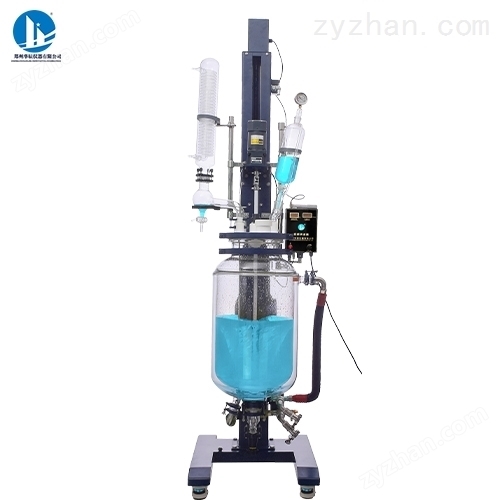
The lifting rotating glass reaction kettle is a laboratory equipment that combines mechanical structure and double-layer glass reaction characteristics. Its process principle and core features are as follows:
1、 Process principle
1. Temperature control mechanism
By circulating cold and hot media (such as thermal oil, refrigerant or hot water) through a double-layer glass structure, precise constant temperature control of the reaction system from -80 ℃ to 300 ℃ can be achieved. The heat exchange process of the interlayer medium transfers energy through thermal radiation (heating) or heat absorption (cooling), and is coordinated with a PID temperature control module to ensure temperature fluctuations of ≤± 1 ℃.
2. Mixing and sealing system
Magnetic coupling drive: The outer magnetic steel body is driven by a motor, which drives the inner magnetic steel body and mixing shaft to operate through magnetic field effect, achieving fully enclosed and leak free mixing. The speed can be adjusted from 0-1450 revolutions per minute through a frequency converter.
Mechanical lifting and rotation: The kettle body is supported by a stainless steel column mobile frame, which supports uniform lifting and lowering (one click control or manual operation), and can rotate horizontally up to 180 ° for easy multi angle feeding, observation, and discharging.
3. Reaction environment regulation
Supports normal or negative pressure operation (vacuum degree up to -0.1MPa), suitable for low boiling point solvent reactions, vacuum distillation, or sensitive reactions that require oxygen isolation.
2、 Core Features
1. Structural design advantages
Material safety: The main body is made of high borosilicate glass (corrosion-resistant, fully transparent), but the pressure resistance is relatively low (only 0.05MPa positive pressure), and sudden cooling, heating, or overpressure operations should be avoided.
Mobility: The lifting bracket allows for adjustable height of the kettle body, and the rotating function facilitates multi station operation, reducing the risk of material transfer.
2. Operational safety and convenience
Loading specification: The volume of the reaction material should not exceed 2/3 of the kettle body to prevent overflow or abnormal pressure.
Sealing protection: Magnetic fluid sealing technology ensures stability under high pressure/vacuum conditions, avoiding medium leakage.
Maintenance process: Natural cooling is required after the reaction is completed → Exhaust → Special solvent cleaning → Drying inspection to extend equipment life.
3. Application adaptability
Widely used in clean scenarios such as fine chemical synthesis, biopharmaceuticals (such as drug intermediate preparation), and new material development, especially suitable for experiments that require real-time observation of reaction processes.
3、 Key operational precautions
1. Prohibited Scenarios: Chlorine containing ions, Flammable and Explosive, Instantly Intense Heat Release, or High Pressure Reactions require customized reaction vessels made of special materials.
2. Leak detection: Before use, water injection and pressure testing are required to ensure the sealing of the interface; Monitor the isolation sleeve for abnormal noise during operation (indicating abnormal mixing system).
3. Media management: It is strictly prohibited to mix interlayer thermal oil with water or other liquids. Regularly check the oil level and equipment component wear.
Summary: The device enhances operational flexibility through a lifting and rotating structure, combined with double-layer interlayer temperature control and magnetic seal stirring to achieve safe and efficient reaction control. However, the pressure resistance limitation of its glass material requires strict adherence to operating standards.