-
E-mail
15093177890@163.com
-
Phone
15093177890
-
Address
B06-1 Qidi Zhenghang Intelligent Manufacturing Industrial Park, Intersection of Xinxiang Road and Luoning Road, Shangjie District, Zhengzhou City, Henan Province
Zhengzhou Kewangda Biological Instrument Co., Ltd
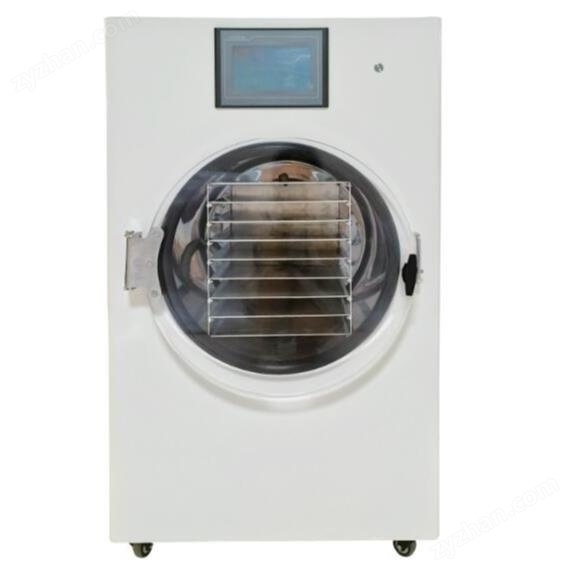
Process principle of pet food freeze-drying machine
Date: 2025-08-05Read: 66
The process principle of pet food freeze-drying machine is mainly based on the three-phase change of water and vacuum freeze-drying technology. Its core is to achieve food dehydration through low-temperature freezing and vacuum sublimation. The specific process is as follows:
1、 Core principle: Three phase sublimation of water
In a vacuum environment (pressure below 610.5 Pa), when the moisture in the material is in a solid state (ice), temperature controlled heating is used to directly sublime the ice crystals into water vapor (without going through the liquid state), thereby achieving dehydration. This process relies on the triple point (0.01 ℃, 610.5Pa) characteristics of water, and ice can be directly converted into gas under low temperature and low pressure conditions.
2、 Detailed explanation of the three-stage process
1. Pre freezing stage
Fresh ingredients (such as meat, fruits and vegetables) are rapidly frozen below -40 ℃ to completely solidify the water into ice crystals, avoiding damage to cell structure. The temperature needs to be adjusted according to the eutectic point of the ingredients (such as -28 ℃ for chicken and -18 ℃ for beef).
The pre freezing time usually takes 8-12 hours to ensure complete internal freezing of the material.
2. Sublimation drying (one-time drying)
The frozen material is placed in a vacuum chamber (pressure 30-50Pa) and slowly heated through thermal radiation or contact partitions (temperature below the melting point), causing ice crystals to sublime into water vapor and be discharged. At this stage, about 90% of free water is removed.
The sublimation process advances from the surface of the material to the interior, and precise temperature control is required to prevent melting.
3. Analysis drying (secondary drying)
Further raise the temperature to 40-60 ℃ and remove residual bound water under high vacuum to reduce the moisture content of the material to 1% -5%.
At this stage, the binding force between water molecules and ingredients is disrupted to ensure long-term preservation without spoilage.
3、 Technical advantages and effects
1. Nutrient retention: Low temperature throughout the process (often below -20 ℃) to avoid the destruction of heat sensitive components (such as proteins and vitamins), resulting in a nutrient retention rate of over 90%.
2. Physical properties: Forming a porous sponge like structure, excellent rehydration ability, and approaching a fresh state after rehydration.
3. Long shelf life: thoroughly dehydrated and vacuum packaged, can be stored at room temperature for 3-5 years.
4、 Key technologies of equipment
1. Heating method:
Radiation type: Indirectly heated through infrared radiation, suitable for easily discolored ingredients (such as vegetables).
Contact type: Metal partition directly conducts heat, with an efficiency 40% -60% higher than radiation type, suitable for meat freeze-drying.
2. Intelligent control: The PLC system automatically adjusts temperature, vacuum degree, and drying time to adapt to the characteristics of different ingredients.
Note: The freeze-drying process does not require the addition of preservatives, as the low temperature and oxygen deficient environment inhibits microbial activity, achieving natural preservation.