- Phone
-
Address
No. 100 Baisha Avenue, Jiangnan District, Nanning City
Product Categories
Guangxi Guangpu New Energy Equipment Co., Ltd
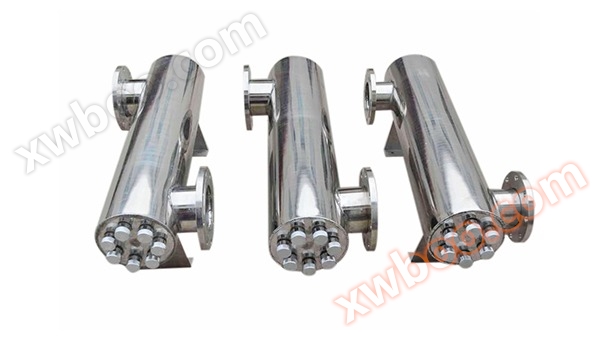
Alien UV sterilizer
NegotiableUpdate on 04/11
- Model
- Nature of the Manufacturer
- Producers
- Product Category
- Place of Origin
Overview
Alien UV sterilizer is a customized UV sterilizer produced according to the installation space and water pipe orientation. Compared with ordinary UV sterilizers, the main difference is the orientation of the inlet and outlet. Product consultation hotline: 15907711607 (Qiu Gong)
Product Details
Product IntroductionIntroduction-Guangpu Guichuan-

The principle of ultraviolet disinfection (also known as ultraviolet sterilizer, ultraviolet disinfection device, etc.) is to use the high-energy band energy of ultraviolet photons to destroy the DNA or RNA structures of various viruses, bacteria, and pathogens in water, causing them to lose their ability to produce proteins and reproduce, thus achieving the purpose of sterilization.
Water flows through the cavity of the ultraviolet sterilizer, which is equipped with an ultraviolet sterilization lamp to irradiate and disinfect the water. UV sterilization lamps are divided into UV-A, UV-B, and UV-C bands, with the C band 253.7nm being the band used for water sterilization and disinfection.
Application scopeapplication-Guangpu Guichuan-
-

-
UV sterilizers can be widely used in the water treatment industry and have been applied in drinking water projects to enhance drinking water hygiene.
Suitable for small-scale water supply systems sourced from rivers, lakes, ponds, and well water, municipal water supply, secondary water supply in residential areas, sponge rainwater engineering, food and beverage, pharmaceutical, aquaculture, water storage, swimming pools, landscape water, chemical, water purification, reclaimed water, sewage treatment, industrial wastewater, etc.
Installing ultraviolet disinfectors at the outlet of water tanks and pools can effectively solve the problem of excessive harmful bacteria caused by secondary pollution.
Different UV disinfectors can be customized according to different installation conditions.
maintenancemaintenance-Guangpu Guichuan-
Regular cleaning of quartz casingFirst, turn off the power, remove the dust covers on both sides of the sterilizer, take out the lamp tube, remove the end caps, take out the "O" ring, and then slowly remove the quartz tube. When cleaning the casing, use alcohol as a cleaning solution. After cleaning, the operator should not directly touch the surface of the quartz tube with their hands to avoid dirtying and affecting transparency. Align the quartz tube with the water seal holes at both ends, insert the quartz tube with equal clearance at both ends, insert the "O" - shaped rubber ring, slowly and evenly tighten the pressure cap, and do not apply too much force to avoid causing the quartz tube to break. Then conduct a water test. If there is water leakage, gently tighten the pressure cap until there is no water leakage. After that, install the lamp tube and start running.
instructionsDescription-Guangpu Guichuan-
The ultraviolet sterilizer of this device is horizontally installed indoors, with the bracket fixed on a designated foundation or workbench. (Connect the inlet and outlet) The sterilization device is located indoors. In addition to considering the convenience of water supply and drainage and meeting the requirements of the process flow, attention should also be paid to leaving an installation position where the ultraviolet lamp tube and space can be extracted. The electrical control box is installed near the device, with a relative humidity of no more than 80 ℃, no corrosive gases, no conductive dust, and no strong vibration and impact.
This product is a pipeline type ultraviolet sterilizer, with two water outlets that can be selected as the inlet and outlet according to the pipeline direction. It can be placed horizontally or vertically according to user needs. To facilitate the replacement of light tubes and quartz tubes, there should be space of the same length on one side as the equipment.
After product installation, conduct a water test to ensure no water leakage, and then connect the power supply.
After connecting the power supply, the indicator light will turn on to ensure that the lamp head and lamp tube are connected properly. Then, press the "power switch" button on the dust cover and the lamp tube indicator light will turn on. The timer will rotate and wait for 3-5 seconds for the lamp tube to light up. At this time, the equipment will operate normally. After confirming that the lamp tube is on for 3-5 minutes, first open the water valve, and then open the water inlet valve. At this point, the machine will start running.
Installation sizeinstallation-Guangpu Guichuan-

Guangxi Guangpu has been specializing in the production of high-quality ultraviolet disinfection equipment for many years, and has complete qualifications such as water related permits, inspection reports, and product patent certificates,China Construction Eighth Engineering DivisionUnits such as Wanda, Evergrande, and South China City are also using our company's ultraviolet disinfection equipment,The product quality is trustworthy, the service is thoughtful, and a free disinfection plan is designed.
Welcome friends from all over the country to call and inquire: 15907711607 (Qiu Gong)


