-
E-mail
923308497@qq.com
-
Phone
13952673660
-
Address
Louzhuang Advanced Industrial Park, Jiangyan District, Taizhou City, Jiangsu Province
Product Categories
Taizhou Borui Machinery Manufacturing Factory

Fully welded heat exchanger
NegotiableUpdate on 05/13
- Model
- Nature of the Manufacturer
- Producers
- Product Category
- Place of Origin
Overview
Fully welded heat exchanger
Product Details
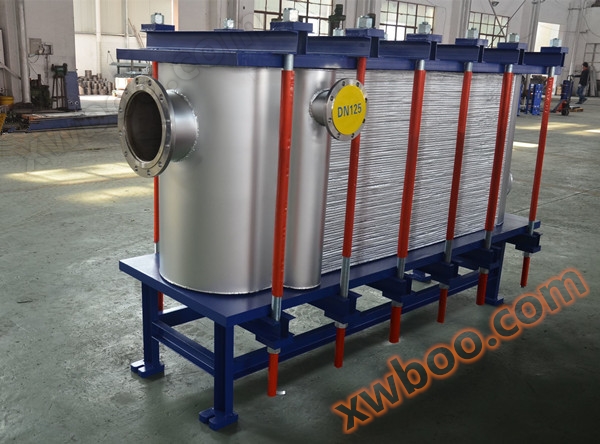
Fully welded heat exchanger structure
Welded plate heat exchangers are mainly composed of heat transfer plates, welded end plates, pressure plates at both ends, clamping bolts, etc.
1、 Heat transfer plate
The heat transfer plate is the main element of the heat exchanger. Generally, the corrugation is in the shape of a figure. According to the different fluid media, the material of the heat transfer plate is different, and it is made of stainless steel.
2、 Clamping bolt
The clamping bolt mainly serves to tighten the pressure plates at both ends. Clamping bolts are generally double threaded, and when pre tightening the bolts, the torque of the fixed plate is evenly distributed.
3、 Hanging rack
Mainly to support the heat exchange plate, making it easy to disassemble, clean, assemble, etc.
Working principle
A fully welded plate heat exchanger is a heat exchange device composed of many corrugated heat transfer plates, which are sealed by welding at certain intervals. When assembling the plates, two groups are arranged alternately, and the plates are sealed by welding. The inside of the plates is a herringbone corrugated plate, which can create turbulence in the fluid at low flow rates to enhance heat transfer. Two types of heat exchange media flow into their respective channels, forming counter current or parallel flow through each plate for heat exchange.
Characteristics: (1) Small size and small footprint;
(2) High heat transfer efficiency;
(3) Low metal consumption;
(4) Low heat loss;
(5) Enduring pressure and high temperature;
(6) The heat transfer efficiency is slightly worse than that of detachable plate heat exchangers;
(6) Compared to detachable plate heat exchangers, they are not detachable, and the initial design area is limited. However, if the production capacity or usage increases in the later stage, the heat exchanger cannot be expanded and can only be replaced with the entire equipment.


