- Phone
-
Address
No. 483 Xingnan Avenue, Panyu District, Guangzhou City
Product Categories
Guangzhou Huayuexing Instrument Co., Ltd
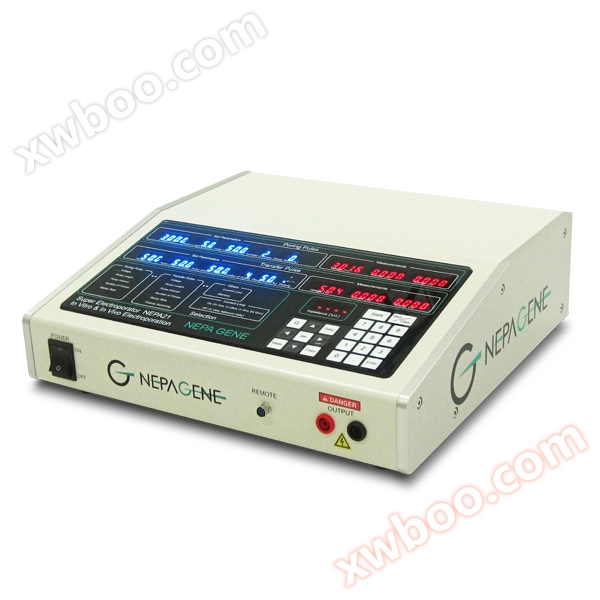
NEPA21 Efficient Gene Transfection System
NegotiableUpdate on 02/13
- Model
- Nature of the Manufacturer
- Producers
- Product Category
- Place of Origin
Overview
NEPA21 Efficient Gene Transfection System
Product Details
After close proximity30With the development and innovation of the year, electroporation has become an indispensable technical means in the field of gene functional research. As the exclusive agent in China, Huayuexing Instrument Co., Ltd. recommends Japan to youNEPA GENEThe company's instruments:
NEPA21Efficient gene transfection system
------Suitable for in vitro use(In Vitro)And living beings(In Vivo)


NEPA GENE specializes in the research and production of cell transfection and fusion devices. Its CUY21 series transfection devices have long been renowned in the research field and have been cited in hundreds of articles, including those from high-level journals such as Nature, Cell, PNAS, Genes&Development, etc.
In 2011, NEPA GENE launched a new generation of versatile NEPA21 efficient gene transfection system. Compared with traditional electroporation instruments, NEPA21 adopts a newly designed electroporation program, which is particularly suitable for transfection of difficult to transfect cells, ex vivo tissues, or live animals. Combined with its unique Voltage Decay design, NEPA21 can achieve high transfection efficiency while improving cell survival rate.
Main features:
- A brand new four step electric conversion program
- Specially suitable for transfection of difficult to transfect cells, ex vivo tissues, or live animals
- High transfection efficiency and high cell survival rate
- The parameters of the electric conversion program are visible, adjustable, and widely applicable
- No need for special transfection reagent kit assistance, low operation and maintenance costs
New four step electric conversion program:

Step 1: Electric perforation mode
High voltage, short duration, multiple pulses, voltage decay
Effectively forming small pores on the cell membrane with minimal damage to the cells
Step 2: Reverse electroporation mode
Used for transfection of in situ adherent cells/tissues, effectively improving perforation rate!
Step 3: Gene Introduction Mode
Low voltage, long duration, multiple pulses, voltage decay
Help target molecules (such as DNA or RNA) enter the cell with minimal damage to the cell
Step 4: Reverse Import Mode
Unique design! Effectively improve import efficiency!
Application scope:
♦ Suspension transfection
Scope of application: Primary cells, stem cells, and various difficult to transfect cells (such as nerve cells, immune cells, and blood cells)
♦ Adhesive transfection
Scope of application: It can directly transfect adherent cells, eliminating the steps of cell digestion and reattachment (which is important for improving the survival rate of certain types of cells)!
♦ Ex vivo tissue transfection
Scope of application: Tissue sections, brain sections, organs, embryos, etc
♦ In vivo transfection
Scope of application: brain, retina, muscles, skin, liver, kidneys, testes, ovaries, etc
Partial references:
- Cell transfection instrument (NEPA21, CUY21 series):
- Barnabe-Heider et al.Genetic manipulation of adult mouse neurogenic niches by in vivo electroporation. Nature Methods,2008 Feb; 5(2):189-96.
- Shibata MA, et al.Combination therapy with short interfering RNA vectors against VEGF-C and VEGF-A suppresses lymph node and lung metastasis in a mouse immunocompetent mammary cancer model.Cancer Gene Ther.2008 Dec; 15(12):776-86.
- Limura T and Pourquie O.Collinear activation of Hoxb genes during gastrulation is linked to mesoderm cell ingression.Nature,2006 Aug 3; 442(7102):568-71.
- Sanada K and Tsai LH.G Protein betagamma Subunits and AGS3 Control Spindle Orientation and Asymmetric Cell Fate of Cerebral Cortical Progenitors.Cell,2005 Jul 15; 122(1):119-31
- Ladher RK et al.FGF8 initiates inner ear induction in chick and mouse. Genes and Development,2005 Mar 1; 19(5):603-13.
For more literature or product information, please visit the English website: http://www.nepagene.jp/E/Eindex.htm Or our company website http://www.huayueco.com/show12345.php?lanmuid=3&id=304
Do you want to learn about live transfection techniques? The world's first scientist to report the use of electroporation for in vivo transfection of mouse embryonic brains (Neuroscience. 2001; 103 (4): 865-72), Dr. H Tabata from Keio University personally demonstrated the method of in vivo embryo transfection for you. Please click to watch the video: http://video.sina.com.cn/v/b/63556016-2484835144.html
Hot promotion in progress
For more details, please contact sales representatives from various regions
Or call 020-34821111 (50 line)
www.huayueco.com
Similar Product Recommend