-
E-mail
1343170510@qq.com
-
Phone
13186680389
-
Address
Zhenglu Town Development Zone, Tianning District, Changzhou City
Product Categories
Changzhou Luyang Pharmaceutical Drying Equipment Co., Ltd


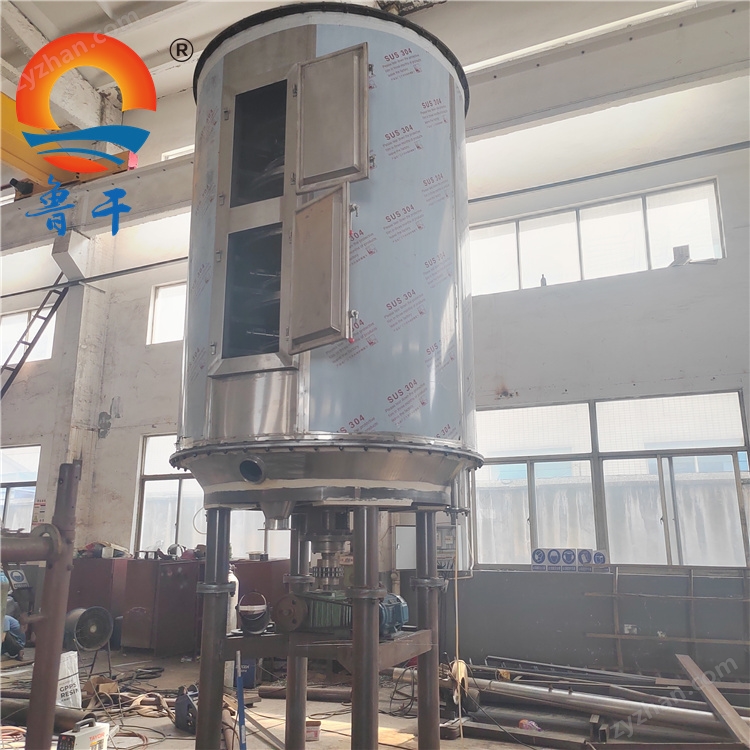
Paste like material flash drying machine
NegotiableUpdate on 01/04
- Model
- Nature of the Manufacturer
- Producers
- Product Category
- Place of Origin
Overview
The working principle of the paste like material flash drying machine $r $n: The clean air heated by the heat exchanger $r $n is blown into the air inlet and spun into the annular gap at the bottom of the drying chamber at a suitable speed, then enters the drying chamber in a tangential direction and rises in a spiral shape. At the same time, the material is quantitatively added to the tower by a continuously variable speed feeder. In the drying tower, the material undergoes sufficient and efficient mass heat conversion with hot air. The dried powdered material is transported to the separator along with the hot air, where the finished product is collected and packaged, while the exhaust gas is further processed by the dust removal device and discharged.
Product Details
Paste like materialFlash drying machine
Typical user: NingxiaXX Pharmaceutical Co., Ltd
Moisture content of wet materials:55%-60%
endWater: 5%
thing material Fineness:20-60 mesh
produceQuantity: 900kg/h
hotSource: 0.4Mpa steam+electric heating compensation
air intake Wen Degree:~155 degrees
show off Wen Degree:~70 degrees
|
Flash drying machineIt is one of the rapidly developing and widely used drying machines, also known as cyclone dryer or rotary fast dryer in China. The flash dryer organically combines fluidization, swirling, spraying, crushing, and grading technologies, and is an optimized combination of fluidization technology, swirling technology, spraying technology, and convective heat transfer technology. The equipment has high technical content and is suitable for drying paste like, granular, filter cake like, and slurry like materials. Flash drying machine has the advantages of high thermal efficiency, short drying time, and good energy-saving effect. The paste like materials can be directly dried to produce powdered dried products, saving the processes of pre-treatment before drying, crushing and screening after drying. Due to the fast drying speed and short heating time of the material, it is not easy to damage the components of the dried material, which is particularly beneficial for drying heat sensitive materials. The drying process is fully enclosed, with no impurities mixed in, resulting in high-quality finished products and a good operating environment. At present, various models of flash dryers have been designed according to different materials, and a series of products have been formed, which are increasingly widely used in industries such as chemical, pharmaceutical, light industry, food, and mining. Typical dry materials include: Inorganic substances: borax, calcium carbonate, hydroxides, copper sulfate, iron oxide, barium carbonate, antimony trioxide, various heavy metal salts, synthetic cryolite, aluminum oxide, white carbon black, etc Organic compounds: atrazine (pesticide insecticide), lauric acid, benzoic acid, benzoic acid, fungicide, sodium oxalate, cellulose acetate, etc; Ceramics: kaolin, silica, clay, etc; Dyes: anthraquinone, black iron oxide, indigo pigment, butyric acid, titanium hydroxide, zinc sulfide, various azo dye intermediates. Food categories: soy protein, gelatinous starch, distiller's grains, wheat sugar, wheat starch, etc. Pesticides, industrial waste, etc… At present, rotary flash dryers produced by general drying equipment manufacturers generally have the following problems: large one-time investment, high energy consumption, relatively small output, and time-consuming and labor-intensive equipment debugging. Even if the drying system is currently in operation, it is uncertain whether it is operating at its optimal state, resulting in poor economic efficiency and waste. In response to these factors, our Yanling drying technicians have long identified the following two main reasons: firstly, the reasonable configuration of the system, such as measuring the quality and heat of different materials and production requirements, determining heat, air volume, temperature, etc; Secondly, how to improve the construction of the host for different materials and system configurations. By solving these two issues, the output can be further increased, thereby improving efficiency and achieving the goal of energy conservation. At present, flash evaporation dryer and airflow dryer are our company's main characteristic products. Working Principle: Paste like materialFlash drying machineEquipment features: Due to the structural characteristics of the flash dryer, its performance has the following advantages compared to other dryers: |
|
Changzhou Luyang Dry Friendly Reminder------14 points to pay attention to when choosing a fast rotary flash dryer 1. Physical and chemical properties of materials that require drying The form, moisture content, water properties, crystal water, particle size, bulk density, viscosity, thermal sensitivity, softening point, phase transition point, thixotropy, toxicity, corrosiveness, odor, flammability, explosiveness, electrostatics, breathability, agglomeration, and easy pulverization of crystals or particles of materials can all affect the drying effect 2. Drying characteristics of materials The drying curve, critical moisture content, and equilibrium moisture content under the selected drying conditions. 3. Dry production requirements and long-term planning. 4. The impact of material commodity value and drying effect on it. The impact of factors such as product moisture, pollution, temperature, wear and tear, pulverization, pulverization, rehydration, etc. on the value of the product. 5. Requirements for material recovery rate. 6. The top-down process of material drying. (Related to the state method of feeding and discharging) 7. Drying methods for materials in the past or similar products. 8. Available heat sources (coal, fuel oil, electricity, coal gas, liquefied gas, natural gas) 9. Are there any special requirements for the size of the installation site for the rotary flash dryer. 10. Environmental requirements - restrictions on dust emissions, noise, vibration, odors, volatile substances, etc. 11. Possible amount of procurement funds, local labor, land, and energy prices. 12. The operator level and maintenance ability of the dryer user. The local environmental temperature and humidity mainly refer to the impact of weather changes on drying. Generally, flash dryers use atmospheric heating as the drying medium. The higher the temperature of the atmosphere, the lower the humidity, which is more conducive to drying. However, in the southern spring and summer, the rainy weather and high air humidity are not conducive to the ability of the dryer and affect production. Our country has a vast territory, and there is a significant difference in air humidity between the north and south. In some parts of the south, the humidity in winter is only 0.008kg water/kg dry air, while in spring and summer, the atmospheric humidity can reach as high as 0.025kg water/kg dry air, which is more than three times higher than the former. Therefore, hot air drying operated at lower exhaust temperatures (<90 ℃) will inevitably decrease its drying rate and increase the required time as the atmospheric humidity increases in spring and summer. Due to the increase in atmospheric humidity, the equilibrium water content of materials will inevitably increase, which will lead to a decrease in drying yield, and in some cases, the yield will decrease by more than 50%. 14. Factors affecting the production capacity of flash drying machines: Due to the same drying method, the heat energy consumed for drying and dehydrating one kilogram is basically the same, and the capacity of the heat source (hot air stove, steam radiator, etc.) matched with the drying machine is also constant. Therefore, the main technical indicator of the drying machine - drying capacity - is often based on the amount of water removed per hour (or maximum amount of water removed). This indicator is measured under certain conditions, such as the type of wet material, initial moisture content, final moisture content, hot air temperature, environmental temperature and humidity, etc. Any change in one of the conditions will have an impact on the production capacity of the dryer, sometimes even more significant. Below are separate explanations. (1) The types of wet materials refer to the combination of materials and moisture. Wet materials can be divided into ① capillary porous materials, where water is mainly bound to the material by capillary force, such as sand, silica, activated carbon, plain fired ceramics, etc. The bonding strength between water and the material is relatively small, making it easier to dry; ② Colloidal materials are dominated by the permeation and binding of water and materials, such as glue, flour balls, etc. These materials generally exhibit high viscosity, strong binding strength between water and materials, and difficult drying; ③ Capillary porous colloidal materials have the properties of the two types of substances mentioned above, such as mud coal, clay, wood, fabric, grain, leather, etc. These materials have the most types, but the form of water binding between them also varies. The difficulty of dehydration under the same conditions is determined by the Tongluo factory. The form of materials also has a significant impact on drying, such as granular materials, where larger particles are more difficult to dry than smaller particles, while larger particles, with smaller thickness, are easier to dry than larger ones. (2) Moisture content of wet materials refers to the percentage of moisture in the total weight of wet materials. In the formula: W - moisture weight; G - Weight of wet material; G0- Absolute dry material weight. The initial moisture content refers to the moisture content of the wet material before entering the dryer. Generally, as long as the wet material can work inside the dryer, the higher the initial moisture content, the more fully the dehydration capacity exhibited by the dryer. On the other hand, the higher the initial moisture content, the more the dryer can achieve maximum dehydration capacity when the final moisture content is constant, but the amount of dry material discharged actually decreases. (3) The final moisture content is generally in the slow drying stage after drying, and the lower the final moisture content, the greater the difficulty of drying, the longer the required drying time, and the lower the thermal efficiency, which also affects the yield. (4) Hot air temperature, also known as drying medium temperature, is the most sensitive top pipe condition in drying. The higher the temperature of the hot air, the more thermal energy it contains, and the lower the relative humidity of the hot air, the stronger its ability to absorb and carry moisture, which is very beneficial for drying, and the drying thermal efficiency is also high. In many drying equipment, when other conditions remain constant, the dehydration capacity of the dryer is basically proportional to the change in hot air temperature. When choosing a drying equipment, it is important to have sufficient data on the maximum temperature at which the material will be damaged. If the material allows, try to choose a high-temperature medium. It should be noted that many drying methods, especially rapid drying, result in material temperatures that are significantly lower than the temperature of the drying medium. For example, although the hot air temperature of an airflow dryer can reach over 250 ℃, the discharge temperature is generally below 60 ℃.
|