-
Phone
13439993923
-
Address
Room G13, Building B, No. 10, Wujian Building, Yongwai East Blacksmith Camp, Fengtai District, Beijing
Product Categories
Beijing Pinzhi Chuangsi Precision Instrument Co., Ltd
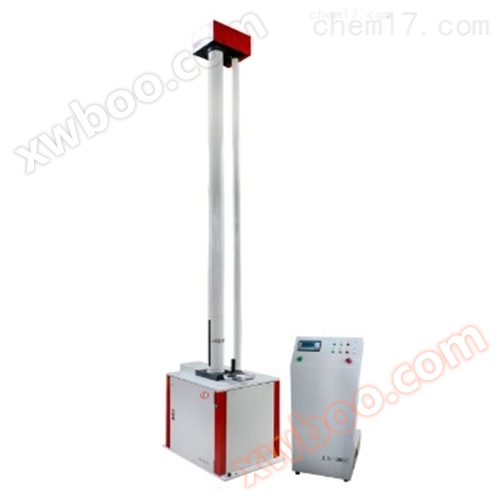
Pipe drop hammer impact material testing machine
NegotiableUpdate on 02/26
- Model
- Nature of the Manufacturer
- Producers
- Product Category
- Place of Origin
Overview
The drop hammer impact material testing machine for pipes is suitable for determining the impact toughness of PVC-U, PVC-C pipes, PP pipes, PE pipes, plastic pipes for underground communication pipelines, and other pipes. It is an ideal testing instrument for testing, production units, building materials industry, and research institutions.
Product Details
Pipe drop hammer impact material testing machineThis testing machine has the function of preventing secondary impact. It adopts an AC servo system, with fast lifting speed, good positioning accuracy, high testing efficiency, small air resistance, and automatic height measurement. The lifting height of the falling hammer can be set arbitrarily, and the lifting height of the hammer can be automatically calibrated. The weight of the impact hammer can be assembled through weights, and the capture rate of the anti secondary impact device is 100%. The V-shaped iron is adjusted to adapt to samples of different diameters, and the hammer body falls freely. It can provide impact hammer bodies that meet other standards according to ordering requirements. The hammer release device and anti secondary impact device are implemented by pneumatic transmission. Two experimental methods are applicable: the pass method and the gradient method
Pipe drop hammer impact material testing machineworking principle
The true impact rate of the batch (or continuous extrusion production) of products can be measured by impacting the specified part of the test sample from the specified height with a hammer of specified quality and size. This test method can meet the technical requirements of different products by changing the mass or height of the hammer. The maximum allowable value for TIR is 10%.
Real impact rate:When testing the entire batch of products, the total number of impact failures divided by the total number of impacts is the true impact rate, expressed as a percentage.
Destruction:When observed with the naked eye, cracks, fissures, or fragmentation of the sample caused by impact are called damage, while dents or discoloration of the sample caused by hammer impact are not considered damage.
Main frame and guide rail:Vertically fixed, adjustable and free to release the hammer vertically. During calibration, the rate of impact of the hammer on the pipe should not be less than 95% of the theoretical rate.
Hammer body:
The hammer body should comply with the provisions of Table 1 and Table 2. The hammer head should be made of steel with a minimum wall thickness of 5mm. The surface of the hammer head should not have visible defects such as dents or scratches that affect the test results. Drop hammers weighing 0.5kg and 0.8kg should have a d25 type hammer head, and those weighing 1kg or more should have a d90 type hammer head.
Sample holder:
Including a V-shaped support plate with a 120 ° angle, its length should not be less than 200mm, and its fixed position should be such that the vertical projection of the impact point of the hammer is within 2.5mm from the centerline of the V-shaped support plate. During arbitration inspection, use a screw top or bracket.
Release device:
The hammer can be dropped from any height of at least 2 meters, which refers to the height from the surface of the specimen, accurate to ± 10mm. It should have a device to prevent secondary impact of the hammer, and the rebound capture rate of the hammer should be guaranteed to be 100%.
table1The size of the hammer head of the falling hammer Unitmm
model |
Rs |
d ±1 |
ds |
a,(°) |
|
d25 d90 |
50 50 |
25 90 |
arbitrary arbitrary
|
arbitrary arbitrary
|
table2Recommended hammer quality Unitkg
|
0.5 0.8 1.0 1.25 |
1.6 2.0 2.5 3.2
|
4.0 5.0 6.3 8.0
|
10.0 12.5 16.0 |
Note: The allowable tolerance for hammer mass is ±0.5% | |||
Similar Product Recommend


