-
E-mail
941593506@qq.com
-
Phone
1516964627915169646279
-
Address
Building 67, 14278 Jiankang East Street, Kuiwen District, Weifang City, Shandong Province
Product Categories
Shandong Runchuang Environmental Protection Equipment Co., Ltd
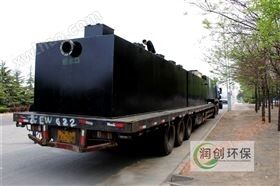
RCHB integrated wastewater treatment equipment for Baoji City Hospital
NegotiableUpdate on 06/24
- Model
- Nature of the Manufacturer
- Producers
- Product Category
- Place of Origin
Overview
The wastewater treatment equipment in Baoji Hospital has the ability to remove nitrogen and phosphorus, and can achieve the ability to treat industrial wastewater, domestic sewage, and urban sewage by adjusting the structure of the equipment. The fillers in the contact oxidation tank are mostly composite soft fillers, which are lightweight, high-strength, and have stable physical and chemical properties. They have a large specific surface area for hospital sewage treatment, strong biofilm adhesion ability, and high contact efficiency between sewage and biofilm.
Product Details
| brand | Runchuang Environmental Protection | Customized processing | correct |
|---|---|---|---|
| Processing capacity | 10m³/h | rated voltage | 380v |
| rated power | 1.5kw | Diameter of water outlet pipe | 110mm |
| Inlet pipe diameter | 110mm |
Baoji Hospital Wastewater Treatment Equipment
certainDr. Qi Peishi from the School of Municipal Environmental Engineering at the University of Technology said: Due to the presence of bacteria and viruses in hospital wastewater, if left untreated, it can pose a threat to human health. Currently, many small-scale hospitals or private clinics are mixed in residential areas and use water and sewage together with residents, which increases the difficulty of wastewater treatment. It is recommended that medical management departments limit the treatment content and scope of these hospitals, and further refine national policies. On the other hand, there are still loopholes in management, such as lax enforcement and failure to prosecute illegal activities. Hospitals spend tens of thousands or even millions of dollars on sewage treatment facilities. Although there is no economic benefit, the social and environmental benefits it brings to people are considerable. We hope that hospital managers can increase their environmental awareness. Hospitals should actively come up with plans, submit applications to Zhengfu, and strive for financial support from relevant departments. They should update and replace the aging and outdated sewage treatment facilities in hospitals as soon as possible, and try their best to achieve harmless treatment of hospital sewage. Further conduct in-depth research on the problems of small and medium-sized hospitals mixed in residential areas, and come up with effective treatment methods to prevent hospital sewage from threatening people's health.
Product images

On site pictures:

The hospital sewage treatment process is mainly divided into two types: activated sludge method and biofilm method. The commonly used methods include ordinary aeration method, oxidation ditch method, and A/B method A2/The O method belongs to the former, while the biological turntable and contact oxidation method belong to the latter. Integrated sewage treatment equipment is a device that integrates a primary sedimentation tank, I and II level contact oxidation tanks, a secondary sedimentation tank, and a sludge tank, and performs air blowing aeration in the I and II level contact oxidation tanks to effectively combine the contact oxidation method and activated sludge method, further improving the level of sewage treatment.
The equipment has strong resistance to impact loads, and the average residence time of the contact oxidation method is over 6 hours.
The equipment has the ability to remove nitrogen and phosphorus, and can achieve the ability to treat industrial wastewater, domestic sewage, and urban sewage by adjusting the structure of the equipment. The fillers in the contact oxidation tank are mostly composite soft fillers, which are lightweight, high-strength, and have stable physical and chemical properties. They have a large specific surface area for hospital sewage treatment, strong biofilm adhesion ability, and high contact efficiency between sewage and biofilm. An aerator is used in the contact oxidation tank for air blowing aeration to continuously float the fiber bundles, ensuring uniform aeration and mature microbial growth, which has the characteristics of activated sludge process. The effluent quality of the equipment is stable, with low sludge production and easy treatment. Submersible pumps can be installed in equipment to reduce project investment. The equipment can be installed on the ground or buried underground. When buried underground, the upper cover can be used for greening, resulting in a smaller factory area and fewer ground structures. Easy to achieve automatic control and simple management operation. The device can be connected to a car to make a mobile integrated sewage treatment equipment.
The sewage treated by this equipment meets the national comprehensive sewage treatment discharge standard level B standard.
Execution standards
1. GB18918-2002 Pollutant Concentration Discharge Standard for Urban Sewage Treatment Plants
2. Medical Institution Wastewater Discharge Standard GB18466-2005
Process Selection
A/O process, SBR process
CASS process, MBR process
Main components
1. Hydrolysis acidification tank 2. Contact oxidation tank 3. Impurity sedimentation tank 4. Disinfection treatment 5. Aerobic sludge digestion tank
1. Hydrolysis acidification tank
This process mainly deals with pre-treatment of sewage before treatment, which involves anaerobic fermentation of the wastewater in the water to improve its biodegradability. This is an important step before sewage treatment, which can directly affect the efficiency and treatment time of later sewage treatment, and can improve the efficiency and reduce consumption of sewage treatment.
2. Contact oxidation tank
Oxidation tanks are classified into several levels based on the degree of pollution in water treatment, including ordinary and reinforced types. Generally judged based on the processing time. If the processing time is no more than four hours, use a regular oxidation tank, and if the processing time is between 4-6 hours, use a reinforced oxidation tank. The main method is to use the effluent from the hydrolysis acidification tank to flow automatically to the contact oxidation tank for biochemical treatment. Most of the organic matter in the original sewage is degraded and purified here. Aerobic bacteria use fillers as carriers and utilize the organic matter in the sewage as food to decompose it into inorganic salts, thereby achieving the purpose of purification. The survival of aerobic bacteria requires sufficient oxygen, that is, there is enough dissolved oxygen in sewage to achieve the purpose of biochemical treatment. The air in the aerobic tank is provided by a fan, and a new type of elastic three-dimensional packing material is used in the tank. The packing material has a large surface area ratio, long service life, easy film formation, and corrosion resistance. The bottom of the tank adopts a rotary mixing aerator, which increases the transfer rate of dissolved oxygen, and has the advantages of light weight, non aging, non clogging, and long service life. The gas to water ratio of the contact pool is around 12:1. (0.5-5 m3/H Contact pool is secondary)
3. Impurity sedimentation tank
After being treated in a biological contact oxidation tank, the wastewater flows automatically into a sedimentation tank for further sedimentation and removal of detached biofilms and some organic and inorganic small particles. The sedimentation tank is based on the principle of gravity. When the wastewater containing suspended solids flows from bottom to top, the substances are precipitated by gravity. An adjustable weir is installed on the upper part of the sedimentation tank to regulate the water level of the effluent; The lower part is equipped with a conical sedimentation zone and a sludge gas device. The gas source is provided by a fan, and the sludge is transported to the sludge aerobic digestion tank by gas lift.
4. Disinfection treatment
According to the TJ14-74 standard, the disinfection pool should last for 30 minutes. If it is hospital sewage, the disinfection pool should increase the residence time to 1-1.5 hours. Our company uses chlorine dioxide disinfection equipment, and the disinfection pool and equipment can continuously change the dosage according to the water output, achieving the goal of adding more water and more medicine, and adding less water and less medicine. Other equipment can be separately prepared if needed. (If used for industrial wastewater, disinfection tanks and disinfection devices can be omitted.)
5. Aerobic sludge digestion tank
The remaining sludge discharged from the sedimentation tank is subjected to aerobic digestion and stabilization treatment in the tank to reduce the volume of sludge and improve its stability. The amount of sludge after aerobic digestion is relatively small. When cleaning, a suction truck can be used to extend from the inspection hole of the sludge tank to the bottom of the tank for suction and then transport it outside (cleaning once every six months). A supernatant reflux device is installed on the upper part of the aerobic digestion tank for sludge, allowing the supernatant to overflow to the hydrolysis acidification tank.
After sales service commitment
All products sold by our company come with a one-year warranty, lifetime warranty, free design and selection, and free technical consultation.
- Assist customers in selecting suitable matching equipment models.
- Provide technical information related to the equipment and be responsible for guiding installation and debugging.
- Provide information on raw material suppliers.
- Free training for operators and provision of technical consultation.
- Undertake the quality responsibilities stipulated in the Quality Law of the People's Republic of China.
- During the warranty period, if any problems occur under normal use, our company will unconditionally provide unlimited service to customers, and even replace the equipment.
- Product maintenance: Respond within 24 hours after receiving a repair report and promptly dispatch maintenance personnel to the scene to solve the problem.
- Free development of operating procedures for customers and free training of operators.
Baoji Hospital Wastewater Treatment Equipment


Dr. Qi Peishi from the School of Municipal Environmental Engineering at Harbin Institute of Technology said: Due to the presence of bacteria and viruses in hospital wastewater, if left untreated, it can pose a threat to human health. Currently, many small-scale hospitals or private clinics are mixed in residential areas and use water and sewage together with residents, which increases the difficulty of wastewater treatment. It is recommended that medical management departments limit the treatment content and scope of these hospitals, and further refine national policies. On the other hand, there are still loopholes in management, such as lax enforcement and failure to prosecute illegal activities. Hospitals spend tens of thousands or even millions of dollars on sewage treatment facilities. Although there is no economic benefit, the social and environmental benefits it brings to people are considerable. We hope that hospital managers can increase their environmental awareness. Hospitals should actively come up with plans, submit applications to Zhengfu, and strive for financial support from relevant departments. They should update and replace the aging and outdated sewage treatment facilities in hospitals as soon as possible, and try their best to achieve harmless treatment of hospital sewage. Further conduct in-depth research on the problems of small and medium-sized hospitals mixed in residential areas, and come up with effective treatment methods to prevent hospital sewage from threatening people's health.
Similar Product Recommend


